Pumpkin can be offered to dogs as a small, occasional addition to their diet, provided it is prepared simply and introduced gradually. If you are wondering whether dogs can eat pumpkin, the answer mainly depends on the amount, the dog’s health and its usual diet: pumpkin is not essential, but it can be a suitable snack for many dogs.
The practical rule is to start with a small amount, observe your dog’s individual tolerance and never use pumpkin to replace a complete meal or a treatment prescribed by a veterinarian.
Why to give dogs pumpkin cautiously
Cooked pumpkin for dogs is appreciated for its soft texture and mild taste. It contains water and dietary fiber, which may add variety to the diet when offered in appropriate portions.
However, “natural” does not automatically mean suitable in any quantity. Too much fiber or a sudden dietary change can cause soft stools, gas, nausea or changes in appetite. In addition, every dog has different needs depending on age, size, activity level, digestive sensitivity and any existing medical conditions.
Consider pumpkin as:
- an occasional addition to your dog’s usual food;
- a possible alternative to higher-calorie treats, if approved by your veterinarian;
- a food to introduce one at a time, without adding other new foods to the diet simultaneously.
Do not use pumpkin to manage persistent digestive problems, constipation, diarrhea or weight changes on your own. These signs deserve veterinary evaluation, especially if they appear suddenly or are accompanied by lethargy, pain, vomiting or blood in the stool.
Cooked pumpkin for dogs: how to prepare it
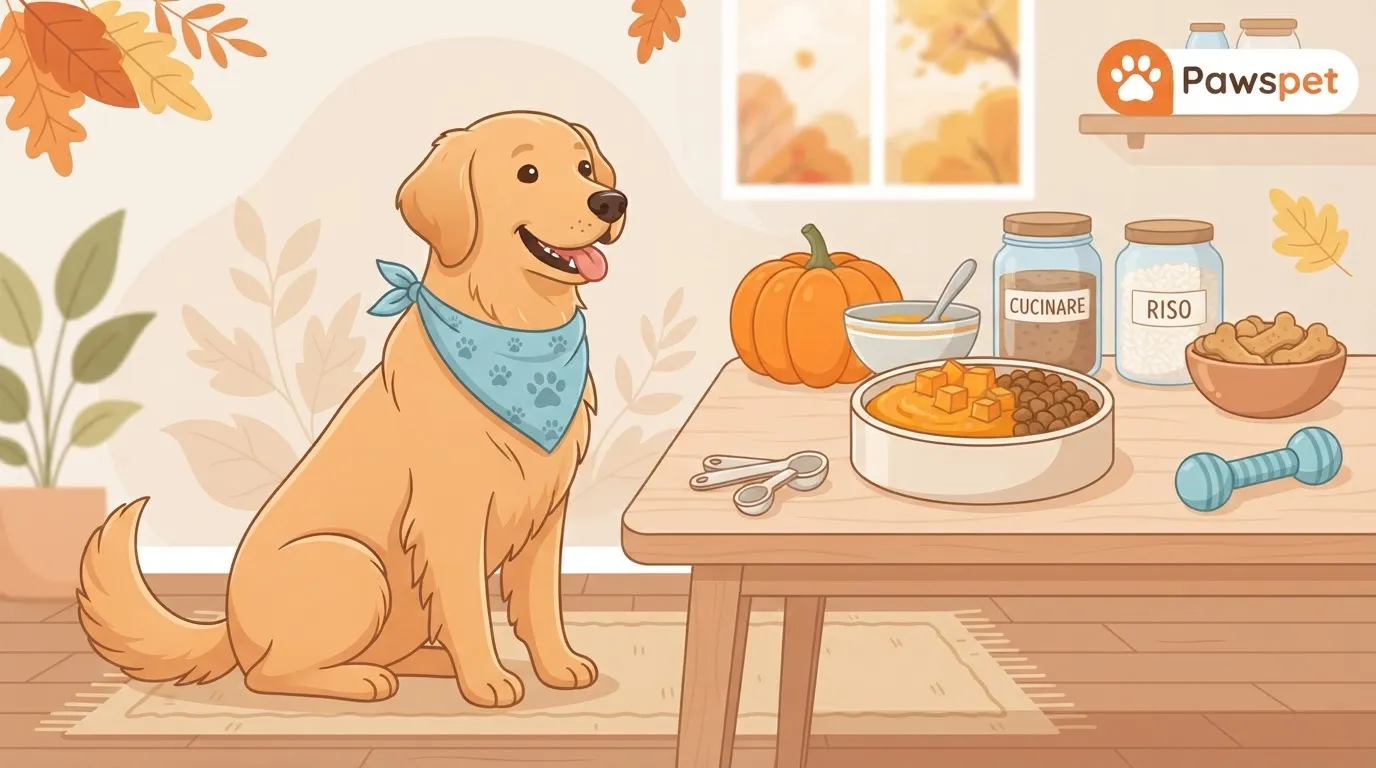
The safest preparation is simple. Offer pumpkin that is thoroughly cooked, soft and cooled, with no added ingredients. You can steam it, bake it or boil it in water, then mash it with a fork until it becomes a plain purée.
Avoid preparations intended for people, such as creamy soups, soups, pies, fillings and seasoned side dishes. Do not add:
- salt, sugar, butter or oil;
- onion, garlic, leek or spices;
- broth, sauces or ready-made seasonings;
- sweeteners or other cooking ingredients that are not suitable for dogs.
Always remove the skin, seeds and fibrous strands before serving the flesh. Hard parts may be more difficult to digest and can pose a risk if swallowed in large pieces, especially by fast eaters or small dogs.
Canned pumpkin also requires attention: it may contain sugar, flavorings or other ingredients. If you choose it, check that it contains only pumpkin purée, with no additions, and ask your veterinarian if you have any doubts.
How much pumpkin can dogs eat?
There is no single amount of pumpkin that is right for every dog. For the first trial, offer a very small portion and observe your dog’s stool and behavior over the following hours. For many dogs, it is more cautious to begin with one teaspoon of plain purée; for very small dogs, even less may be appropriate.
After the initial introduction:
- wait before increasing the portion;
- keep pumpkin as an extra, not as a main part of the meal;
- reduce or stop offering it if you notice digestive problems;
- consider the total calories from treats and rewards throughout the day.
In general, extras should remain a limited part of a dog’s daily diet. If your dog follows a diet formulated for weight management, allergies, diabetes, gastrointestinal disease or another medical condition, ask a veterinarian or veterinary nutritionist for advice first.
When to avoid pumpkin or contact your veterinarian
Pumpkin is not suitable for every situation. Ask for advice before offering it if your pet takes medication, follows a therapeutic diet or has had adverse reactions to other foods.
Contact a veterinarian if you notice:
- repeated vomiting or diarrhea that does not resolve;
- abdominal pain, loss of appetite or marked lethargy;
- itching, facial swelling or other possible signs of an adverse reaction;
- significant and prolonged changes in the stool.
If your dog has eaten pumpkin with seasonings, sweet products or preparations containing onion, garlic or other potentially harmful ingredients, do not wait for symptoms to appear. Call your veterinarian and explain what your dog ate and, if possible, how much.
FAQ about pumpkin for dogs
Can dogs eat raw pumpkin?
It is preferable to avoid it. Cooked pumpkin mashed into a purée is generally easier to chew and digest. Raw, hard or fibrous pieces may be unsuitable, especially when offered in large chunks.
Does pumpkin always help a dog’s digestion?
No. Fiber can affect stool consistency, but each dog responds differently. Do not use pumpkin as a remedy for persistent symptoms: diarrhea, constipation or recurring digestive problems require veterinary advice.
Can I give my dog pumpkin every day?
It depends on the overall diet and your dog’s individual tolerance. For frequent use or to establish a consistent portion, ask a veterinary professional for guidance.
Keeping track of new foods, reactions and professional recommendations can help you manage your dog’s diet more thoughtfully. With PawsPet, you can keep your pet’s health profile, reminders and useful notes organized, making it easier to share clear information with your veterinarian.