A dog that jumps up at people is not necessarily “badly behaved”: often, the dog is seeking contact, attention, or an outlet during a moment of high excitement. However, this behavior can make people uncomfortable, frighten guests, and become risky for children, older adults, or anyone who is physically vulnerable.
Teaching a dog not to jump requires consistency, prevention, and a clear alternative to offer instead. Punishment, shouting, and pulling on the leash tend to increase confusion or arousal.
Why dogs jump up at people
In most cases, a dog jumps because the behavior has worked at least sometimes. A pet, a look, a laugh, or even a reprimand can be perceived as attention. The behavior is therefore reinforced and repeated, especially when you return home, guests arrive, or the dog meets people on leash.
Jumping is more likely when a dog:
- is young or has had little practice greeting people calmly;
- becomes highly excited when seeing people;
- has built-up energy or frustration;
- receives different rules from family members and guests;
- does not yet know how to get attention appropriately.
The goal is not to “stop” the dog without explanation, but to teach that keeping all four paws on the floor—or taking a position such as sitting—opens access to people, greetings, and rewards.
Start with management: prevent jumping from being reinforced
While the behavior is frequent, organizing the environment helps prevent constant practice. Every jump that gets a reaction can make progress slower.
At home, prepare for challenging moments with a few simple measures:
- keep your dog on a leash when guests arrive, if this can be done safely and without creating tension;
- use a baby gate, a separate room, or another barrier to manage the initial entry;
- ask guests to ignore the dog until all four paws are on the floor;
- avoid excited greetings as soon as you return home: put your things down, move calmly, and greet your dog only when they are calmer;
- keep small, appealing treats in strategic places around the home.
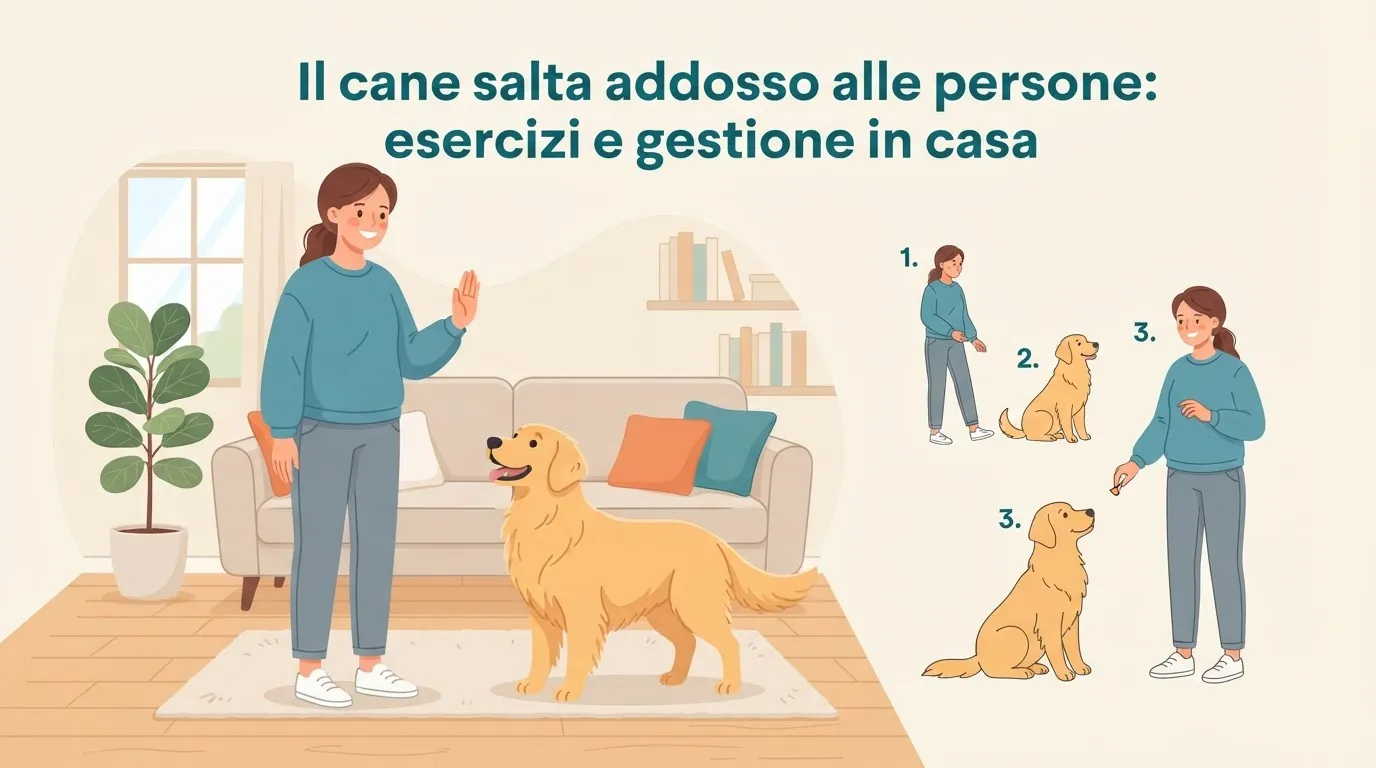
Ignoring a jump does not mean leaving the dog without guidance. If the dog jumps, the person can turn sideways, withdraw attention, and wait for a moment of calm. As soon as the dog has all four paws on the floor again, provide reinforcement: a calm voice, a treat, or a brief interaction.
The rule needs to be the same for everyone. If one person pets the dog while they are jumping and another ignores them, the dog receives unclear signals.
Exercises to teach your dog not to jump
Dog self-control exercises work best when they are short, easy, and practiced away from the most difficult situations. Start in a calm environment and gradually add distractions.
Reward all four paws on the floor
Notice everyday moments when your dog is near you without jumping. Before they become excited, mark the behavior with a calm “good” and reward them low, close to the floor.
This exercise teaches that the desired position is worthwhile. Avoid holding the treat above the dog’s head, as you may unintentionally encourage jumping.
Teach “sit” as a greeting
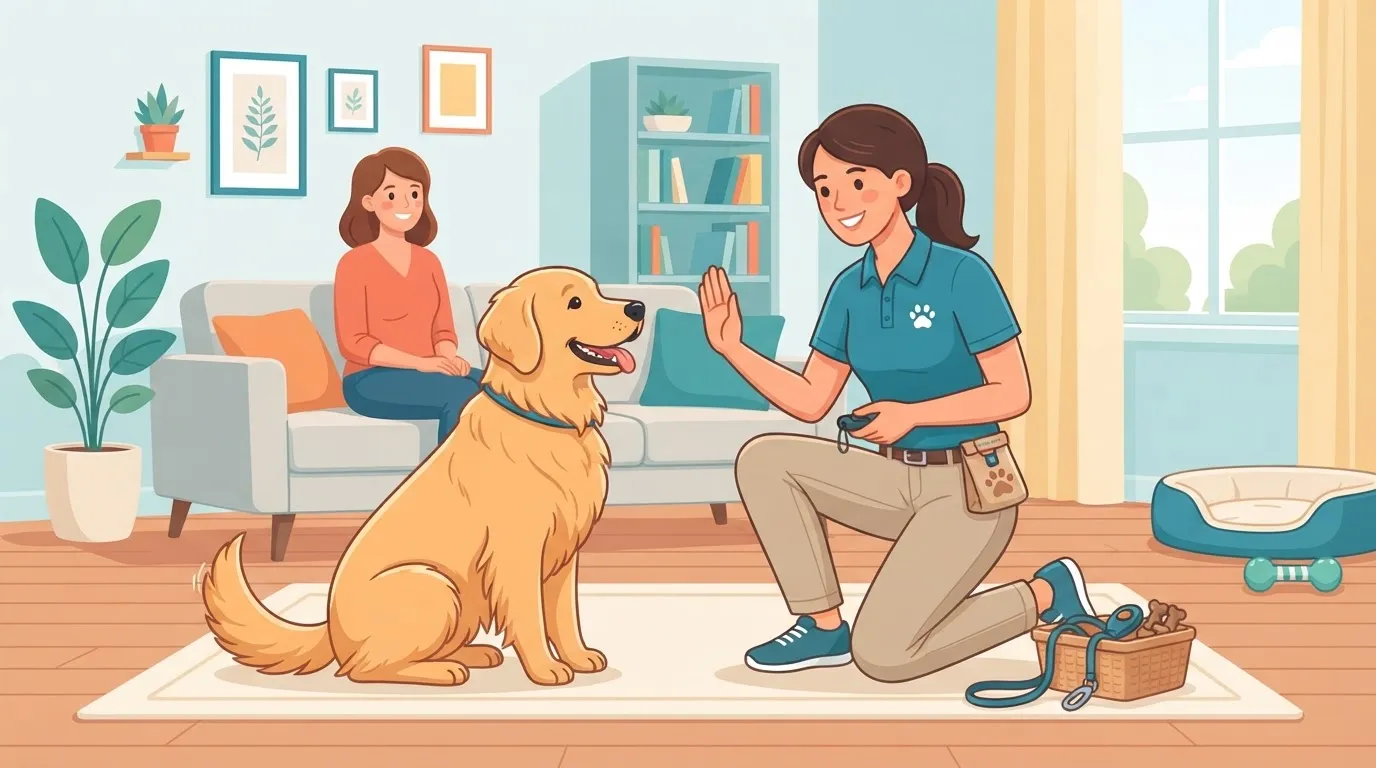
Ask for a sit when your dog can already do it in simple situations. After the dog sits, offer a brief pet or allow the person to say hello. If the dog stands up and jumps, stop the greeting without scolding; when the dog becomes calm again, start over.
Progress in small steps:
- Ask for a sit with a familiar person.
- Add movement, such as someone taking one step toward the dog.
- Practice opening the door without letting anyone enter.
- Involve a prepared and cooperative guest.
- Extend the exercise to different people and more stimulating settings.
Do not ask for a sit that lasts too long. Especially at the beginning, a few seconds of success are enough.
Managing guests and arrivals without increasing excitement
When a dog jumps on guests, the most delicate moment is the entrance. Before guests arrive, offer a calm activity suited to your individual dog, such as scattering kibble on a mat for them to sniff out or having them search for small treats. Avoid highly energetic games immediately before the visit.
Welcome guests with a shared plan: keep the dog behind a barrier or on a leash, while the guest enters without staring at or speaking to the dog. Contact should begin only when the dog appears more settled. If excitement rises again, increase the distance instead of insisting.
For everyday returns home, maintain a predictable routine. Calmly ignore the first few seconds of agitation, ask for a simple behavior, and greet your dog when they are able to offer it. Predictability helps reduce frantic anticipation.
If jumping is accompanied by fear, growling, biting, intense agitation, or difficulty calming down, consult a qualified dog trainer or a veterinarian with expertise in behavior.
FAQ
How long does it take to teach a dog not to jump?
It depends on the dog’s history, the family’s consistency, and how often the behavior is still being reinforced. Practicing every day in simple, consistent situations tends to produce more reliable results than long but occasional sessions.
Should I scold my dog when they jump up?
It is better to avoid excited reprimands or physical punishment. These may increase arousal or make the dog feel insecure. It is more helpful to interrupt attention and immediately reward an alternative, such as keeping all four paws on the floor or sitting.
Can I let my dog greet guests?
Yes, if the greeting happens gradually and the dog remains manageable. Ask guests to cooperate and stop the interaction whenever the dog starts jumping again.
With PawsPet, you can use reminders to keep the exercise plan consistent and record progress in more difficult situations, such as arrivals home and visits.