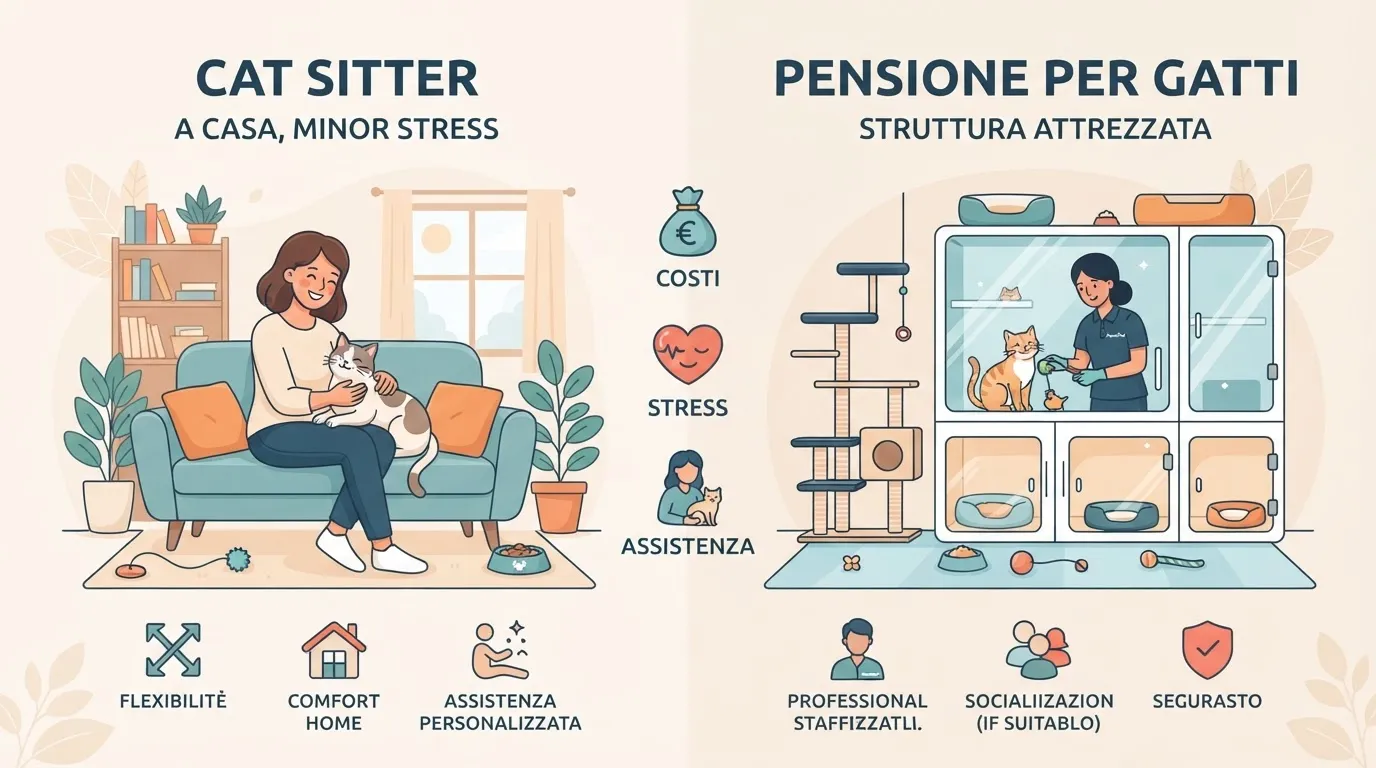
Leaving your cat during a trip can raise questions, especially if they are not used to changing environments. A good cat boarding facility should provide safe spaces, respectful routines and reliable care: choosing in advance lets you assess every detail without rushing.
There is no single ideal facility for every cat. Age, temperament, habits and health needs all influence the choice of the most suitable cat hotel.
How to choose a cat boarding facility
Before booking, ask to visit the facility. Photos are useful, but seeing the spaces in person helps you understand whether they are clean, calm and organized around the cats’ well-being.
Pay particular attention to:
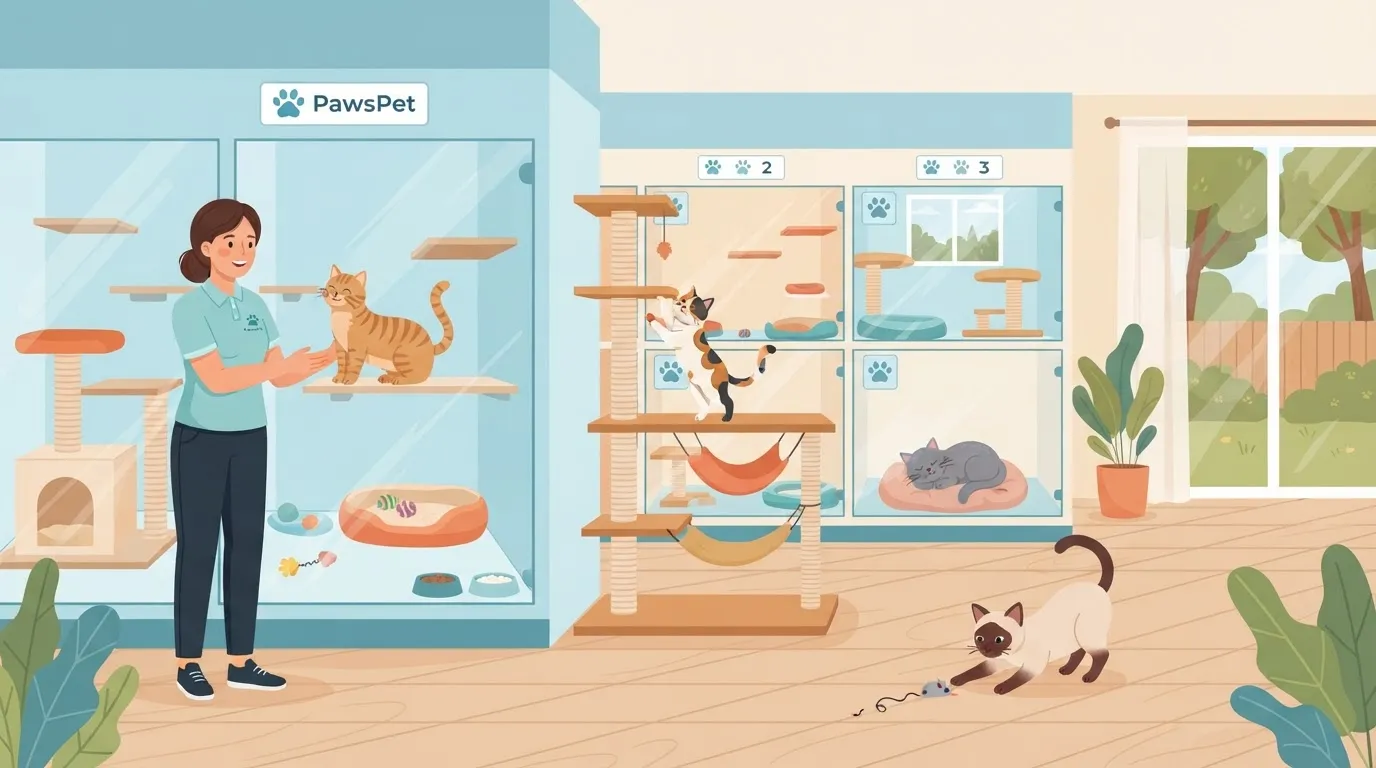
- Suitable individual spaces, with room to move, climb and rest in separate areas.
- Separation from other animals, especially dogs or unfamiliar cats, to limit noise and stress.
- Regular cleaning of litter boxes, bowls, fabrics and surfaces.
- Comfortable ventilation, lighting and temperature, without drafts or persistent odors.
- Hiding places and environmental enrichment, such as shelves, scratching posts, toys and beds.
- Present, prepared staff, able to recognize changes in behavior, appetite or litter box use.
Also ask how cleaning and feeding times are managed. A predictable routine is often reassuring for a cat staying away from home.
The checklist to take to your visit
Preparing specific questions makes it easier to compare facilities. A reputable boarding service answers clearly and does not minimize concerns about health, safety or daily care.
During the visit, check:
- Access and security: doors, windows and enclosures should reduce the risk of escape. Ask what procedures are followed when staff enter or leave the individual spaces.
- Health management: find out which requirements apply, such as an up-to-date health record, parasite treatments or vaccinations. Requirements may vary, so always ask for detailed instructions.
- Medication administration: if your cat takes medication, check whether staff can administer it and which instructions or documents are needed.
- Procedure in case of illness: the facility should explain who contacts the owner, which veterinarian is involved and how any urgent situations are handled.
- Updates during the stay: photos, messages or brief reports can help you monitor your cat’s adjustment without disturbing their peace.
- Food and litter: ask whether you can bring their usual food, preferred litter and a small number of familiar items.
Avoid choosing based only on distance or immediate availability. Continuity of care and the quality of the environment matter more than logistical convenience.
Cat boarding prices and the factors that affect them
Cat boarding prices depend on the area, season, length of stay and type of accommodation. Additional services may also affect the cost, such as larger spaces, special diets, medication administration, frequent updates or personalized care.
When you receive a quote, ask whether it includes:
- food or accommodation only;
- daily cleaning and litter changes;
- playtime, interaction and monitoring;
- any holiday, peak-season or short-stay surcharges;
- costs related to medication and special needs;
- cancellation and deposit terms.
Comparing cat boarding prices is sensible, but do so on the basis of equivalent services. An unclear rate may conceal significant extras, while a detailed quote helps you plan your budget more effectively.
Prepare your cat for the stay without stress
A temporary change of environment is easier when your cat can find familiar smells and routines. A few days before departure, prepare everything calmly and give the boarding facility concrete information about your cat’s personality.
If permitted, bring:
- the food they are used to, in sufficient quantities;
- written instructions about portions, mealtimes and preferences;
- a blanket or item of clothing with a familiar scent;
- medication in its original packaging and clear instructions, if prescribed by a veterinarian;
- up-to-date contact details and an alternative emergency contact.
Do not change your cat’s diet shortly before the stay, and do not wait until the last minute to help them become familiar with the carrier. If your cat is particularly anxious, elderly or has health conditions that require monitoring, speak with your veterinarian and the facility manager beforehand.
After booking: confirm the essential details
Before drop-off, contact the cat boarding facility again to confirm dates, times, food arrangements and emergency contacts. Be honest about any relevant habits, such as fear of people, litter box difficulties or reactions during handling: this information helps staff care for your cat more effectively.
With PawsPet, you can organize your pet’s health information, set useful reminders before departure and search for cat services in the marketplace more easily.
FAQ
How far in advance should I book cat boarding?
It is advisable to arrange it well in advance, especially for vacations, long weekends and holidays. This gives you time to visit several facilities and choose without having to settle for the remaining availability.
Can I leave my cat with their usual food?
Often, yes, and it can help maintain a stable feeding routine. Check the facility’s rules beforehand and provide labeled portions with clear instructions.
Do cat boarding facilities accept pets that take medication?
It depends on the facility and the type of treatment. Always ask whether staff can follow the veterinarian’s instructions and which documents are required before acceptance.