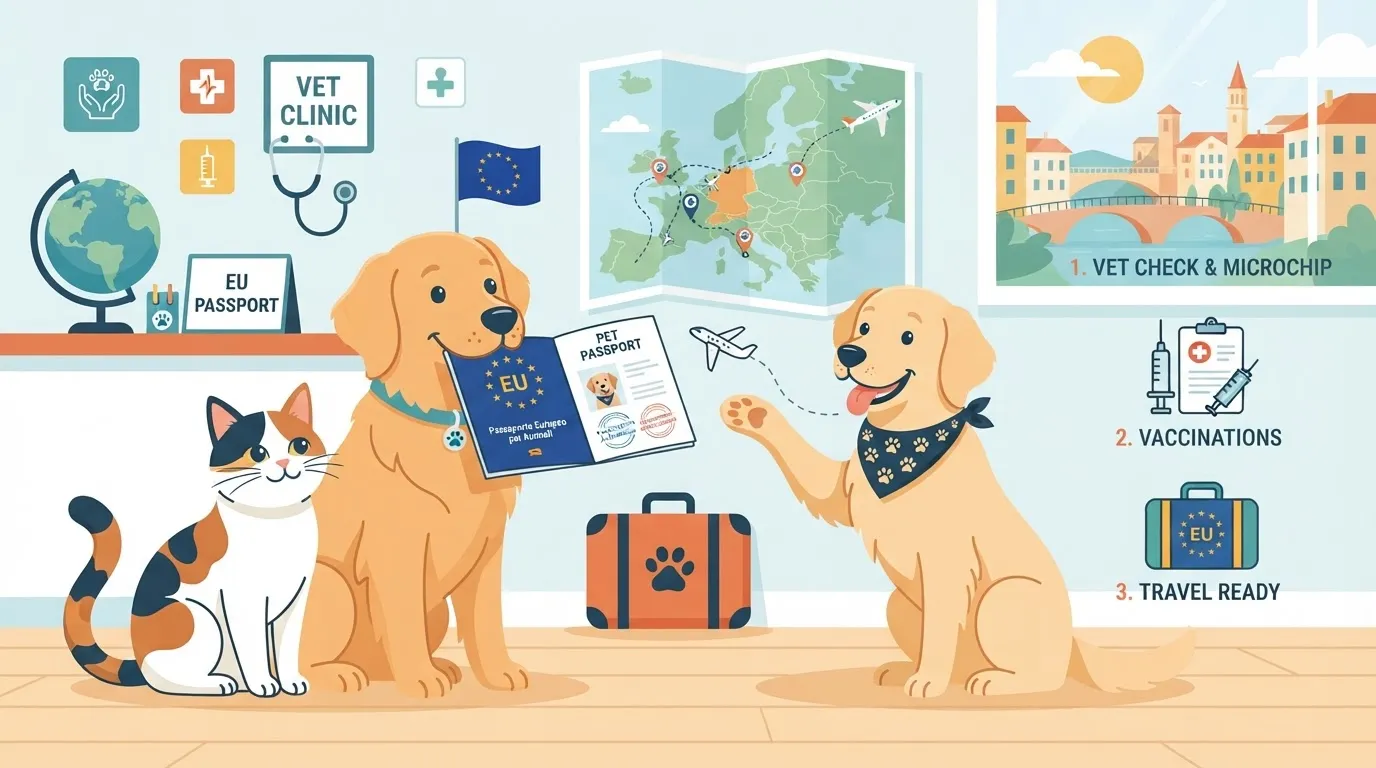
The European pet passport is the essential document for travelling with a dog, cat or ferret between European Union countries and, in some cases, to destinations outside the EU. Preparing it in advance helps avoid last-minute cancellations, problems during checks and unexpected costs.
A microchip, rabies vaccination and the requirements of the destination country are the main points to check before booking. Rules may vary depending on the destination and the type of journey.
When a European pet passport is required
A European pet passport is issued for dogs, cats and ferrets that have been correctly identified. It is normally required for non-commercial journeys within the European Union, meaning when the pet travels with its owner or an authorised person.
The document contains important information, including:
- identification details for the pet and owner;
- the microchip number and date of implantation;
- details of the veterinarian who records the information;
- rabies vaccination details;
- any treatments required by specific countries;
- other health information required by applicable rules.
For travel with pets to non-EU countries, the passport may not be sufficient. Some destinations require additional health certificates, antibody titre tests or specific entry procedures. Before departure, always check the current instructions issued by the relevant authorities in the destination and transit countries.
Microchip and rabies vaccine: the correct order
To obtain a valid dog or cat passport, the pet must be identified with a microchip. The microchip number must appear in the passport and must be readable during any checks.
Once identification has been completed, the rabies vaccine can be administered if required. The order matters: a vaccination recorded before the microchip was implanted may not be considered valid for travel purposes.
You must also allow enough time for the first rabies vaccination to become valid for travel. Do not leave things until the last few days: ask your veterinarian which time limits apply to your pet and chosen destination.
Before departure, check that:
- the microchip can be read and the details are correct;
- the rabies vaccination is still valid on the travel date;
- all records in the passport are complete;
- the pet’s name, contact details and information match the travel documents;
- any additional requirements of the destination country have been met.
How to obtain the passport and which costs to expect
The European pet passport is issued through the competent public veterinary services in your area, according to locally applicable procedures. Your regular veterinarian can help you check your pet’s health status and identify which office to contact, but they are not always the person who physically issues the document.
To start the application, you will generally need:
- the owner’s identity document;
- tax identification number, if required;
- details of registration in the pet registry;
- microchip certificate or registration details;
- a health record with up-to-date vaccinations;
- written authorisation if someone else submits the application.
The dog passport cost varies depending on the area and the administrative fees that apply. Additional costs may include the microchip, veterinary examination, rabies vaccination, booster shots and certificates required for travel outside the EU. Ask your veterinarian for a clear estimate and inform the competent office of your planned departure date.
Validity, renewals and checks before departure
The passport does not necessarily have one fixed expiry date like a personal identity document. Its usability mainly depends on the validity of the health records, especially the rabies vaccination. If vaccine protection expires without a booster being given within the required timeframe, you may have to wait again before travelling.
Carry out a final check of your pet travel documents at least a few weeks before departure. Keep the passport in a sturdy case, away from food and liquids, and carry it with you throughout the journey: do not leave it in checked luggage.
It is also useful to check:
- the transport rules of the airline, railway company or shipping operator;
- the size and specifications of the carrier;
- any limits on the number of pets allowed;
- requirements concerning leashes, muzzles or insurance;
- contact details for a veterinarian at your destination.
With PawsPet, you can organise your pet’s health records and set reminders for vaccinations, boosters and deadlines—a practical way to avoid forgetting important steps before a trip.
FAQ about passports for dogs and cats
Is a European pet passport also required for travel within the UK?
For domestic travel within the UK, it is not normally the document required. However, accommodation providers and transport operators may ask for health records or other information, so check before travelling.
Can I get the passport the day before departure?
It depends on the pet’s health situation and the destination, but doing so is risky. Microchipping, rabies vaccination and issuing the document may require processing time, so organise everything well in advance.
Does a pet passport remain valid if I change ownership?
The passport contains the owner’s details, and any change must be handled correctly. In the event of rehoming, transfer or a change of address, ask the competent veterinary service for instructions on updating the pet registry and documentation.