Transporting your dog by bicycle can be a pleasant way to share trips and walks, but it requires stable equipment and patient acclimation. Choosing between a dog bike basket and a trailer mainly depends on your dog’s size, temperament, physical condition, and the type of route.
The goal is not to put your dog on the bike immediately. It is to help them feel protected without compromising your control or the safety of other road users.
Dog bike basket or trailer: how to choose
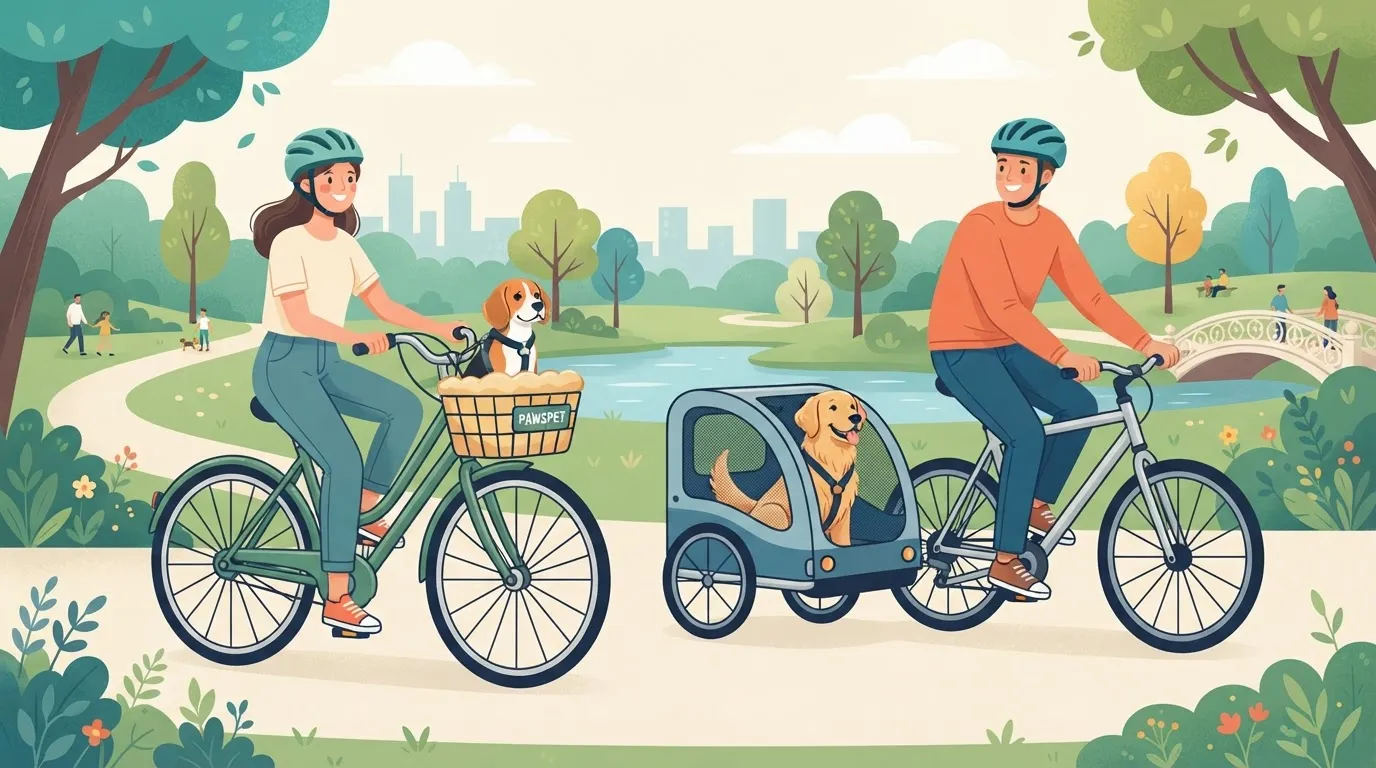
A dog bicycle basket is generally suitable for small dogs, provided the model is designed for animal transport and compatible with your bicycle. It can be mounted at the front or rear. Both options should provide a rigid structure, reliable attachment, and side protection.
A dog bike trailer is often more suitable for medium or large dogs, dogs with reduced mobility, or animals that need more room to sit and lie down. Compared with a basket, it has less impact on handlebar balance, but it makes the bicycle longer and wider when cornering.
Before buying, check:
- the manufacturer’s stated weight capacity and your dog’s actual weight;
- attachment systems compatible with the frame or luggage rack;
- a non-slip, washable floor;
- a stable frame, securely attached wheels, and durable materials;
- closures that prevent sudden escapes;
- good ventilation, shade, and protection from light wind or splashes;
- reflective elements for visibility.
Do not rely on soft bags, improvised backpacks, or generic baskets: they may swing, tear, or fail to restrain your dog during braking.
Preparing your dog to cycle calmly
To cycle with your dog in a relaxed way, acclimation should take place on the ground and in small steps. Some animals accept the equipment easily, while others need days or weeks. Rushing the process can create fear and make future outings more difficult.
Start by leaving the basket or trailer open at home or in a quiet place. Encourage your dog to explore it voluntarily and associate the experience with treats, a calm voice, or a short relaxing break. Once your dog enters without hesitation, try closing the protective cover for a few seconds while staying beside them.
Then proceed as follows:
- Move the bicycle or trailer by hand for a few metres on even ground.
- Observe your dog’s posture, breathing, and signs of discomfort, such as trembling, repeated attempts to get out, or continuous vocalising.
- Take short trips in quiet areas, with frequent breaks.
- Gradually increase the duration, speed, and variety of the route.
A calm dog does not necessarily need to remain completely still. What matters is that they do not try to jump out, do not appear panicked, and can maintain a comfortable position.
Dog transport safety: attachments, riding, and breaks
When transporting your dog by bicycle, always use the internal restraint system provided by the manufacturer. It should normally be connected to a properly adjusted harness, not a collar: in the event of a jolt or sudden braking, the neck is a sensitive area. The attachment should prevent your dog from jumping out without forcing them into an unnatural position.
Before setting off, carry out a quick check:
- basket or trailer closures;
- internal attachment and harness;
- tyre pressure and condition;
- working brakes;
- no loose objects that could hit your dog;
- water for longer outings.
Ride predictably: avoid potholes, kerbs, sudden braking, and tight turns. Keep your speed moderate, leave more distance from other vehicles, and consider the trailer’s extra width when passing obstacles or parking.
Plan breaks in shaded, safe areas away from traffic. Never leave your dog unattended in a trailer or basket, even for a few minutes: heat, noise, and passing people can quickly turn a break into a risky situation.
Routes, weather, and your dog’s well-being
The first outings should take place on cycle paths or lightly trafficked roads, with an even surface and easy opportunities to stop. Avoid routes that are too long until you understand how your dog responds to movement, noise, and vibrations.
Pay particular attention to the weather. Heat can build up quickly inside a trailer, while cold, rain, and wind may be unpleasant even with protective covers. If your dog is panting heavily, seems lethargic or restless, or shows signs of discomfort, stop and consider returning home. If you have concerns related to age, joint problems, medical conditions, or recovery after surgery, ask your veterinarian for advice beforehand.
Traffic and transport rules may also vary. Before a trip or a new route, check the local regulations that apply.
FAQ about transporting a dog by bicycle
Is a front or rear basket better?
It depends on the bicycle, your dog’s weight, and the stability provided by the model. A front basket makes it easier to monitor your dog, but it can affect handling. A rear basket requires a suitable luggage rack and a very secure attachment.
Can I attach my dog directly to the trailer?
It is preferable to use the internal attachment provided, connected to a harness. Do not use long leads or external attachments, as they could get caught in the wheels or allow your dog to escape.
How long should the first outing last?
A few minutes on a quiet route are enough. The quality of the experience matters more than the distance: finish while your dog is still calm and reward them with a pleasant break.
Planning safe outings becomes easier when you have your dog’s routines, contacts, and useful reminders under control. With PawsPet, you can manage your dog’s information and plan everyday activities and trips with greater peace of mind.