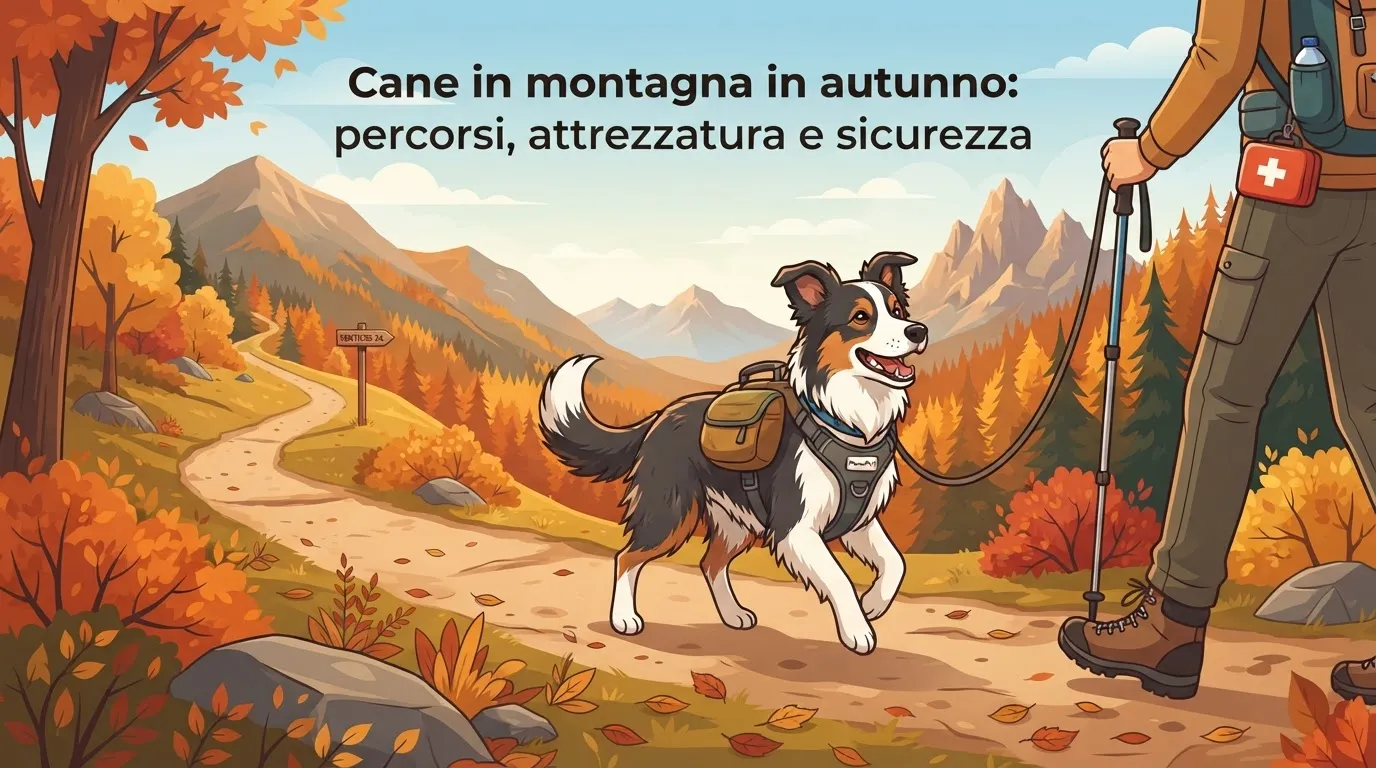
Taking your dog to the mountains in autumn can be an enjoyable experience, but it requires more planning than a summer walk. Days are shorter, weather can change quickly, and mud, wet leaves or early patches of ice can make even simple dog-friendly trails challenging.
Choosing a suitable route, preparing essential gear and knowing when to stop can make hiking with your dog safer while respecting their pace and the natural environment.
Choosing Suitable Routes for Your Dog in the Mountains in Autumn
A good route should be more than scenic: it needs to match your dog’s age, physical condition and temperament. In autumn, it is sensible to choose familiar, well-marked trails with options for a quick return if rain, fog or tiredness develops.
Before setting off, carefully consider:
- Distance and elevation gain: increase the difficulty gradually, especially if your dog is not used to walking on uneven ground.
- Ground conditions: loose stones, roots, slippery leaves and mud require extra attention; avoid exposed sections or via ferrata routes that are not suitable for animals.
- Access to water: streams and fountains may be seasonal. Do not assume that you will find reliable water sources.
- Local rules: parks, nature reserves and mountain huts may have specific leash requirements or access restrictions. Check in advance with the relevant authorities.
- Wildlife and grazing areas: in autumn, keeping your dog under control is particularly important to avoid disturbing wild animals or approaching livestock.
If your dog is elderly, very young, brachycephalic or has joint problems, ask your veterinarian whether the planned activity is appropriate.
Checking the Weather, Daylight and Trail Conditions
Mountain weather in autumn can change quickly. Clear skies at the start do not rule out cold winds, rain or fog at higher elevations. Check the forecast for the specific area and also look for any local warnings.
Plan your outing during the central hours of the day and allow plenty of time for the return journey. Sunset comes early, and reduced visibility makes it harder to follow trail markers, keep track of your dog and spot obstacles on the ground.
Cancel or change your plans if you encounter:
- thunderstorms, strong winds or dense fog;
- temperatures that are unsuitable for your dog’s coat and endurance;
- early snow, ice or dangerously unstable ground;
- signs of tiredness during the first part of the route.
Turning back is not a failure: it is a responsible hiking safety decision.
Dog Hiking Gear: What You Really Need to Bring
Dog hiking gear should be practical, lightweight and suitable for the expected conditions. It is best to pack your bag the evening before and check that everything is in good condition.
Useful items include:
- a properly adjusted, sturdy and comfortable harness;
- a durable leash, to use on exposed, busy or regulated sections;
- enough water for both of you and a collapsible bowl;
- your dog’s usual treats, useful during short breaks;
- waste bags;
- a small towel for paws and coat;
- an LED light or reflective accessory to improve visibility;
- a lightweight blanket or coat if your dog is sensitive to damp and cold;
- a first-aid kit for people and animals, together with the contact details of your regular veterinarian.
Avoid making your dog carry a heavy pack or introducing one for the first time on the day of the hike. If you are considering protective booties, introduce them gradually during short walks: not every dog tolerates them.
Managing Pace, Breaks and Signs of Discomfort
When hiking with a dog, the pace should be adapted to the most tired member of the group. Take short, regular breaks, offer water before your dog appears thirsty and observe their behavior.
Watch for signs such as unusual slowing down, limping, trembling, excessive panting, reluctance to continue, disorientation or persistent licking of the paws. Stop in a sheltered spot, check for cuts, foreign objects or irritation and consider returning.
Do not give human or veterinary medication without professional guidance. If your dog is injured, has difficulty breathing, shows marked weakness or develops other concerning symptoms, contact a veterinarian or the appropriate emergency services depending on the situation.
Preparing a Simple Emergency Plan
Before leaving, tell a trusted person your route, expected return time and the number of people taking part. Bring a fully charged phone and a portable battery, and, whenever possible, download area maps for offline use.
Make sure your dog’s identification tag and details are up to date. PawsPet GPS walks can help you record your route and keep outing information organized, while reminders are useful for remembering checkups, parasite treatments or veterinary appointments before setting off.
Practical preparation makes it easier to handle unexpected situations and leaves more room to enjoy the hike.
FAQ
Does my dog always have to be on a leash in the mountains?
It depends on local rules and trail conditions. A leash is recommended near roads, cliffs, other hikers, wildlife, grazing animals and protected areas. Always check the regulations for the location.
How much water should I bring for my dog on a hike?
It depends on the duration, temperature, your dog’s weight and the intensity of the route. It is better to bring more than you expect to need and not rely exclusively on natural water sources, which may be unavailable or unsuitable for drinking.
How can I protect my dog’s paws in autumn?
Check them during and after the walk, especially if the ground is muddy, rocky or cold. Remove any debris from between the paw pads, dry the paws thoroughly and ask your veterinarian for advice if you notice wounds, pain or persistent irritation.
With a realistic route and the right gear, autumn can offer wonderful days to share outdoors. Organize your pet’s outings and health information with PawsPet, so you can set off with greater peace of mind.