
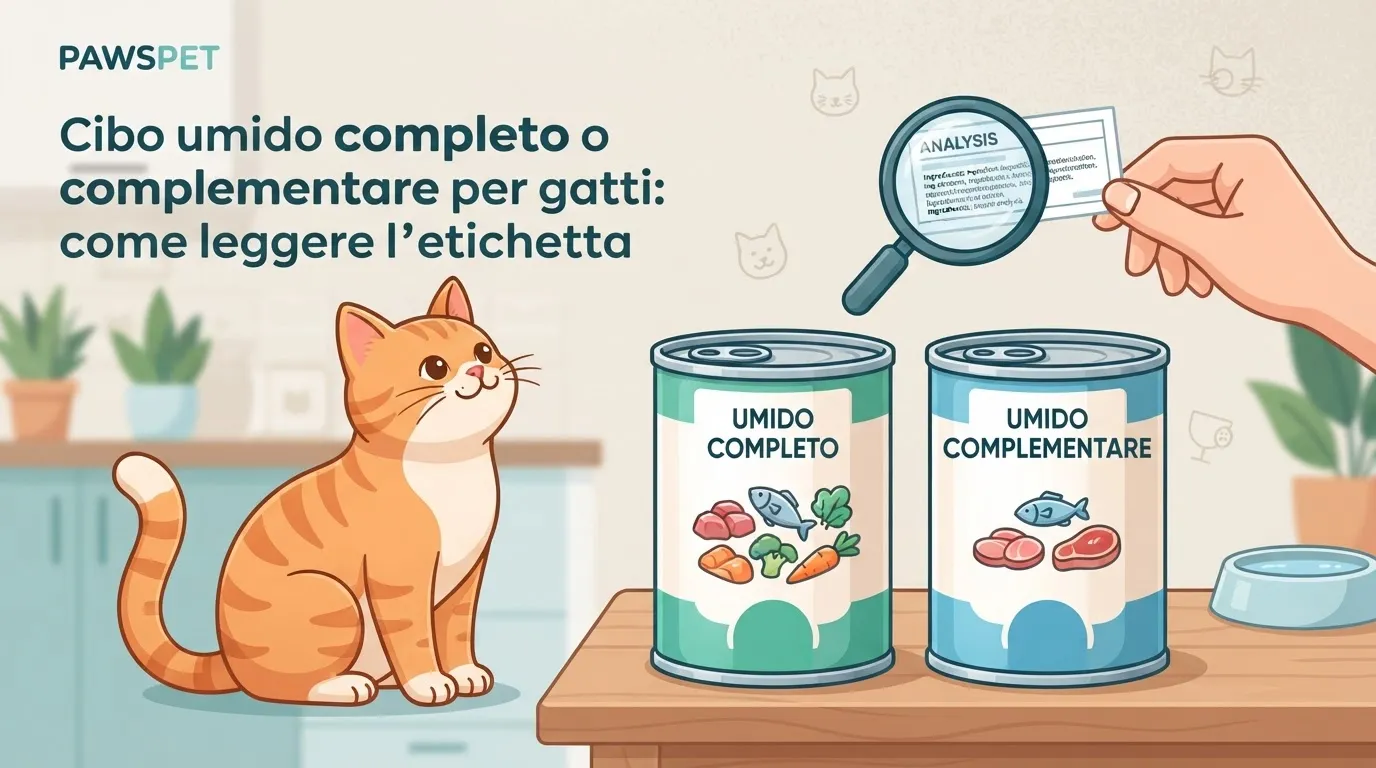
Choosing between complete or complementary cat food matters because the two products serve different purposes in a cat’s daily diet. A cat wet food label contains the information you need to make a more informed decision: you simply need to know where to find it and how to interpret it.
Complete or complementary cat food: the essential difference
A complete food is formulated to provide, when served in the recommended amounts, all the nutrients a cat needs during a specific life stage. It can therefore form the basis of the daily diet on its own, provided it is suitable for the cat’s profile: adult, kitten, senior or a cat with specific needs assessed by a veterinarian.
Complementary cat food, on the other hand, does not necessarily contain a nutritional balance sufficient to be the only food offered during the day. It can be useful for varying textures and flavours, making a meal more appealing or providing a welcome addition, but it should be included in an already balanced diet.
The first check is simple: look for wording such as:
- “Complete food for cats”: suitable as a main meal.
- “Complementary food for cats”: to be combined with other complete foods.
- Terms such as “snack”, “topping” or “soup”: these often indicate a product intended as an extra, but always check the definition given on the label.
Do not rely only on pictures of fillets, fresh meat or appealing ingredients: by themselves, they do not show that complete wet food for cats meets the cat’s daily nutritional needs.
How to read a cat food label step by step
A cat food label may seem full of technical terms, but some elements can help you make a practical choice.
Product description and intended species
Check that the product is intended for cats and for the appropriate life stage. A cat’s nutritional needs are not the same as a dog’s: regularly using food designed for another species is not appropriate.
Also check whether the product is intended for:
- adult cats;
- kittens;
- pregnant or nursing cats;
- senior cats;
- specific nutritional needs.
If your cat has a medical condition, digestive problems, weight loss or needs a veterinary diet, make the choice together with the treating veterinarian.
Composition and ingredient order
The “composition” section lists the ingredients present in the product. Ingredients are generally listed in descending order of quantity at the time of processing. Read the description carefully and do not assess a food solely because a word such as “chicken”, “tuna” or “beef” appears on the front of the package.
A complete assessment considers the whole list:
- declared protein sources;
- any cereals, vegetables or by-products;
- oils and fats;
- broth, cooking water or gelatine;
- ingredients your cat is already known not to tolerate.
If your cat has shown unwanted reactions after eating a product, do not eliminate entire ingredient groups on your own: note the product, amount and symptoms, then ask your veterinarian for advice.
Nutrients, additives and daily portions
After the composition, you will often find the analytical constituents, such as protein, fat, fibre, ash and moisture. These values are useful for comparing products in the same category, but they should not be interpreted in isolation.
High moisture is a common characteristic of cat wet food and can contribute to fluid intake through the meal. However, your cat should always have access to fresh water.
Also check the section on nutritional additives. A complete food may contain added vitamins, minerals and other nutrients to support the balance of the formulation. Their presence is not a negative sign: what matters is that the product is clearly identified as complete and suitable for cats.
Finally, check the recommended daily amounts. These are guidelines and may vary according to:
- weight and body condition;
- age and activity level;
- neutering;
- other foods or treats;
- health status.
Monitor your cat’s appetite, stools, energy levels and weight changes over time, without changing the diet too quickly.
How to use complementary food without unbalancing the diet
Complementary food can be a pleasant addition, but it should be treated as such. If you offer it frequently and reduce the complete food too much without a plan, the diet may become less balanced.
For practical management:
- choose a complete food as the usual base;
- offer complementary food in small portions, following the manufacturer’s instructions;
- include treats and rewards in the total amount offered each day;
- introduce dietary changes gradually, especially for sensitive cats;
- avoid leaving wet food in the bowl for many hours, particularly in warm weather.
Keeping track of meals can help prevent double portions or frequent changes. With PawsPet, you can organise reminders for purchases, meals and veterinary check-ups, while keeping a clearer overview of your cat’s routines.
FAQ
Can I feed my cat only wet food?
Yes, if it is a complete food suitable for your cat and it is served in the appropriate amount. If you have questions about weight, age or health conditions, ask your veterinarian.
Is complementary food lower quality?
Not necessarily. It simply has a different purpose: it complements or enriches the diet, but it is not designed to be the only daily source of nutrition.
How should I change my cat’s wet food?
Introduce the new food gradually by mixing it with the previous one and increasing its proportion over several days. If persistent digestive problems appear or your cat refuses the food, consult your veterinarian.


