When a dog pees in the house, it is tempting to assume that the problem is simply a lack of training. However, especially when an adult dog starts having accidents after a period of regular habits, it is important to consider both possible medical causes and changes in routine or surroundings.
Observing when, where, and how often it happens can help you choose the most useful approach: a veterinary check when needed, thorough cleaning, and consistent training without punishment.
First rule out possible medical causes
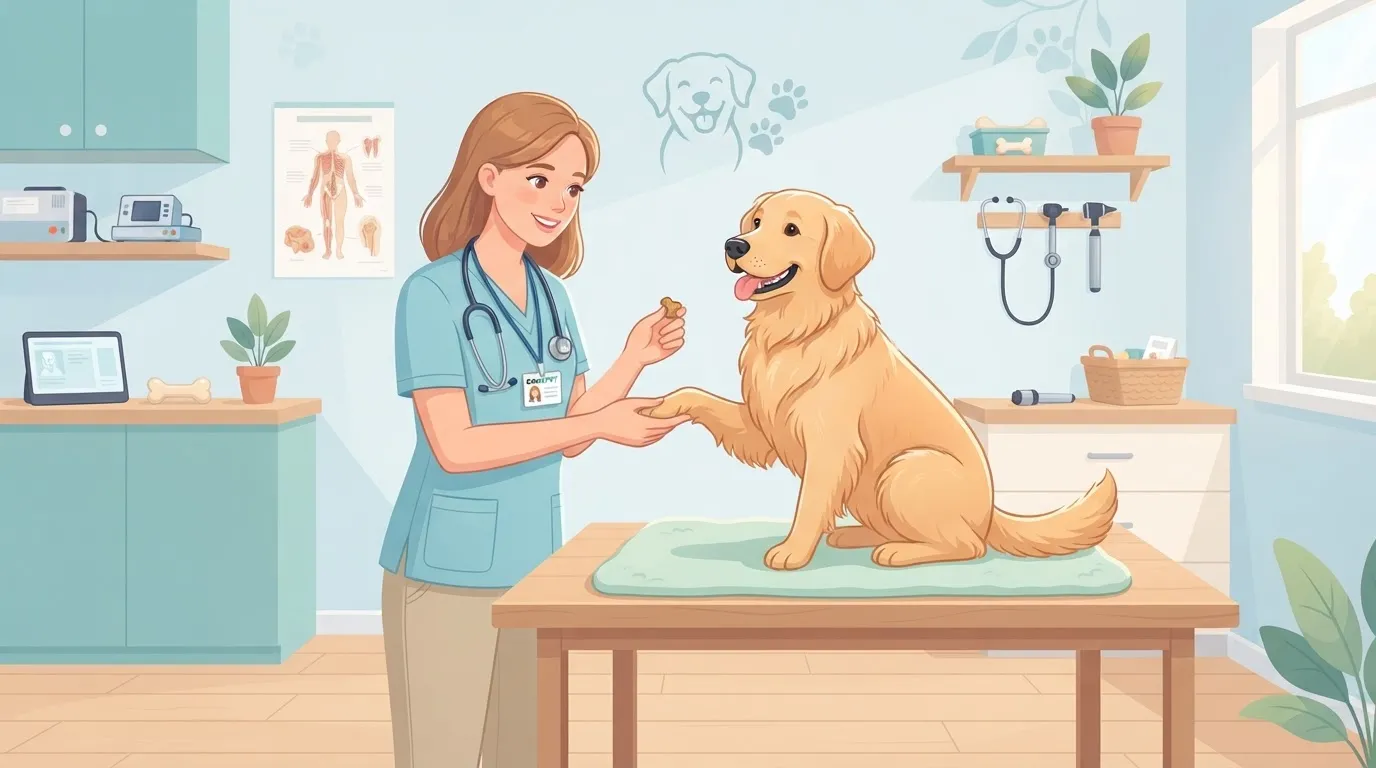
An isolated accident can happen, for example after many hours without going outside or during a period of intense excitement. If the behavior is new, frequent, or accompanied by other signs, the prudent first step is to contact your veterinarian.
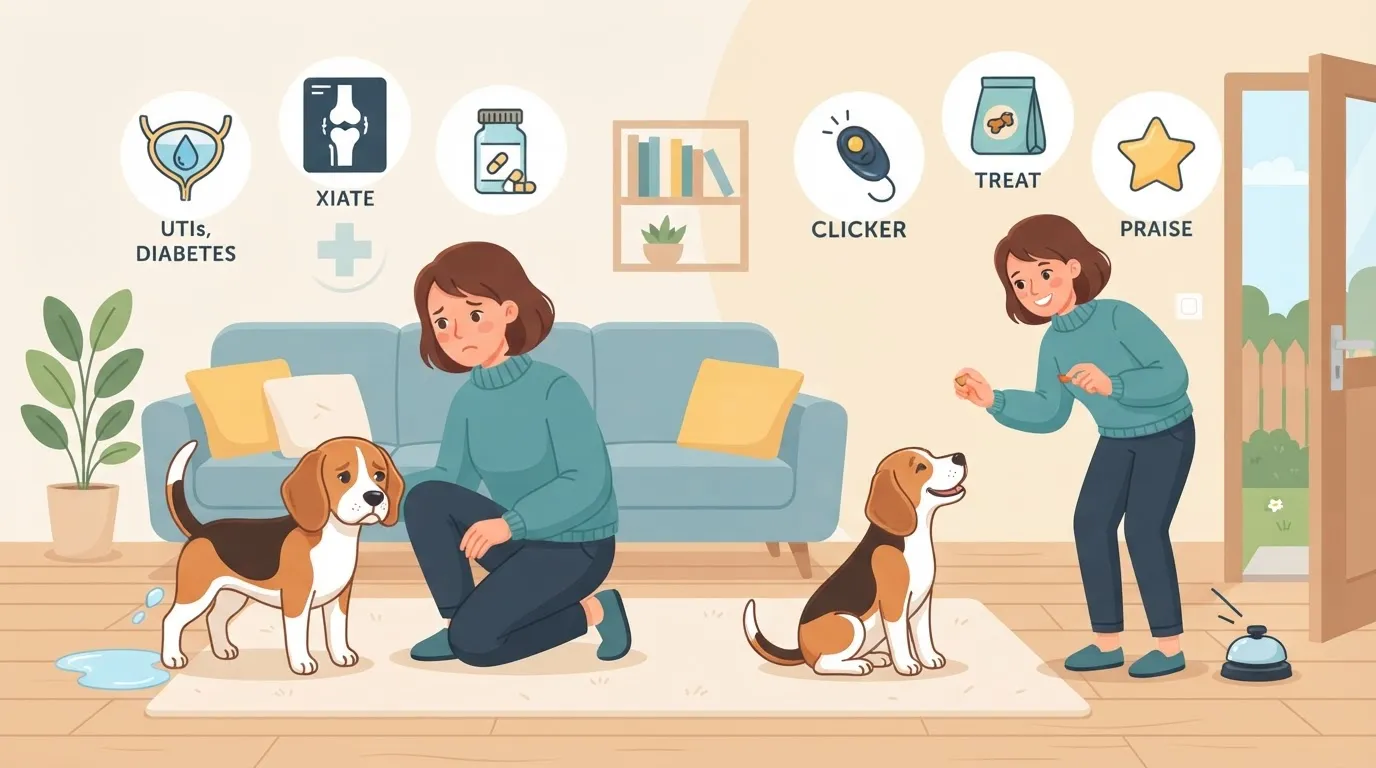
Possible causes of peeing in the house include urinary problems, pain, age-related changes, medication effects, or difficulty holding urine. Dog incontinence, for example, may appear as involuntary leakage while the dog is resting or sleeping and should not be interpreted as disobedience.
Arrange a veterinary evaluation if you notice:
- a sudden increase in thirst or urine volume;
- frequent attempts to urinate with little urine produced;
- straining, vocalizing, or signs of discomfort while urinating;
- urine with an unusual smell, very dark urine, or unusual traces;
- leakage during sleep;
- a sudden change in an adult dog that was previously house-trained.
Do not restrict your dog’s water to “solve” the problem. This could affect the animal’s well-being and make the signs you need to report to the veterinarian less clear.
Understanding whether your dog is peeing indoors because of habits or context
After a health problem has been ruled out, observe the pattern of the accidents. A puppy is still developing bladder control and needs frequent trips outside; a recently adopted dog, on the other hand, needs to learn the rules of its new home. Moving house, guests, new animals, longer absences, or changes in schedule can also have an effect.
Keep a brief diary for several days, recording:
- the time and duration of outdoor trips;
- when the accident occurs;
- the approximate amount of urine;
- the place chosen by the dog;
- the preceding activity, such as play, sleep, meals, or someone arriving;
- any signs of stress or excitement.
This information can help you recognize whether your dog has too few opportunities to go outside, has trouble relaxing outdoors, or has accidents in specific situations. It can also be useful to your veterinarian or a qualified dog trainer.
How to teach your dog to go outside without punishment
Teaching a dog to toilet outside requires prevention, clarity, and positive reinforcement. Scolding a dog after finding urine does not connect the punishment with the earlier action. Instead, it may increase anxiety and cause the dog to hide when it needs to urinate.
Set up a predictable outdoor potty routine. Take your dog outside especially:
- after waking up;
- after meals, play, or a long rest;
- before leaving the dog alone and as soon as you return;
- before bedtime.
When your dog urinates outside, reward it immediately with a calm voice, a gentle touch, or a treat appropriate for its diet. The reward should come within a few moments, in the correct location, so the connection is clear.
If you catch your dog peeing indoors, interrupt calmly only if you can do so without frightening it and take it outside. If it has already finished, clean up without comment. Temporarily increase the number of outdoor trips and limit access to rooms where you cannot supervise the dog.
Cleaning properly and making the home easier to manage
Residual odor can encourage a dog to return to the same spot. First absorb the liquid without rubbing, then use a product specifically designed to remove organic residue. Avoid strongly scented products or those containing irritating substances, and let the area dry completely before allowing access again.
In the meantime, simplify the environment:
- protect carpets or surfaces that are difficult to wash;
- temporarily block access to frequently soiled areas;
- create a quiet place for resting;
- avoid sudden changes to the daily routine;
- make sure everyone in the household follows the same rules.
To avoid losing important observations, PawsPet can help you organize reminders for outdoor trips, veterinary appointments, and notes about your dog’s routine.
FAQ
How long does it take to teach a dog to go outside?
It depends on the dog’s age, history, consistency of outdoor trips, and any health or environmental factors. Daily regularity and immediate reinforcement are more effective than intensive but occasional efforts.
Does an adult dog that pees indoors do it out of spite?
No, “spite” is not a useful explanation. A sudden change may be related to health, stress, an unsuitable routine, or difficulty being left alone. Observe the context and seek professional support if the problem continues.
When is a dog trainer needed?
A qualified trainer may be helpful if, after medical problems have been ruled out, the dog continues to have accidents indoors, shows fear during outdoor trips, or is experiencing difficult changes. A personalized plan can help prevent mistakes and counterproductive punishment.