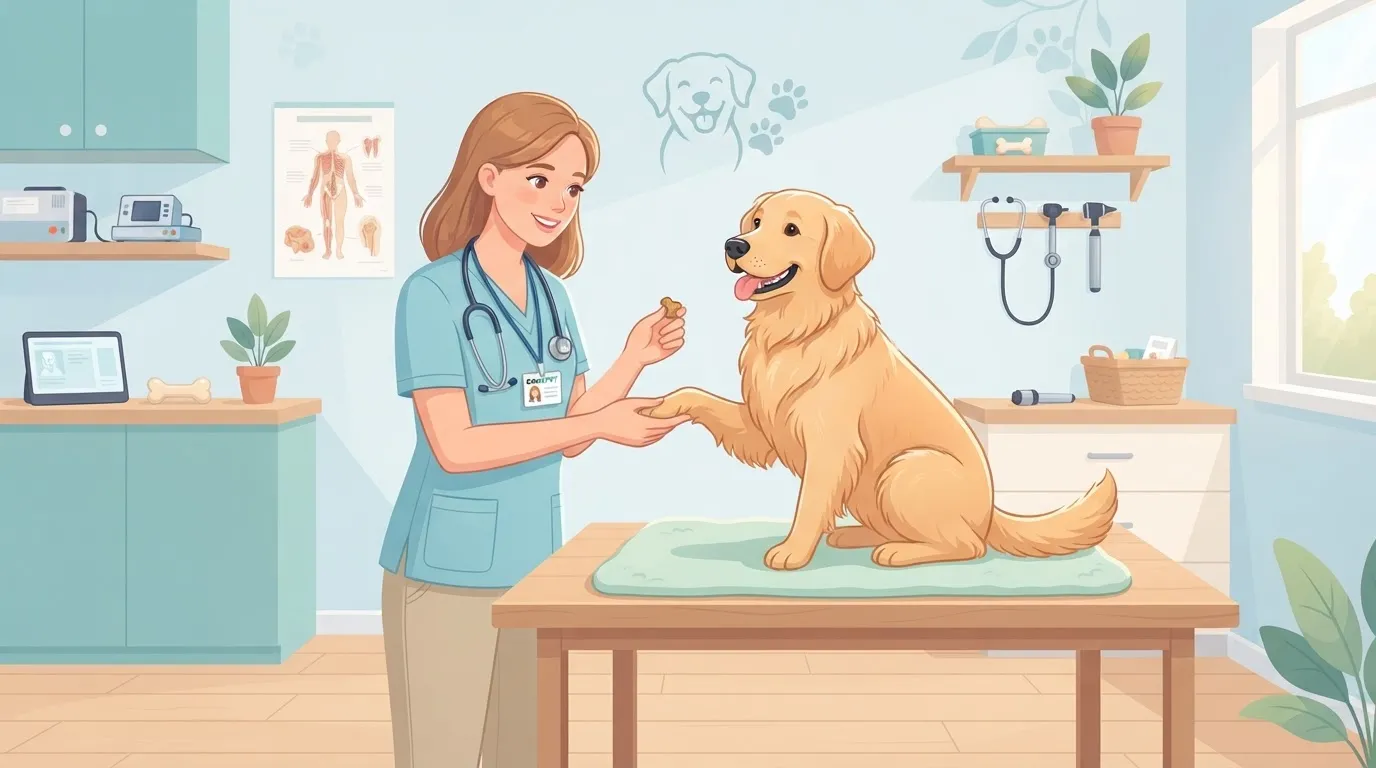
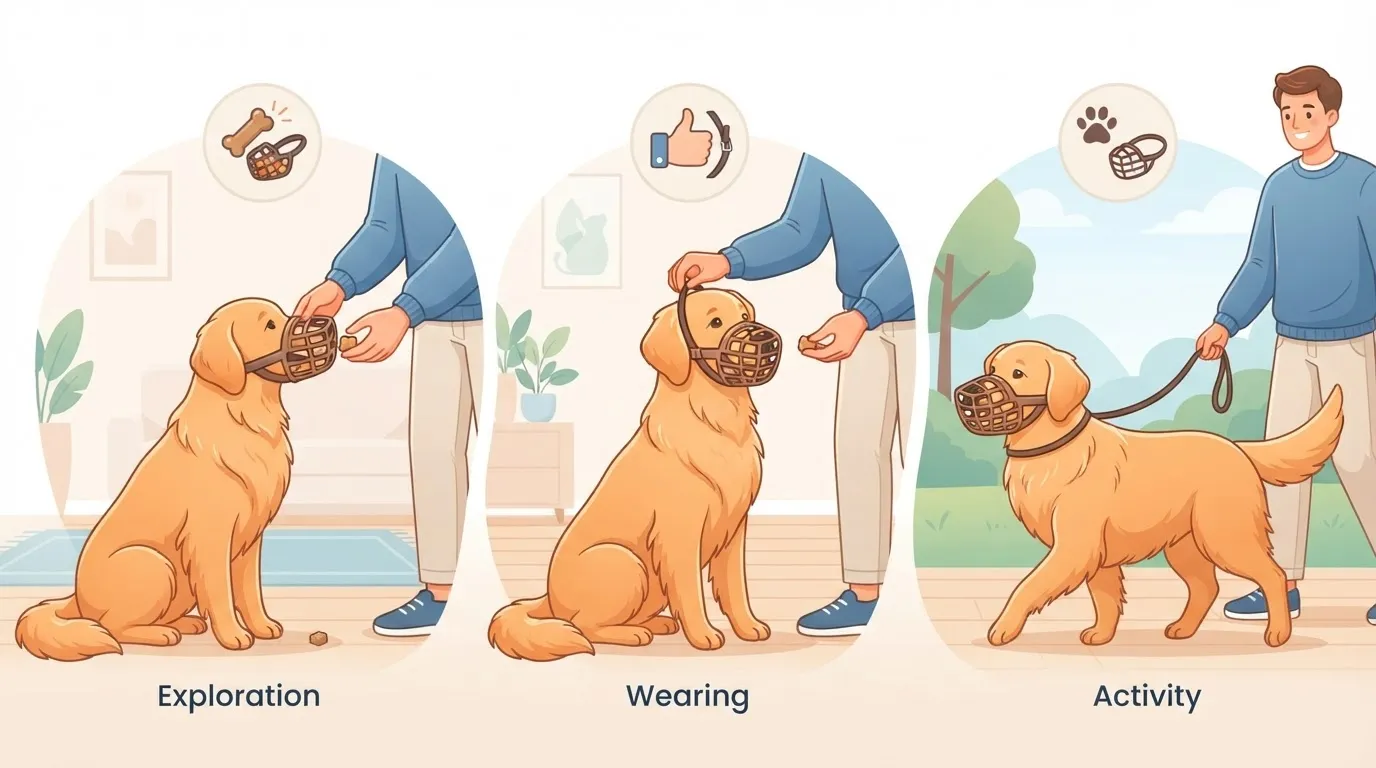
Cooperative care for dogs helps make everyday activities such as brushing the coat, checking the paws, cleaning the ears, or preparing for a veterinary visit easier to manage. The goal is not to “make the dog stay still” at all costs, but to teach them to cooperate gradually and communicate when they need a break.
Practicing handling calmly can reduce tension and conflict while also improving preparation for veterinary visits and care at home.
What cooperative care is and why it matters
Cooperative care, also known as cooperative care for dogs, is a training approach based on choice, predictability, and positive reinforcement. The dog learns small behaviors that are useful during care, such as resting their chin on your hand, offering a paw, or staying on a mat.
This does not mean every procedure will always be easy: in an emergency or when pain is involved, a veterinarian may need to intervene quickly. However, dog handling exercises practiced over time can make many non-urgent situations calmer.
Practical benefits include:
- greater tolerance of touch and equipment;
- clearer signs of comfort or discomfort;
- less need to physically restrain the dog;
- better-organized care at home;
- potentially less stressful professional visits.
The central rule is simple: go slowly and stop before the dog feels overwhelmed.
Before you begin: observe your dog’s body language
To get your dog used to handling, offering treats is not enough: you also need to observe how they respond. A relaxed dog may approach voluntarily, maintain a soft posture, eat willingly, and resume the exercise without hesitation.
On the other hand, reduce the difficulty or take a break if you notice signs such as:
- moving their head away from your hand;
- licking their nose, frequent yawning, or suddenly becoming still;
- a stiff body, low tail, or ears held far back;
- trying to move away, growling, or snapping;
- refusing a treat in a situation they would normally enjoy.
Do not punish growling: it is important communication. Ignoring or correcting it can remove an early warning signal without addressing the discomfort. If your dog reacts intensely, may be in pain, or has bitten before, ask a veterinarian and a qualified trainer experienced in cooperative care for support.
Dog handling exercises: a practical progression
Choose a quiet place, keep sessions very short, and use treats that suit your dog. Work on one area of the body at a time and finish while your dog is still calm.
1. Build a consent signal
Teach your dog an easy position to maintain, such as resting their chin on the palm of your hand or on a folded towel. Reward the position for a few moments, then allow your dog to move away.
This position becomes a practical signal: if your dog keeps their chin down, you can continue with a gentle touch; if they lift it, you stop. This is not “absolute” consent in the human sense, but it is a concrete way to respect your dog’s communication during training.
2. Touch, reward, and stop
Begin with areas that are generally less sensitive, such as the shoulder or side. Touch for one second, reward, and remove your hand. Repeat a few times.
Gradually increase only one element at a time:
- length of contact;
- gentle pressure;
- more difficult areas, such as paws or ears;
- the position you ask your dog to maintain;
- the presence of an object, such as a brush or gauze.
If your dog becomes stiff, return to the previous step. Progress does not have to be linear: some areas need more time.
3. Introduce tools without using them immediately
Many dogs tolerate a hand but find nail clippers, brushes, or ear-cleaning materials more difficult. Show the tool from a distance, reward your dog for looking at it or approaching voluntarily, and then put it away.
Only later should you bring it close to the body without making contact. For example, before brushing a paw, reward your dog for seeing the brush, then for sniffing it, and finally for one gentle stroke.
How to prepare your dog for real visits and care
Home exercises do not replace a clinical examination, but they make veterinary visit preparation more practical. You can practice common actions separately: briefly lifting the lip, touching the ear, running a hand along the back, or simulating a short paw check.
Avoid these common mistakes:
- restraining your dog when they try to move away;
- practicing for long sessions “until they get used to it”;
- practicing only when care is actually needed;
- moving straight to the most sensitive areas;
- ignoring sudden changes in behavior.
If an area that was previously tolerated becomes painful or your dog suddenly refuses contact, contact your veterinarian: the discomfort may have a physical cause that training alone cannot resolve.
Recording exercises, reactions, and care deadlines can help you stay consistent. With PawsPet, you can use health-management reminders to schedule short sessions and note what works best.
FAQs about cooperative care for dogs
How long should a cooperative care session last?
A few minutes is enough, especially at the beginning. It is better to finish after one or two positive experiences than to continue until the first signs of stress appear.
Can I use cooperative care to trim my dog’s nails?
Yes, by preparing each stage separately: seeing the tool, touching the paw, applying gentle pressure, and hearing the nail clippers. If your dog is very worried or the nails need urgent attention, ask your veterinarian how to proceed safely.
What should I do if my dog growls during handling?
Stop, increase the distance, and assess the situation. Do not punish the growl. A veterinarian can check for pain or other physical problems, while a behavior professional can create a gradual training plan.
Cooperative care requires patience, but every small step makes care more respectful and easier for both of you to understand. Establish a sustainable routine, observe your dog, and use PawsPet to keep track of reminders and information related to their health.