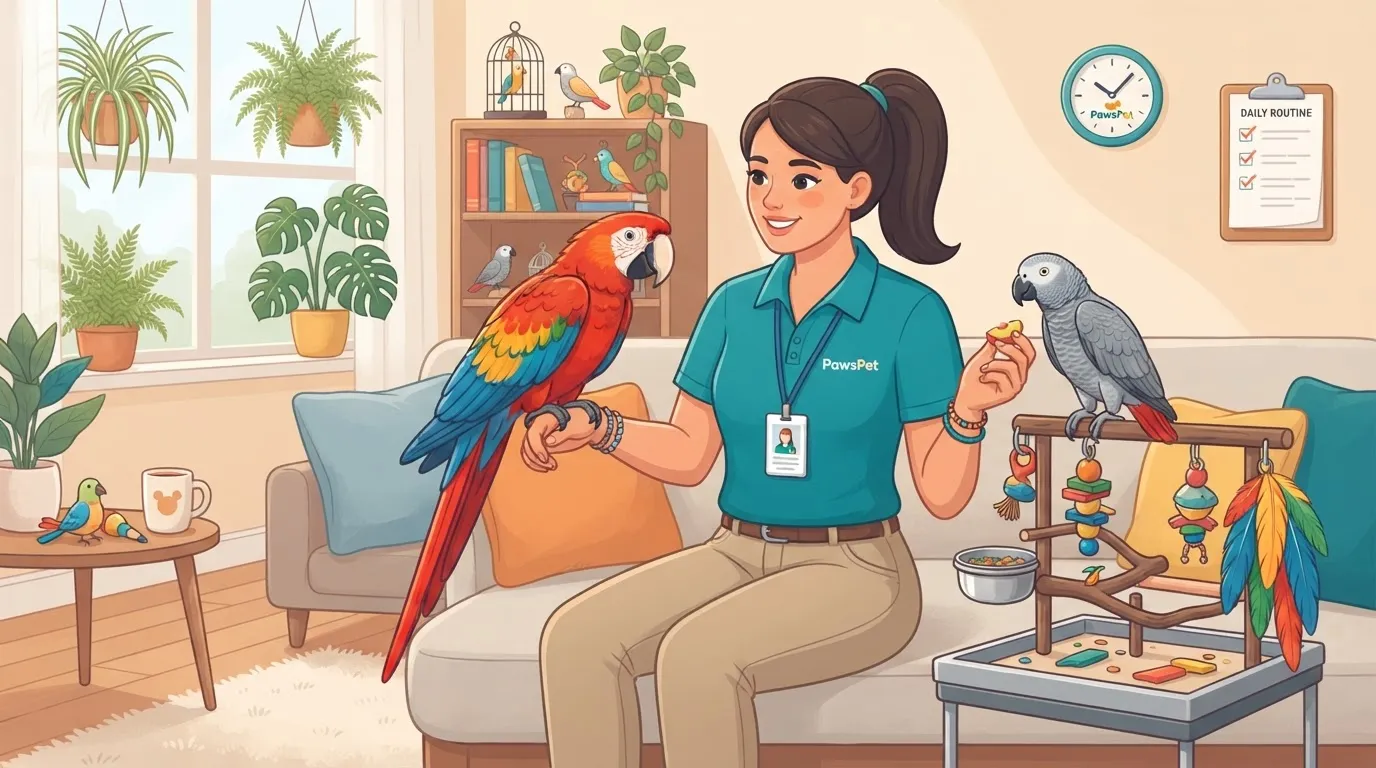
Leaving a parrot during a trip requires more than simply having someone fill the bowls and change the water each day. A parrot pet sitter should know how to respect the bird’s habits, behavioral signals, and species-specific safety needs, making your absence easier for both the animal and you.
In most cases, in-home parrot care is the most suitable option: the bird remains in its familiar environment, with its usual routines and surroundings. The professional should still be chosen carefully.
Why parrots have particular needs
Parrots are intelligent, social animals that are highly sensitive to change. A sudden absence, a different routine, or careless aviary management can cause stress. Some birds become quieter, while others vocalize more or refuse activities they usually enjoy.
A reliable bird sitter should not try to “replace” the owner, but should maintain the animal’s daily life as much as possible:
- usual times for meals, water, and rest;
- food the parrot already knows;
- regular cleaning of bowls, the cage bottom, and soiled areas;
- interaction that respects the bird’s individual personality;
- safety checks for the cage, aviary, fastenings, and toys;
- observation of appetite, droppings, activity level, and general attitude.
Avoiding unnecessary changes is essential. While you are away is not the right time to introduce new foods, demanding training, or objects that could frighten the bird.
What skills to look for in a parrot pet sitter
Experience with dogs or cats can be useful, but it is not enough for parrot care during vacations. Look for someone who understands the basics of domestic bird care and is willing to follow your instructions precisely.
During the first conversation, assess whether the sitter can speak concretely about:
- differences between parrot species and sizes;
- the risk of escapes when opening doors, windows, or the aviary;
- the importance of avoiding smoke, sprays, strong fragrances, and cooking fumes;
- daily hygiene without using potentially irritating products;
- caring for a wary, territorial bird or one accustomed to only one person;
- the need to avoid forcing physical contact.
A good professional will not promise to quickly build a relationship with every parrot. Instead, they should suggest a gradual, safe approach that respects the bird’s signals. If your parrot does not like being handled, the sitter must be able to manage food, water, and cleaning without chasing the bird or causing distress.
Routine and instructions: what to prepare before leaving
To organize parrot care during vacations, prepare a simple but complete information sheet. The aim is to reduce uncertainty and improvised decisions, especially if you will be away for several days.
Include the following information:
- Meals and water: quantities, times, permitted foods, and foods to avoid. Leave enough supplies, clearly labeled and easy to identify.
- Daily routine: lighting, rest, interaction, any time outside the cage, and safe ways to encourage the bird to return.
- Aviary management: cleaning instructions, replacement of materials, and checks for locks, hooks, and points that must never be left open.
- Usual behavior: helpful words or gestures, preferences, known fears, reactions to strangers, and boundaries to respect.
- Important contacts: your phone number, a trusted person, an avian or exotic-animal veterinarian, and instructions on what to do in an emergency.
Arrange at least one meeting before departure, preferably including a practical visit. The pet sitter can observe the routine, learn how the cage fastenings work, and understand how the parrot reacts to their presence. For longer absences, a short trial visit can be especially useful.
Questions to ask when choosing a reliable bird sitter
Knowing how to choose a bird sitter means checking their experience, approach, and organizational skills. Do not limit yourself to asking whether they “love animals”; focus on practical questions.
- Have you cared for parrots or other domestic birds before? What kinds of needs did they have?
- How many visits per day can you guarantee, and how long will you stay?
- How do you handle a parrot that does not want to leave or return to its cage?
- What precautions do you take to prevent escapes and household accidents?
- Can you send updates after visits, through messages or photos?
- Are you willing to follow the veterinarian’s instructions if necessary?
- Do you have experience managing an aviary, not just a small cage?
Be cautious with anyone who minimizes your instructions, suggests taking the bird to their own home without a careful assessment, or seems uncertain about basic safety practices. Consistent care matters more than geographical proximity.
FAQ
Is it better to leave a parrot at home or take it to the pet sitter?
It depends on the bird’s personality and the facilities available, but in-home care is often less stressful because it preserves the familiar environment, cage, and routine. Moving the bird and introducing it to a new aviary should be considered carefully.
How many visits does a parrot need during a vacation?
The frequency depends on the species, health status, setup, and the bird’s actual level of independence. Arrange regular visits that are long enough to allow for checking, cleaning, and safe interaction.
What should I do if the parrot shows a sudden change?
The pet sitter should notify you immediately and contact the designated veterinarian, especially if they notice reduced appetite, lethargy, breathing difficulties, injuries, or unusual behavior. It is not appropriate to improvise remedies or treatments.
A careful choice, written instructions, and a meeting beforehand make care much more reliable. With PawsPet, you can organize your pet’s information and evaluate professionals through the marketplace, keeping routines, contacts, and useful reminders readily available.