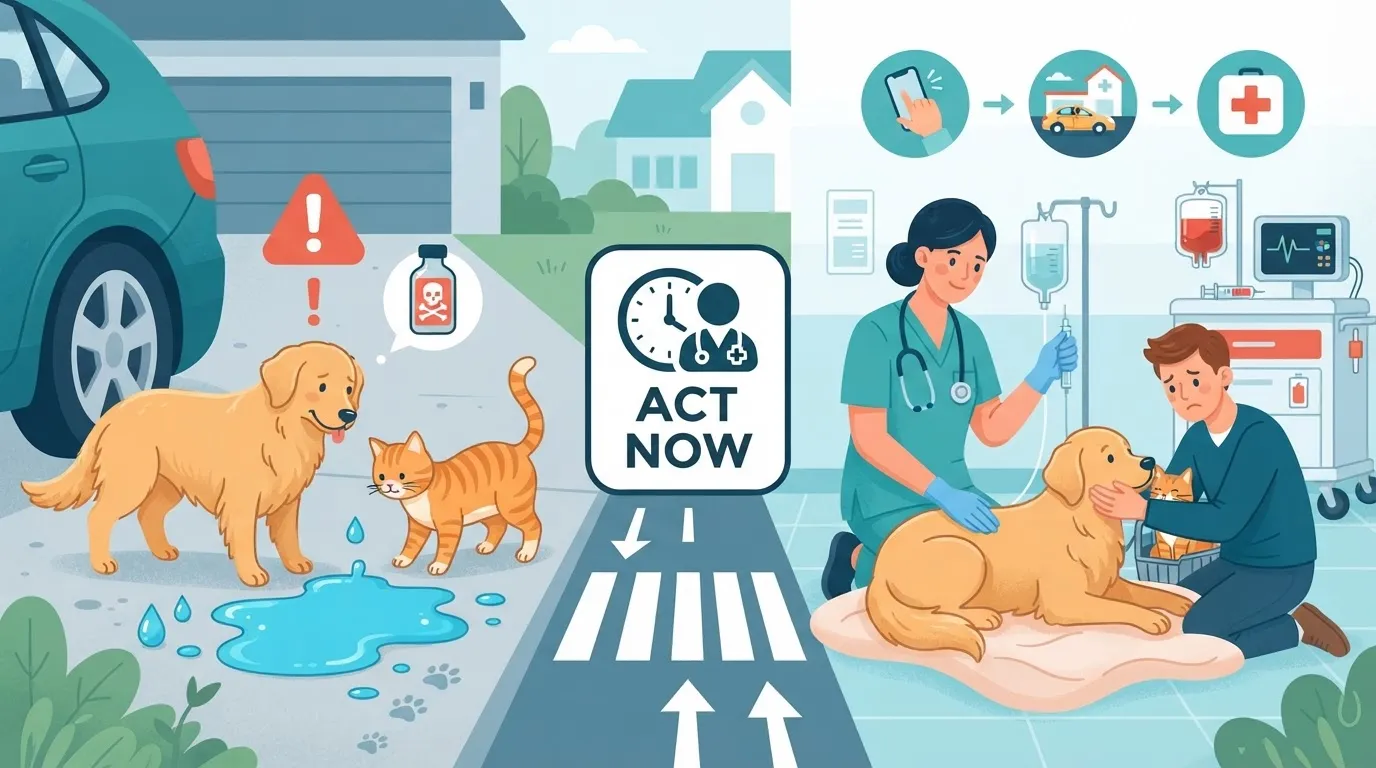
Toxic antifreeze for pets is a real risk, especially during the colder months, but it can be found year-round in garages, yards, cars and maintenance areas. Dogs and cats may accidentally lick it from a puddle, an open container, or contaminated fur and paws: even suspected exposure requires immediate veterinary contact.
The most important rule is simple: do not wait for symptoms to appear. If antifreeze poisoning in a dog is possible or your cat may have ingested it, time is critical.
Why antifreeze is dangerous for dogs and cats
Many antifreeze products contain ethylene glycol, a substance that can sometimes have an appealing smell and taste to animals. Once ingested, it may be converted by the body into harmful compounds, with serious effects, especially on the kidneys and nervous system.
The danger is not limited to a container of undiluted antifreeze. Exposure can also happen through:
- leaks from a car radiator or engine;
- puddles in a garage, driveway or parking area;
- containers left open or products transferred into unlabelled bottles;
- cloths, rags and tools used during maintenance;
- contaminated paws or fur after a walk or access to a utility area.
The risk depends on the substance involved, the amount and the animal’s characteristics. For this reason, it is not safe to estimate the amount ingested at home or assume that it is harmless.
What to do immediately if ingestion is suspected
If you saw your pet lick a suspicious liquid, found a container tipped over, or noticed residue on the muzzle, paws or fur, act as though exposure may have occurred.
- Move the animal away from the source and prevent other pets from entering the area.
- Contact your regular veterinarian, a veterinary clinic or an emergency veterinary hospital immediately. Share the suspected time of the incident and any available information.
- Take the original container with you, if this can be done safely. A clear photo of the label may help identify the product.
- Carefully remove the product from the fur or paws, preventing the animal from licking itself. Use lukewarm water and a mild cleanser only if the veterinarian does not advise otherwise.
- Follow the professional’s instructions only while travelling to the clinic and waiting for the examination.
Do not induce vomiting or give milk, food, salt, activated charcoal, medication or home remedies without specific veterinary instructions. These measures may be ineffective or make the situation worse.
Symptoms to know about, without waiting for them to appear
Ethylene glycol poisoning may cause vague early signs. An animal may seem lethargic, unsteady or unusually agitated; nausea, vomiting, increased thirst or more frequent urination may occur. In some cases, symptoms appear to improve for a while, but this does not mean the danger has passed.
Contact a veterinarian urgently if you notice:
- marked drowsiness, weakness or difficulty standing;
- repeated vomiting, excessive drooling or unusual behaviour;
- altered breathing, tremors or seizures;
- clear changes in thirst or urine output;
- inability to urinate or severe lethargy.
These signs can be caused by many different conditions: do not attempt to diagnose the problem yourself. If your cat ingests antifreeze, or may have done so, prompt veterinary assessment remains the priority, even if the cat appears well.
Preventing antifreeze poisoning at home and outdoors
Winter pet safety depends on a few practical habits. Store antifreeze and other automotive fluids in their original, tightly closed containers, inside a cabinet that pets cannot access. Never transfer chemicals into drink bottles or containers without labels.
After using a car or carrying out maintenance work:
- check for leaks beneath the vehicle;
- clean drops and residue immediately, following the product instructions;
- dispose of contaminated cloths and materials correctly;
- keep dogs and cats away from garages, basements and yards during the work;
- wash your pet’s paws if it has walked through an area containing unknown liquids.
Consider alternative products only after carefully reading the label: “less toxic” does not mean safe to ingest. Keep the same precautions in place.
Organising a rapid response to emergencies
During an emergency, it is easy to forget useful details. Keep your veterinarian’s and preferred clinic’s contact information up to date, along with the location of your pet’s health records. With PawsPet, you can centralise health information and set useful reminders, for example for seasonal check-ups or contact updates.
Acting quickly without trying improvised remedies is the most protective choice. If antifreeze contact is suspected, call your veterinarian and provide all available information.
FAQ
How much antifreeze is dangerous for a dog or cat?
There is no safe amount that can be estimated at home: the danger depends on the product, the animal and the exposure. Even suspected ingestion of a small amount deserves immediate veterinary contact.
If my pet has no symptoms, can I wait?
No. Symptoms may appear later or seem mild at first. If antifreeze contact is possible, speak to a veterinarian immediately rather than waiting for changes in behaviour.
Can I give my pet water or milk after ingestion?
Do not give milk, medication or other home remedies. For water and food, follow the veterinarian’s instructions based on the specific situation.