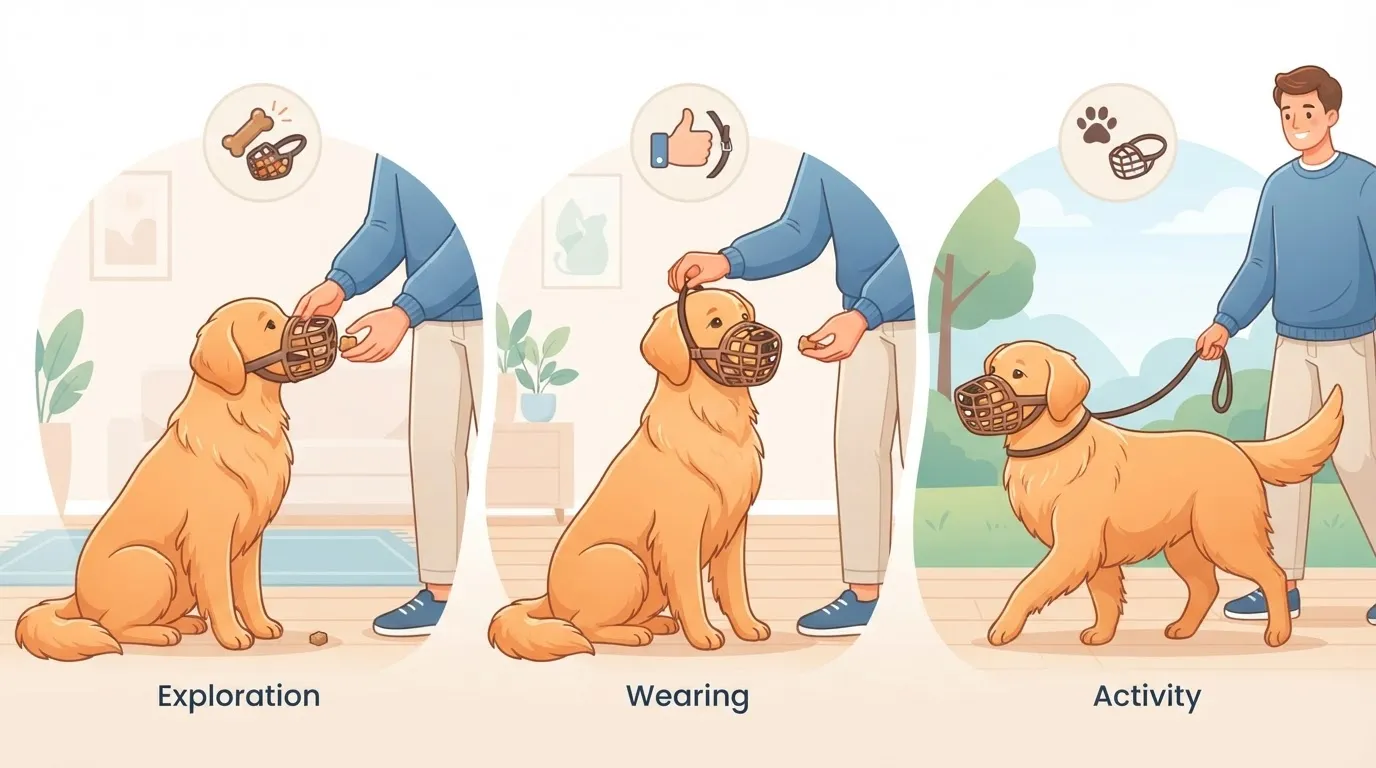
Getting your dog used to a muzzle does not mean preparing them for punishment or a negative experience. It is a useful preventive exercise for veterinary visits, travel, public spaces, or situations where safety temporarily requires protection. With a well-fitting basket muzzle and a gradual approach, many dogs learn to wear it calmly.
The goal is not simply to “put it on,” but to teach your dog that approaching the muzzle leads to pleasant and predictable experiences.
Choosing the Right Basket Muzzle
A basket muzzle is often a practical choice because, when properly fitted, it allows your dog to pant, drink, and receive small treats. It should not press tightly against the snout or restrict breathing, especially during movement, warm weather, or stressful situations.
Before starting the exercises, check that:
- your dog can open their mouth and pant comfortably;
- the basket does not press against the nose, eyes, or lips;
- the straps are adjustable and do not rub behind the ears;
- the material is durable without being excessively rigid or heavy;
- your dog can drink without the muzzle having to be removed, if needed.
An incorrect fit can make muzzle training difficult, even for a cooperative dog. If you are unsure about the shape or fit, ask a qualified dog trainer or veterinarian for support.
Preparing Treats and the Environment for Cooperative Training
Dog muzzle exercises work best in a quiet place, without rushing and away from distractions. Choose highly appealing, small treats that are easy to eat. Learning will be smoother if your dog is motivated without becoming overexcited.
Keep sessions short, even just a few minutes, and stop while your dog is still relaxed. Cooperative training is based on giving the dog a choice: they should be able to step back or turn away without being held in place.
Watch your dog’s body language. Slow down if you notice signs such as:
- turning their head away from the muzzle;
- a stiff body or backing away;
- repeatedly licking their nose, yawning, or panting when it is not hot;
- persistent attempts to move away;
- refusing treats they normally enjoy.
These signs do not indicate “disobedience.” They show that the step is too difficult or that the pace is too fast.
How to Get Your Dog Used to a Muzzle Step by Step
Move forward only when your dog appears relaxed with the previous step. Some dogs progress within a few days, while others need more time. Respecting their individual pace is part of the process.
- Present the muzzle from a distance. Hold it in your hand and reward your dog for looking at it or approaching voluntarily. Do not move it toward their face.
- Create a positive association. Place a treat inside the basket and let your dog put their nose in to take it. Then remove the muzzle immediately, without fastening the straps.
- Gradually increase the time. Offer several treats in a row while your dog’s nose remains in the basket for a few seconds. Always let them pull away when they choose.
- Introduce contact with the straps. Once your dog confidently puts their nose inside, gently lift and lower the straps while rewarding them. Do not fasten them yet.
- Fasten it for a moment. Secure the muzzle, give a treat, and open it again immediately. Increase the time very gradually, alternating with easier moments.
- Add small movements. Start with one step indoors, then try a short walk in a calm setting. Reward calm behavior and remove the muzzle before your dog becomes upset.
Never use the muzzle only before an unpleasant event. Also introduce it in positive and neutral situations, such as scent games or brief, quiet outings.
If Your Dog Refuses the Muzzle
If your dog refuses the muzzle, avoid putting it on by force or fastening the straps to “make them get used to it.” This can increase fear, resistance, and difficulty in future situations.
Instead, return to an easier exercise: reward your dog for looking at the basket, then for approaching it, and finally for voluntarily touching it with their nose. Also check that there is no physical discomfort, oral pain, or sensitivity to touch.
If the muzzle is urgently needed for a veterinary visit or safety situation, tell the veterinarian or professional before the appointment. They can advise you on the most appropriate approach without resorting to stressful procedures on the spot.
Keeping the Training Consistent Over Time
Even after your dog has reached a good level of comfort, repeat short sessions periodically. A few minutes can help maintain the positive association and prevent setbacks.
It may be useful to record your dog’s progress: duration, environment, reactions, and the most effective treats. On PawsPet, you can use reminders to schedule brief, low-pressure sessions and keep the training consistent without turning it into a burdensome task.
FAQ
How long does it take to get a dog used to a muzzle?
It depends on the dog’s experience, sensitivity, and how regularly you practice. Taking small steps is preferable to focusing on speed.
Can a basket muzzle be used during a walk?
Yes, if it is properly adjusted and allows your dog to pant and drink. It should still be introduced gradually, first indoors and then outdoors in low-stimulation settings.
Should I punish my dog if they try to remove the muzzle?
No. Trying to scratch or remove it may indicate discomfort, an incorrect fit, or a training process that has moved too quickly. Reduce the difficulty and consider support from a qualified trainer.