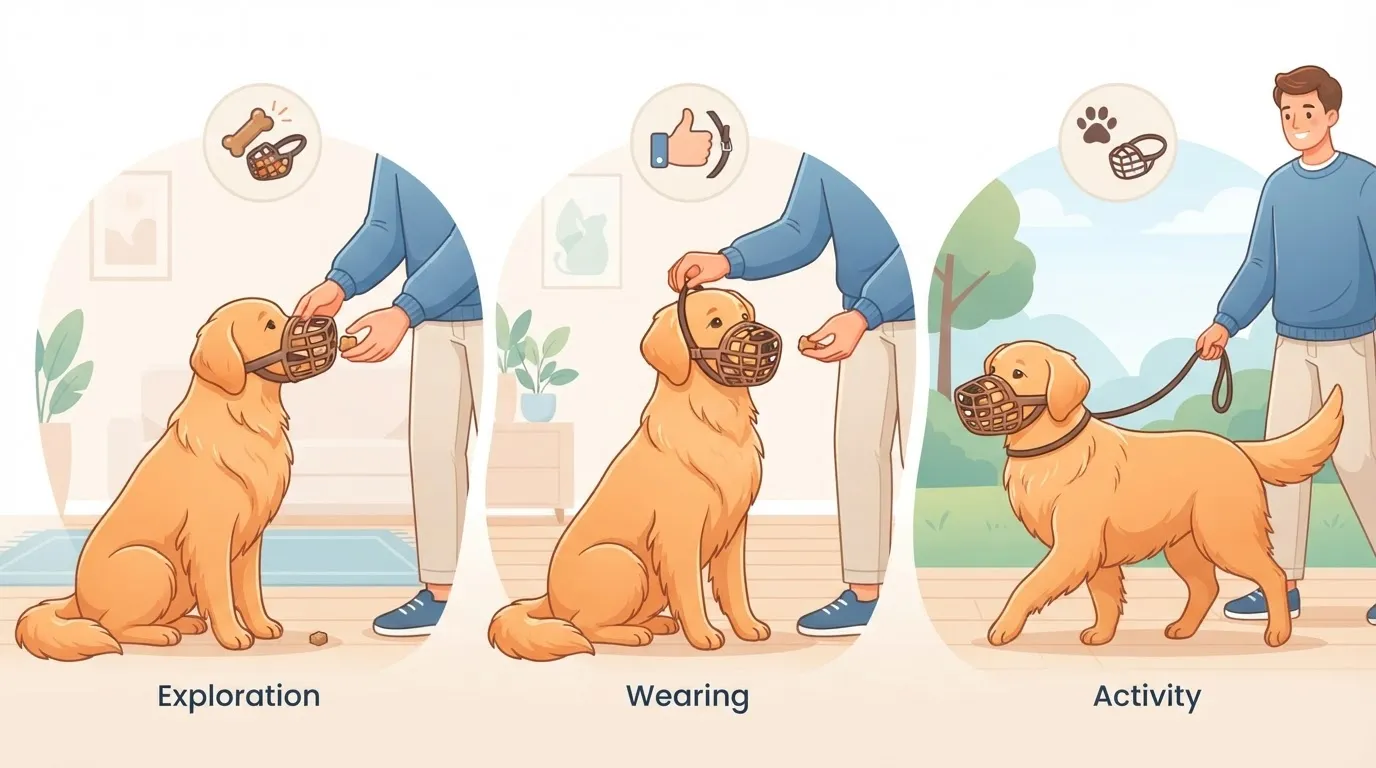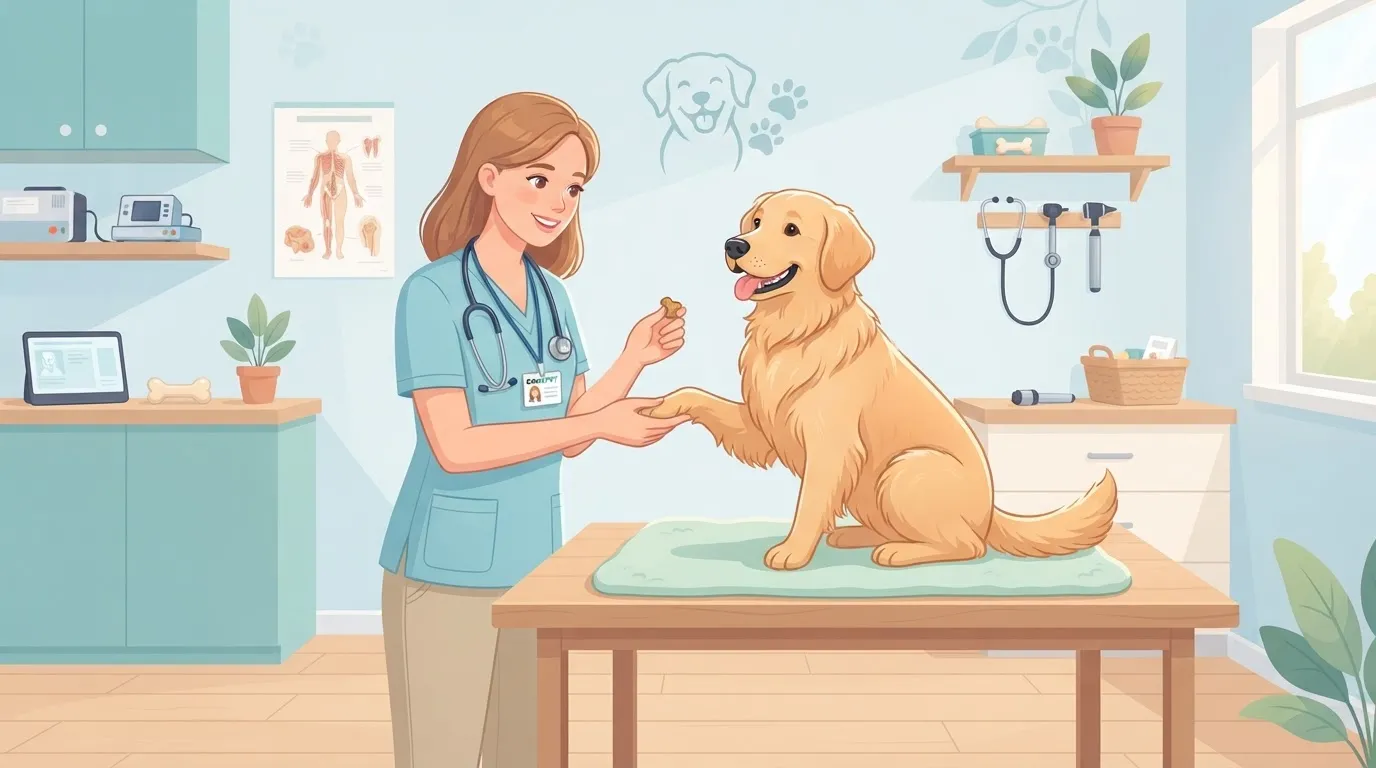
Cooperative care for dogs can make veterinary visits, checkups, and basic grooming tasks less stressful, without asking the animal to simply “put up with” handling. The goal is not to keep the dog still at all costs, but to teach them that they can understand what is happening, cooperate gradually, and communicate when they need a break.
This preparation can make veterinary visits, nail trimming, ear and teeth cleaning, or parasite treatment easier. It should be built with realistic expectations and respect for the dog’s emotions.
What is cooperative care for dogs?
Cooperative care, also known as cooperative care, consists of exercises based on positive reinforcement and choice. The dog becomes accustomed to handling through small steps, receiving a reward for cooperating and being able to stop the activity through signals that we learn to recognize.
This does not mean that every procedure will always be optional: in an emergency, a veterinarian may need to act quickly to protect the animal’s health. However, practicing consensual handling in advance can often reduce tension, conflict, and the need for restraint in non-urgent situations.
A useful foundation is teaching a “consent position”: for example, resting the chin on a hand, towel, or stable support. As long as the dog maintains that position, the session continues; if they move away, stop for a few seconds without reprimanding them.
First rule: observe signals and respect breaks
To get a dog used to handling, work below their tolerance threshold, meaning before intense discomfort appears. A dog that seems still is not necessarily calm: they may be frozen with fear.
Stop or simplify the exercise if you notice signs such as:
- turning the head away or moving the body away;
- frequent nose licking, out-of-context yawning, or panting;
- stiffness, a lowered tail, or flattened ears;
- a fixed stare, very dilated pupils, or repeated attempts to escape;
- growling, snapping, or biting.
Growling is important communication, not a behavior to punish. Punishing it can remove a warning signal without resolving the fear. Instead, make the situation safe, avoid insisting, and consider support from a qualified dog trainer, especially if handling causes intense reactions.
Cooperative care exercises for dogs to do at home
Choose a quiet environment, keep sessions very short, and use treats your dog genuinely enjoys. At first, practice when no care procedure is needed: the aim is to build trust, not to take advantage of the dog’s willingness.
Proceed in tiny steps. One possible progression is:
-
Brief touch and reward
Lightly touch an easy area, such as the shoulder or side, for a moment. Remove your hand and reward the dog. Repeat only if they remain relaxed. -
Gradually increase duration and areas
Move on to the paws, muzzle, neck, ears, and tail, one area at a time. Do not increase duration and intensity at the same time. -
Introduce tools separately
Show the brush, gauze, nail clippers, or carrier without using them. Reward voluntary approaches. Then pair them with very light and brief contact. -
Simulate the procedure
Gently lift one paw, look between the toes, touch a nail with the clippers closed, and reward. For some dogs, this will already be an excellent initial result. -
Practice a useful position
Teach the dog to rest their chin on a surface or to stay on a mat. The position must remain voluntary: if the dog ends it, take a break and start again with an easier step.
Use a simple rule: end each session while the dog is still calm. Three successful repetitions are better than ten attempts that increase discomfort.
How to prepare your dog for a veterinary visit
Preparation for a veterinary visit can begin well before the appointment. Bring treats your dog enjoys and a blanket carrying familiar scents. If possible, ask the clinic whether a quieter waiting area or an alternative entrance is available.
At home, you can practice common actions: gently opening the lips, looking at the ears, having your dog step onto a stable surface, listening to a sound similar to a stethoscope, or running a hand along the body. The aim is to build familiarity, not to recreate a complete examination.
Before the appointment, note symptoms, changes in behavior, eating habits, ongoing treatments, and questions to ask. With PawsPet’s health management features, you can keep data, documents, and appointment reminders organized, helping you arrive better prepared without relying on memory.
If your dog has already had difficult experiences, tell the veterinarian before the visit. The professional can assess timing, environmental management, and strategies better suited to your dog’s situation.
When to ask for professional help
A positive reinforcement approach requires patience, but it should not repeatedly expose the dog to fear. Contact a trainer experienced in force-free methods if your dog consistently avoids contact, shows aggression, refuses treats during the exercise, or has a history of traumatic experiences.
For pain, itching, sudden sensitivity to touch, or abrupt changes in behavior, the veterinarian should be your first point of contact. A dog that refuses handling may be experiencing physical discomfort: forcing them can worsen both the problem and the emotional association.
Building cooperative care means turning small daily checks into predictable and more respectful moments. With PawsPet, you can organize health reminders and record your dog’s habits, maintaining consistency throughout the process.
FAQ
How long does it take to get a dog used to handling?
It depends on the dog’s experience, sensitivity, and the type of check involved. Some dogs improve after a few sessions, while others need weeks or longer. Progress should follow the dog’s comfort, not a fixed deadline.
Can I practice cooperative care if my dog growls?
Yes, but do not insist or punish the growl. Immediately reduce the difficulty of the exercise, work farther away from the sensitive area, and ask a qualified trainer for support if the reaction happens repeatedly.
Does cooperative care replace a veterinary visit?
No. It is behavioral preparation that can make checkups and treatments easier to manage. If there are symptoms, pain, or clinical needs, always contact your veterinarian.