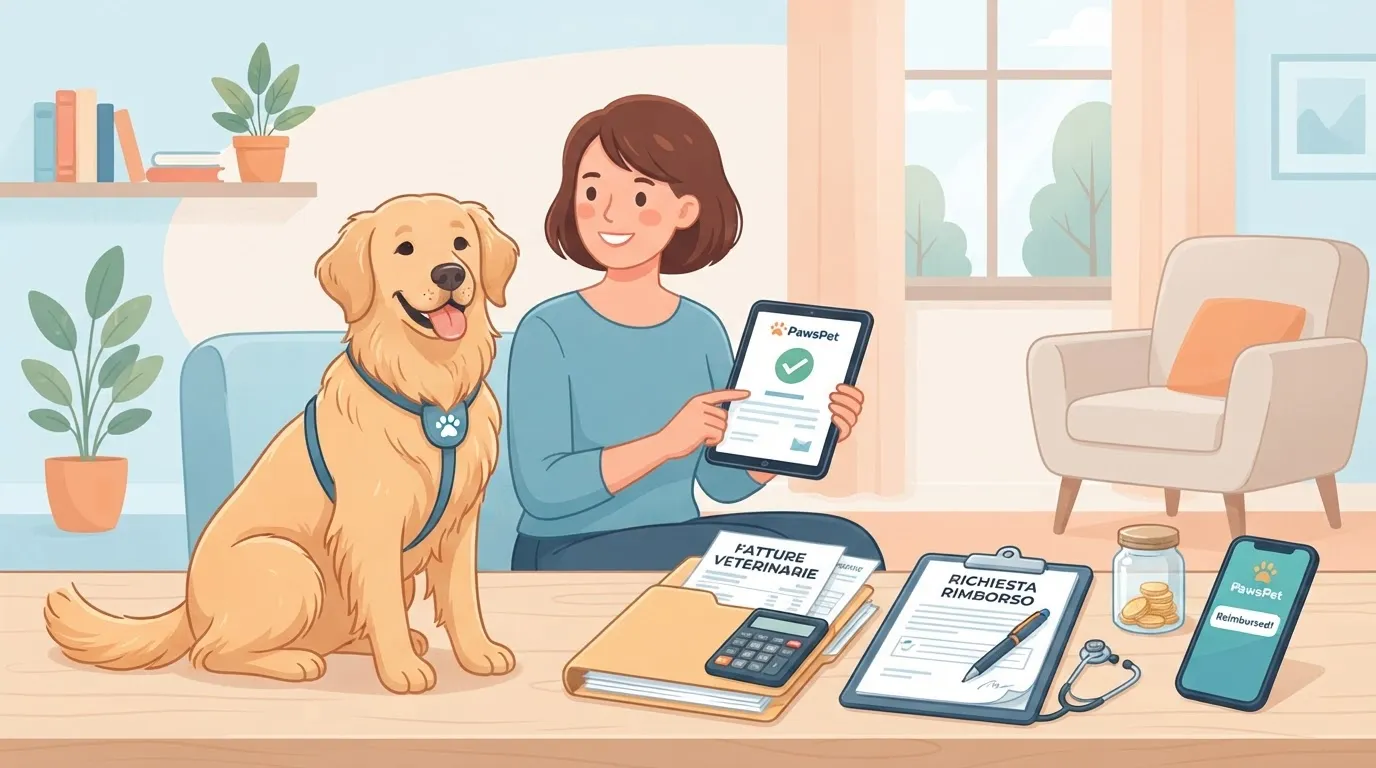
Pet insurance reimbursement can be easier when you collect the right documents from the veterinary visit onward and follow the procedure set out in your policy. The claim is not just about the invoice: deductibles, coverage limits, exclusions, deadlines and filing methods can all affect the outcome and the amount you may receive.
Before filing: check what your pet insurance covers
Before starting a pet insurance claim, reread the policy terms and the information provided by the insurer. Not all benefits work in the same way: a policy may cover some veterinary expenses but not others, or set specific limits for certain events, treatments or insurance periods.
Check in particular:
- Active coverage: make sure the coverage for the expenses you incurred is included in your policy.
- Effective date and waiting periods: some benefits may include an initial period during which certain claims are not eligible for reimbursement.
- Coverage limit and deductible: the coverage limit is the maximum amount provided; the deductible is the portion that may remain your responsibility.
- Exclusions: check for restrictions relating to pre-existing conditions, preventive care, specific treatments or types of procedures.
- Claim deadlines: note how long you have to submit the claim and whether the insurer requires immediate notification of the event.
If a clause is unclear, ask the insurer, broker or an insurance professional for an explanation before submitting incomplete information. Clarification is preferable to relying on your own interpretation.
Documents for veterinary expense reimbursement
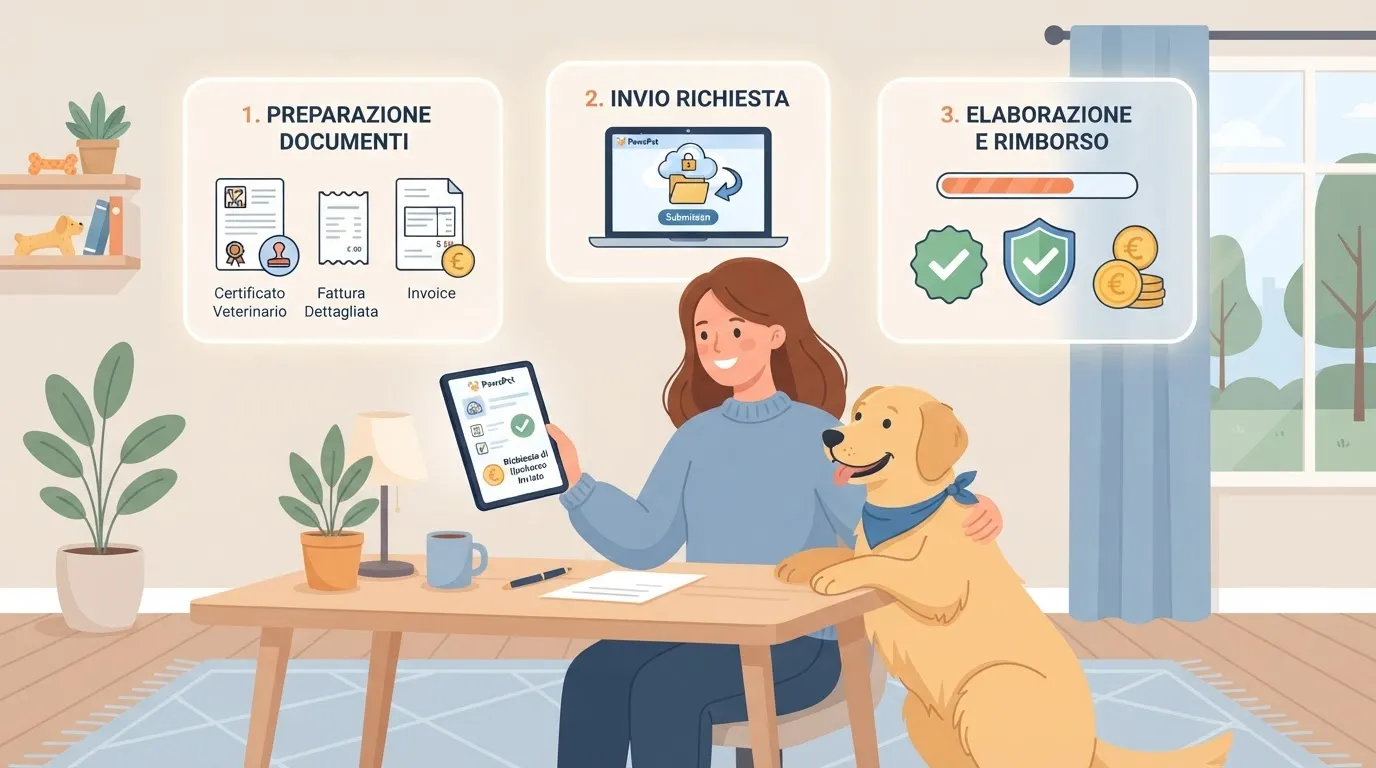
The veterinary reimbursement documents required may vary depending on the insurer and the coverage, but an orderly claim almost always starts with clear, consistent and complete evidence. Keep both the originals and digital copies, organized by date.
You will generally need:
- pet insurance reimbursement claim form, completed in full;
- policy number and policyholder details;
- identifying information about the animal, such as species, name, microchip number or other requested details;
- invoices or fiscal receipts from the clinic, veterinary practice or professional;
- proof of payment, if required by the procedure;
- veterinary report, medical record or certificate relating to the service;
- prescriptions, diagnostic tests and supporting documentation when connected to the expense;
- bank details for payment, if they have not already been provided.
Veterinary invoices should clearly describe the service provided. Avoid sending blurry photos, cropped documents or files with missing pages, as these may delay the assessment. Do not alter receipts, certificates or reports; if there is an error, ask the veterinary practice how to correct the document properly.
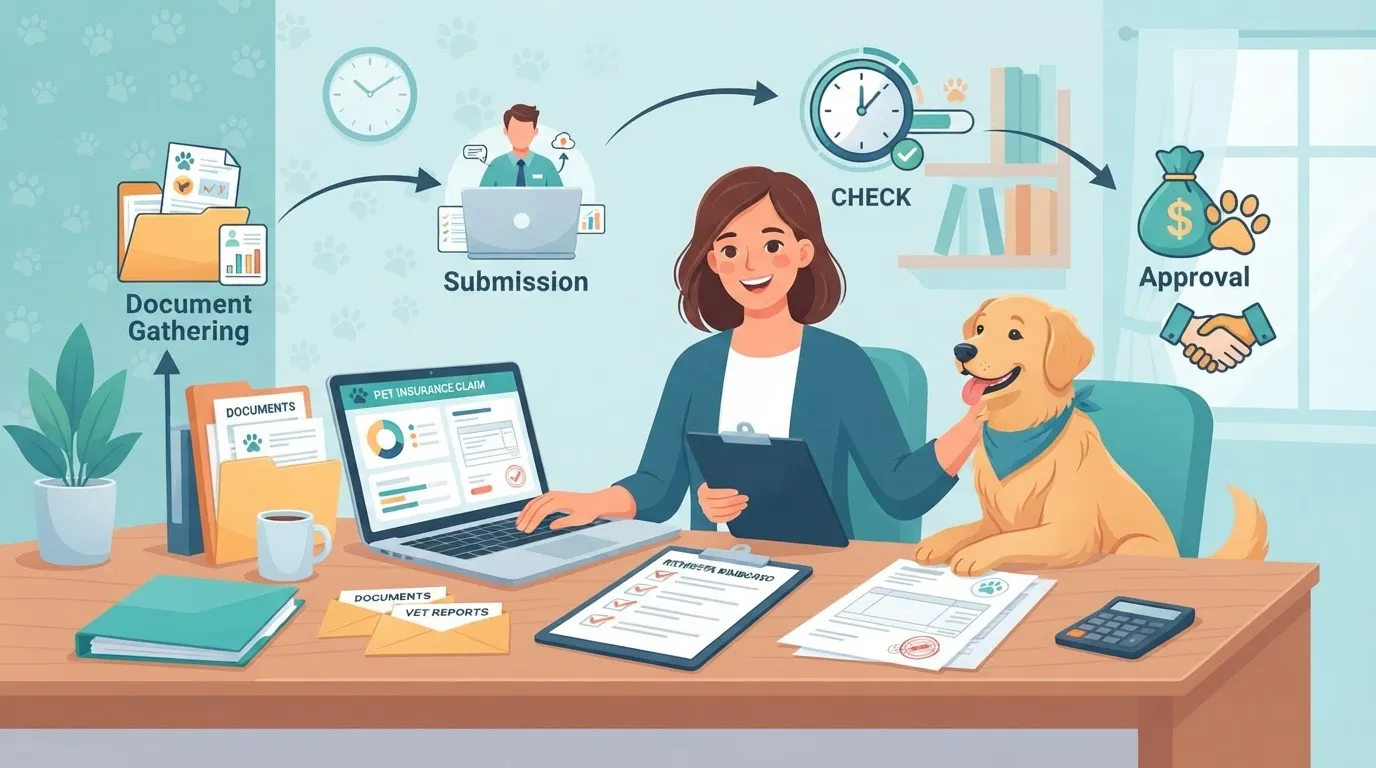
How to file a pet insurance claim
Use the channel specified in your policy: customer area, app, email, online form or another stated method. The exact procedure varies, but a few steps can help prevent omissions and requests for additional information.
- Open the claim within the required time. Do not wait until you have collected documents that may be difficult to obtain if the reporting deadline is approaching: notify the event according to the instructions and check how to submit any additional documents.
- Complete the information accurately. Visit dates, amounts, claim number and the animal’s details must match the attached documents.
- Describe the facts briefly. State what happened and which care was provided, without making your own diagnosis.
- Attach files in an orderly way. Use clear file names, such as “visit_invoice_date” or “exam_report_date”.
- Keep proof of submission. Save confirmations, emails and the claim number: they will be useful for tracking the request.
If the animal needs urgent care, the veterinarian always comes first. Handle the insurance requirements as soon as possible and according to the procedure set out in the policy.
Veterinary reimbursement claim deadlines and useful checks
Veterinary reimbursement claim timelines depend on the policy, the completeness of the documentation and any checks that may be required. A well-prepared claim does not guarantee reimbursement, but it makes the insurer’s assessment easier.
After submitting:
- note the claim number and opening date;
- check messages in the customer area and your email inbox;
- respond promptly to any requests for additional information;
- compare any amount paid with the coverage limits, co-insurance or deductibles stated in the policy;
- ask for a written explanation if the outcome or amount is unclear.
To avoid searching for documents at the last minute, store invoices, reports and deadlines in one place. With PawsPet, you can keep your pet’s health information and reminders organized, creating a useful timeline when you need to prepare an insurance claim.
FAQ
Which invoices are needed for pet insurance reimbursement?
You generally need invoices or fiscal receipts for veterinary services, and they should be complete and easy to read. The policy may also require proof of payment, a veterinary report, prescription or medical record: always check the insurer’s instructions.
Can I submit a claim if a document is missing?
That depends on the rules set out in the policy. If the reporting deadline is approaching, follow the insurer’s instructions to open the claim and submit the requested additional document afterward.
Why may the reimbursement be lower than the amount paid?
The amount may be affected by a deductible, co-insurance, coverage limit, benefit restrictions or services that are not covered. Compare the payment calculation with your policy terms and ask for clarification if necessary.