Cat sterilization is a common procedure, but careful preparation and controlled recovery can make a difference to your cat’s comfort and safety. Knowing what to arrange beforehand, how to monitor the wound, and when to call the veterinarian can help you manage post-operative care calmly.
Every cat may receive specific instructions based on age, sex, health conditions, and the type of procedure. The veterinary clinic’s instructions should always take priority.
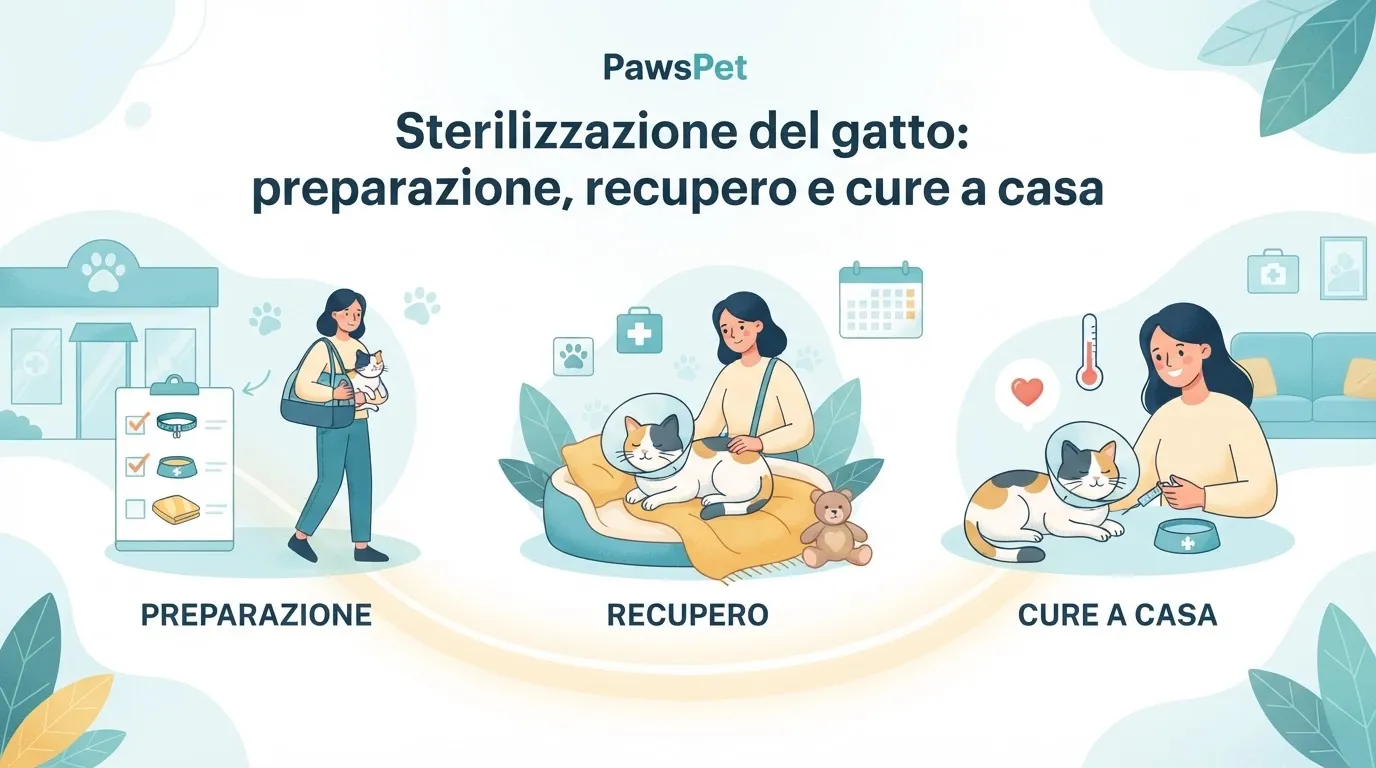
How to prepare your cat for sterilization
In the days before cat sterilization, tell the veterinarian about any changes, including poor appetite, vomiting, diarrhea, coughing, sneezing, current medications, or unusual behavior. Even details that seem minor may be important when assessing anesthesia safety.
Fasting should be followed only according to the instructions provided by the veterinary facility. Timing may vary depending on the cat’s age, health, and the protocol used. Do not stop water, food, or medications on your own.
To make the day of the procedure easier:
- prepare the carrier with a clean, absorbent blanket or towel;
- keep your cat indoors the night before, so it does not miss the meal or fail to return home;
- reduce noise, visitors, and stressful situations;
- bring any medical records, treatment information, and updated contact details;
- ask in advance how to manage the return home, follow-up checks, and possible suture removal.
When your cat returns home, it may be sleepy, disoriented, or more sensitive to noise for several hours. Set up a quiet, warm room that is easy to monitor.
After cat sterilization: the first 24 hours
The first day is mainly for rest and observation. Keep your cat in the carrier until it is alert enough to move steadily, then place it in a safe area without high shelves, stairs, or opportunities to go outside.
Offer water and food only in the amounts and at the times recommended by the veterinarian. Some cats eat very little after anesthesia. Do not force them to eat, but contact the clinic if refusal continues or is accompanied by vomiting, lethargy, or other symptoms.
Check that your cat:
- breathes regularly;
- gradually manages to walk without falling;
- stays warm without being covered excessively;
- uses a clean, low-sided litter tray if needed;
- does not repeatedly lick or bite the surgical area.
Avoid baths, energetic play, running, and overly intense physical contact. Even a cat that appears well may become active before the wound is ready to withstand jumping and pulling.
Wound care and rest during recovery
Cat sterilization recovery generally requires several days of limited activity, according to the veterinarian’s instructions. The wound should remain clean and dry. Do not apply creams, disinfectants, dressings, or home remedies unless they have been specifically recommended.
Check the incision once or twice a day during a calm moment. Mild initial redness may be compatible with healing, but the appearance should remain stable or gradually improve.
If your cat tries to lick the wound, use an Elizabethan collar or post-operative suit only if recommended and in the correct size. Removing them too early increases the risk of irritation or wound opening.
To stay organized:
- follow the prescribed medication schedule and duration;
- do not use human medicines or medication left over from other treatments;
- note your cat’s appetite, behavior, litter tray use, and wound appearance;
- keep the scheduled veterinary check-up, even if your cat seems to be doing well.
PawsPet reminders can help you remember medications, check-ups, and important dates related to your cat’s health management.
Post-operative cat warning signs not to overlook
Contact the veterinarian or the facility that performed the procedure if you notice bleeding that does not stop, significant swelling, discharge, a bad smell, an open wound, or clear signs of pain when your cat moves or is touched.
Seek prompt assistance also in case of severe lethargy, breathing difficulties, repeated vomiting, inability to urinate, tremors, sudden deterioration, or failure to regain alertness after anesthesia. Do not wait for the next scheduled check-up if something concerns you: a timely assessment is the most cautious choice.
FAQ about cat sterilization
How long does recovery after cat sterilization take?
It depends on the type of procedure and your cat’s individual condition. Always follow the veterinarian’s instructions about rest, treatment, and check-ups, even if your cat quickly regains its energy.
Can I let my cat outside after sterilization?
No, not until the veterinarian confirms that healing is progressing well. Keeping your cat indoors reduces the risk of jumping, dirt getting into the wound, fights, and wandering away.
Is it normal for a cat to lick less or eat little after the procedure?
A slight reduction in appetite during the first few hours can occur after anesthesia. However, if your cat does not eat, vomits, seems very lethargic, or does not gradually improve, contact the veterinarian.
An organized routine makes cat post-operative care easier to manage: prepare a quiet space, follow the prescription, and observe your cat without unnecessary alarm. With PawsPet, you can keep health information together and set useful reminders to support recovery day by day.