For a dog urine analysis or cat urine test, sample quality matters as much as the test itself. An unclean collection method, an unsuitable container or delayed delivery can make some results harder to interpret and, in some cases, require collecting another sample.
Before proceeding, always ask your veterinarian what type of sample is needed: a spontaneous sample collected at home, a sample obtained at the clinic or another procedure. Instructions may vary depending on the reason for the test and the animal’s condition.
What to Ask Before a Urine Test
A urine test may be requested during a check-up, to investigate changes in urination habits or to monitor a known condition. However, not all samples are suitable for the same purpose.
When scheduling the test, clarify:
- whether a spontaneously collected sample is needed or the veterinarian must collect it;
- whether the first urine of the morning is required or a sample collected at another time;
- how much urine should be brought;
- whether the animal must follow any specific instructions before collection;
- when the container must be delivered;
- how to handle the sample if you cannot reach the clinic immediately.
It is also useful to report any medications, supplements, ongoing treatments and observed symptoms, such as more frequent urination, difficulty urinating, changes in urine color or persistent licking of the genital area. This information does not replace the test, but it helps the veterinarian assess the results in the right context.
Dog Urine Analysis: How to Collect a Clean Sample
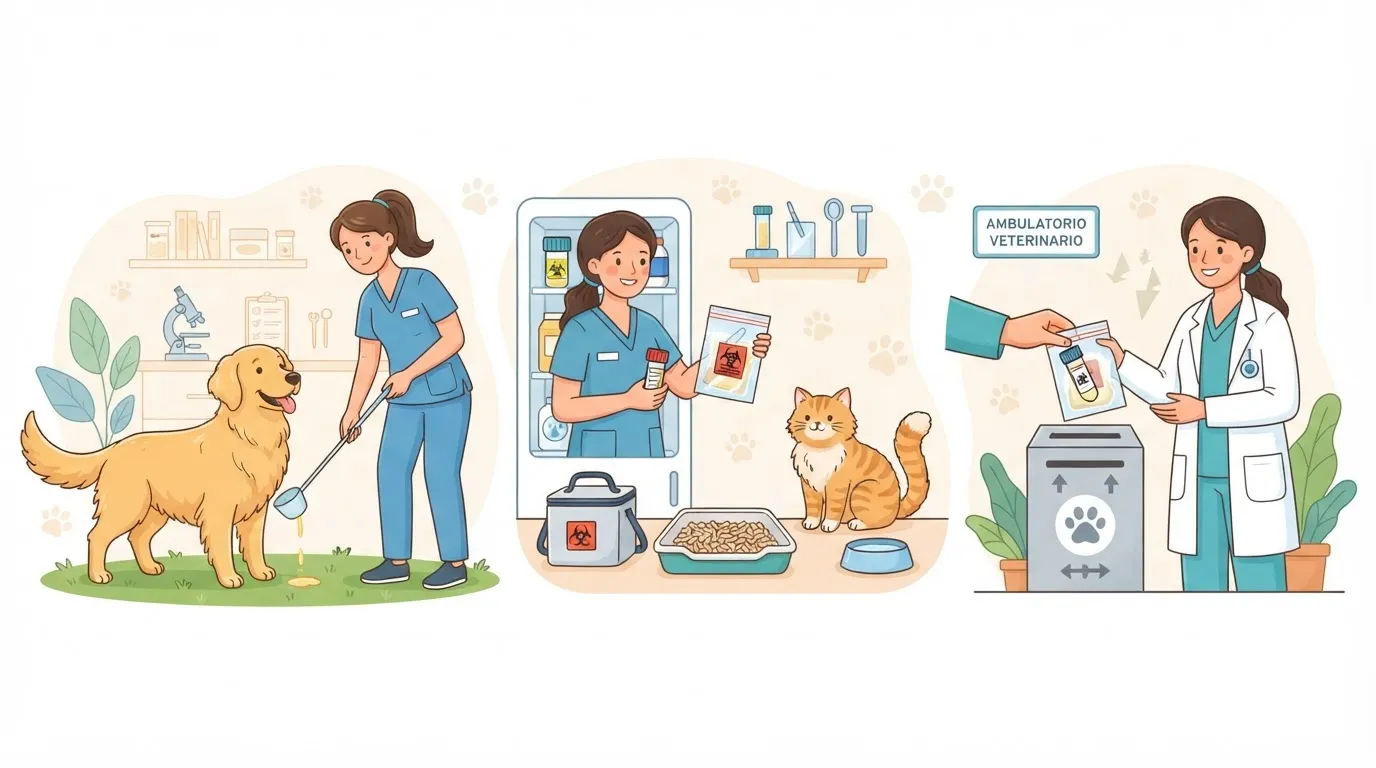
For dogs, collecting a spontaneous sample during a walk is often the most practical solution. The goal is to catch the urine without contaminating the sample with soil, grass, floor residue or cleaning products.
Use a sterile container provided by the clinic or purchased from a pharmacy. Unless your veterinarian gives different instructions, you can follow these steps:
- Take the container with you and open it only when you are ready to collect the sample.
- Watch your dog while they urinate and calmly place a clean container in the stream, avoiding contact with fur or skin.
- Try to collect a midstream portion rather than necessarily the first few drops.
- Transfer the sample to the sterile container, close it securely and clean the outside if needed.
- Label the container with your animal’s name, the collection date and time, if requested.
For female dogs, a low, wide container may be convenient; for some male dogs, a container with a long handle may be easier to use. Do not force your dog to urinate or change their usual water intake without veterinary advice.
How to Collect Cat Urine Without Contaminating the Litter
Knowing how to collect cat urine may require a little more preparation. Regular cat litter absorbs liquid and can alter the sample, so it is important to use the method recommended by your veterinarian.
A commonly used approach is to provide a clean litter tray that has been emptied and washed without scented products or disinfectants, then fill it with non-absorbent material supplied by the clinic or recommended by the professional. When the cat urinates, collect the liquid with a clean pipette or needle-free syringe and transfer it to the sterile container.
To make the process easier:
- choose a quiet time and allow your cat their usual privacy;
- keep only one litter tray available for the shortest time necessary;
- do not mix the sample with water, regular litter or cleaning products;
- note the collection time and any difficulties you observe.
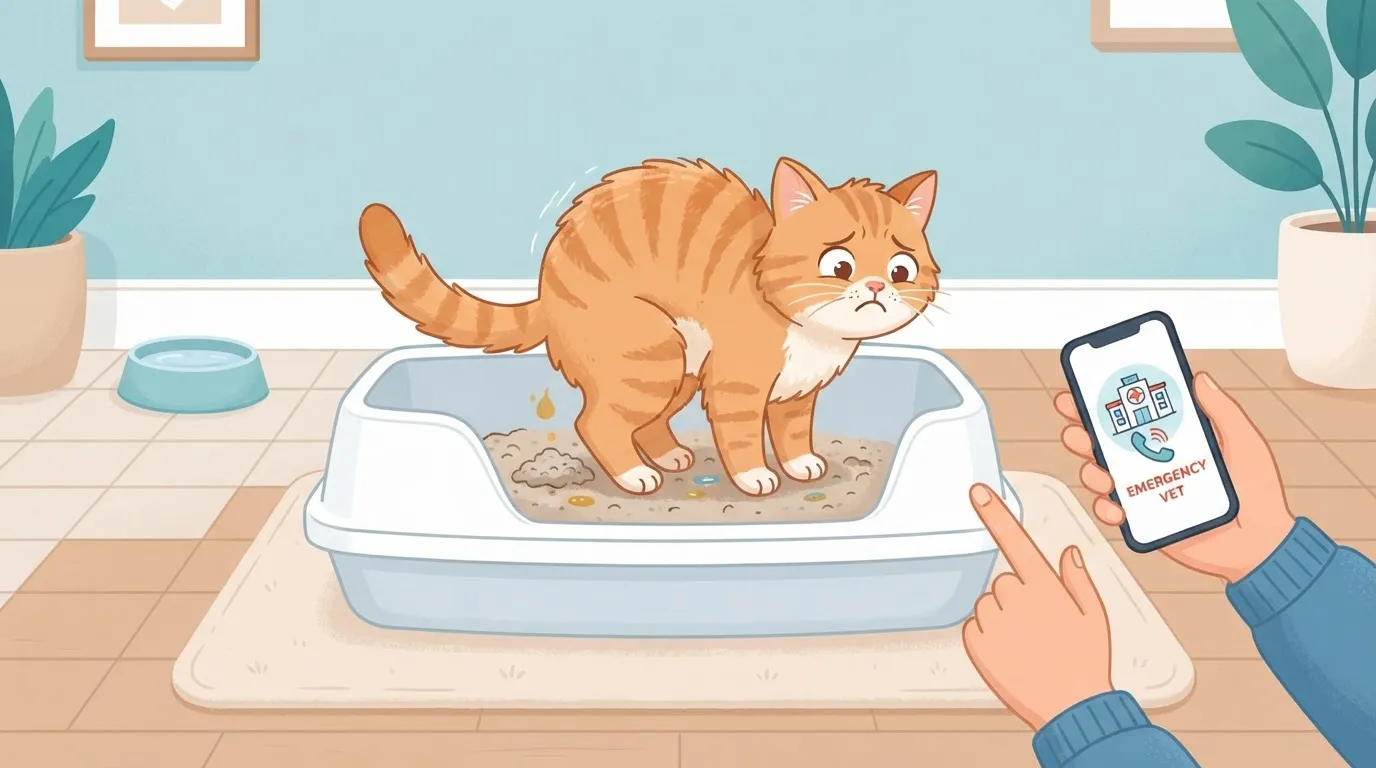
If your cat does not urinate, seems painful, repeatedly enters the litter tray without producing urine or shows a clear worsening of their condition, do not keep trying to collect the sample at home: contact your veterinarian promptly. Difficulty urinating should always be assessed by a professional.
Dog Urine Storage and Delivery to the Veterinarian
Dog and cat urine storage should be kept to a minimum: generally, the sample should be delivered as soon as possible according to the instructions you received. As time passes, some characteristics of urine may change and make the test less representative.
Do not leave the container in a car, near a heat source or in direct sunlight. If you cannot deliver it immediately, ask your veterinarian whether it should be stored temporarily in a refrigerator and how to do so. Do not freeze the sample or add any substances unless the professional provides or prescribes them.
When delivering the sample, report:
- the time and method of collection;
- whether and how it was stored;
- medications or supplements being taken;
- recent symptoms and changes in urination habits.
Recording reminders, treatments and veterinary appointments in PawsPet can help you arrive at the visit with organized, easy-to-access information.
FAQ
Is a sterile container needed for a dog urine test?
Yes, it is the preferred option because it reduces the risk of contamination. Ask your veterinarian whether they can provide one and follow their specific collection instructions.
Can I collect my cat’s urine from regular litter?
It is better to avoid this: absorbent litter and residue in the tray can affect the sample. Use non-absorbent material or the method recommended by the clinic.
What should I do if the sample changes color or contains unusual traces?
Do not try to interpret it yourself. Deliver the sample if your veterinarian considers it useful and describe what you observed. If your animal has difficulty urinating or seems unwell, contact a professional immediately.
Preparing a sample properly makes the test more useful and can reduce the need for repeat collection. With PawsPet, you can keep track of check-ups, observed symptoms and veterinary reminders, so every appointment starts with more complete information.