Choosing between individual or group dog walks depends on more than your available time or budget. Your dog’s temperament, habits, health and the professional’s ability to handle unexpected situations can all make a real difference to their wellbeing.
The right service should provide exercise, safety and an experience suited to your dog’s needs, without forcing them into situations that are not a good match.
Individual dog walking: when it is the right choice
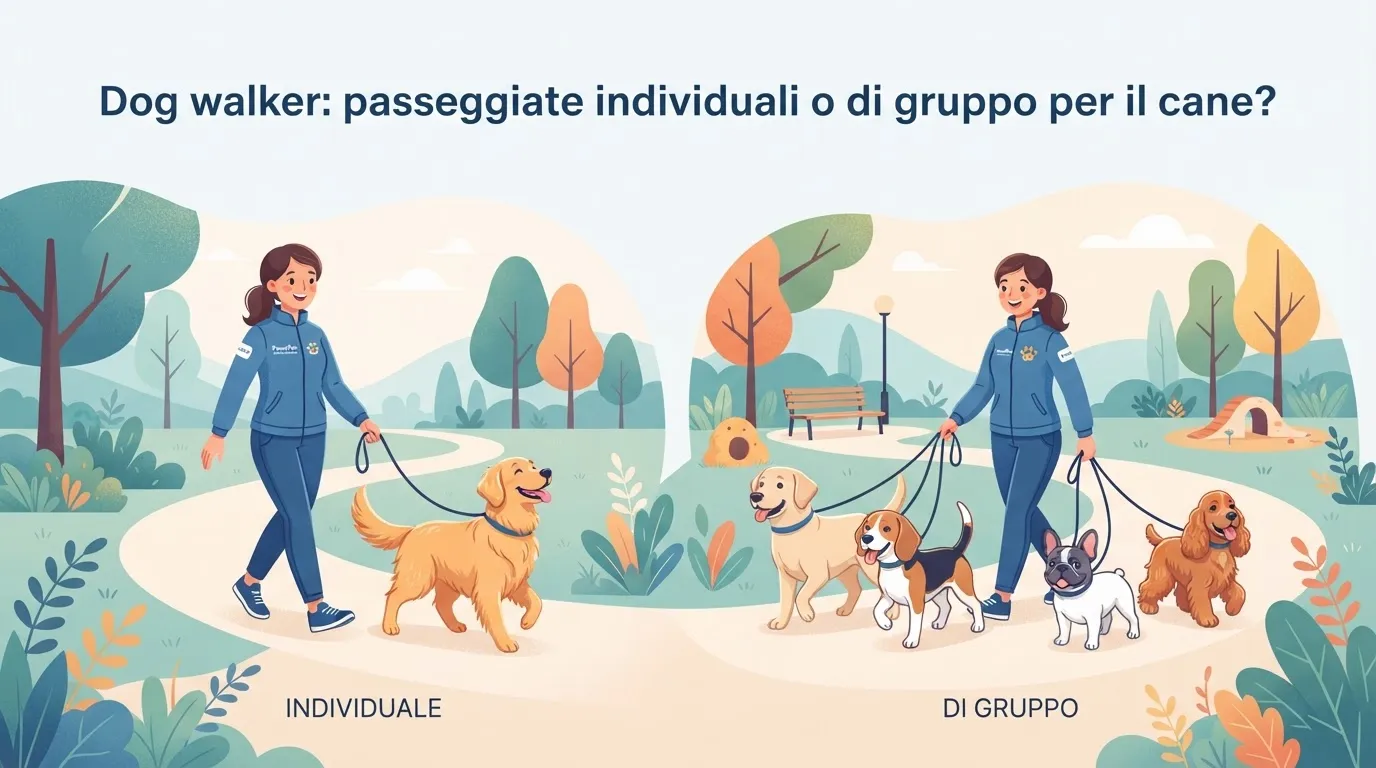
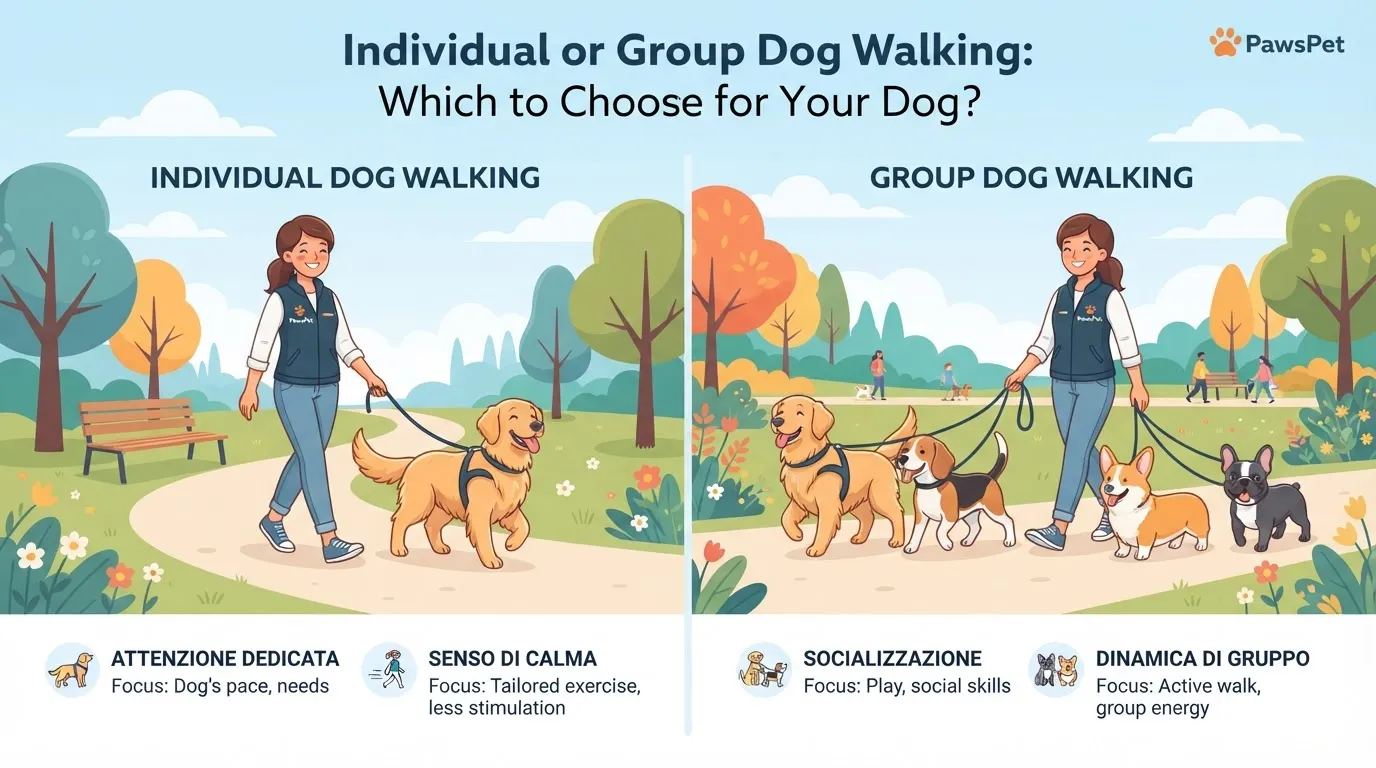
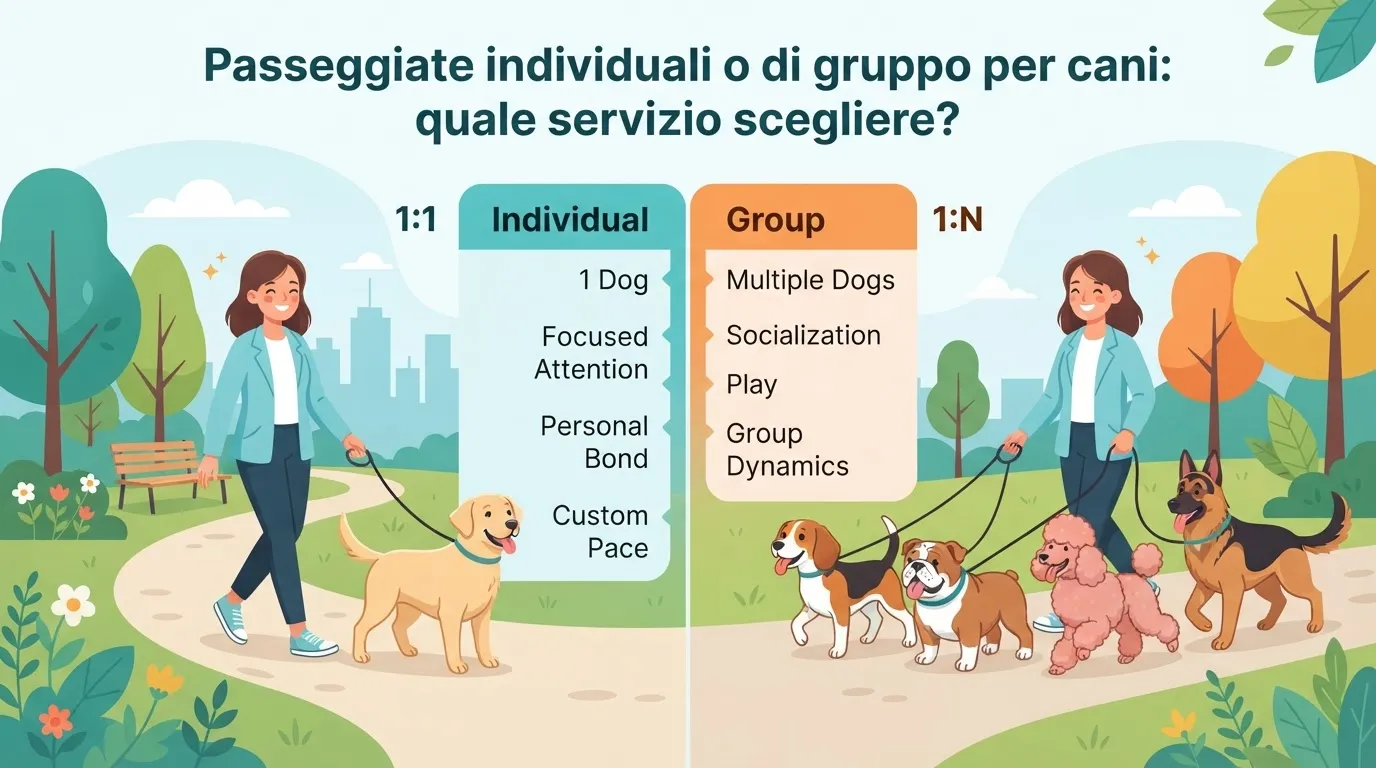
Individual dog walking means a walk dedicated to one dog, or to several dogs living in the same family. The dog walker can adapt the pace, route, stops and activities to the individual animal.
It is often suitable for dogs that:
- are elderly, puppies or recovering physically;
- struggle with close encounters with other dogs;
- become agitated in crowded places or around many stimuli;
- have specific needs identified by a veterinarian or trainer;
- need focused work on leash walking;
- have recently joined the family and are still building a routine.
One-to-one attention allows the professional to observe the dog’s body language, energy and reactions more closely. It can also be useful for owners who want more personalised walks, with simple exercises involving calmness, exploration and leash management.
This does not mean that a dog must always be kept apart from others. It means offering a controlled setting while gradually assessing possible opportunities for social interaction.
Group dog walks: advantages and limitations to consider
Group dog walks bring together dogs selected by the dog walker according to compatible characteristics. When organised thoughtfully, they can provide exercise, exploration and balanced social interaction.
A well-structured group may suit dogs that:
- show calm interest in other dogs;
- can walk on a leash without strong tension;
- cope well with noises, people and changes of route;
- do not problematically guard resources such as food, toys or spaces;
- have energy levels similar to those of the other participants.
The main benefit is the opportunity to experience guided social interaction. However, being together does not automatically mean that dogs are socialising well: some dogs tolerate other animals without enjoying constant contact, while others may become overexcited.
The group should be reasonably homogeneous and manageable for the professional. Be cautious of anyone who adds unfamiliar dogs without a preliminary meeting or does not ask about their behaviour.
Dog compatibility: what to observe before deciding
Dog compatibility is not based only on size, breed, sex or age. What matters most is how each animal communicates and reacts to others.
Before choosing a group service, give the dog walker precise information about:
- how your dog responds to encounters on a leash;
- any fears, impulsive reactions or previous conflicts;
- sensitivity to physical contact, handling or noise;
- habits involving food, toys and treats;
- relevant health conditions and ongoing treatments;
- recalls and commands your dog genuinely knows.
A responsible professional should suggest an initial assessment, perhaps including a short introductory walk. During this meeting, they can check for signs such as a stiff posture, fixation, excessive excitement, avoidance or the ability to return to a calm state.
If behavioural difficulties emerge, choosing individual walks is not a failure. It may be the safest and most respectful option, potentially alongside support from a qualified trainer.
Costs, organisation and questions to ask the dog walker
Individual dog walking costs tend to differ from those of a group service because the time involved, travel, number of animals and level of personalisation may vary. Rather than choosing based only on the price, compare what is included in the service.
Ask directly:
- How many dogs are handled at the same time?
- How are groups formed, and how often do they change?
- Is an introductory meeting arranged before a dog joins the group?
- What safety measures are used during transport, off-leash time and the walk?
- How do you handle an emergency or a dog showing signs of distress?
- Will you receive updates about the dog’s duration, route and behaviour?
- Do you have experience with your dog’s specific needs?
For people who work many hours away from home, consistency also matters: days, times and duration should fit the dog’s routine. GPS walks can help you check routes and habits, but they do not replace communication with the professional.
How to choose without putting pressure on your dog
Start with a short trial and observe your dog after returning home. A content dog may be tired, but should recover calmly. Signs such as persistent agitation, reluctance to go out, fear of the leash or marked changes in usual habits deserve attention.
The best choice is the one that respects the dog you have today, not one based on an abstract idea of socialisation. On PawsPet, you can use the marketplace to compare professionals, organise your pet’s health information and set useful reminders for meetings, vaccinations or appointments.
FAQ
Is an individual or group walk better for a shy dog?
In general, it is preferable to start with an individual walk. A predictable environment allows the dog to get to know the dog walker without the pressure of other animals. Any move into a group should be assessed gradually.
Can a sociable dog join any group?
No. Even a friendly dog may struggle with different paces, energy levels or communication styles. The professional should select the group based on the participants’ actual compatibility.
How long should a dog walker’s walk last?
It depends on the dog’s age, physical condition, habits and energy level. Agree on the duration and intensity with the dog walker and, in case of health-related needs or doubts, ask your veterinarian for guidance first.