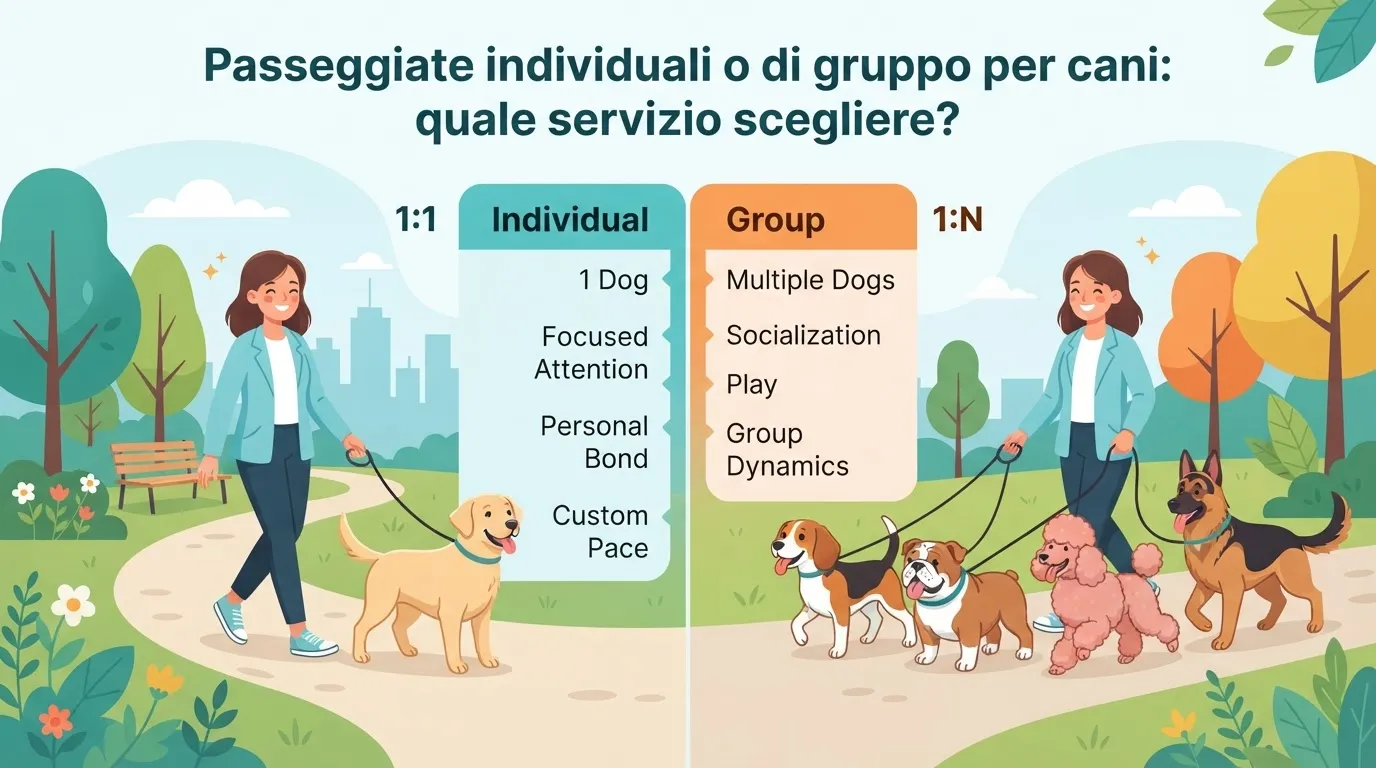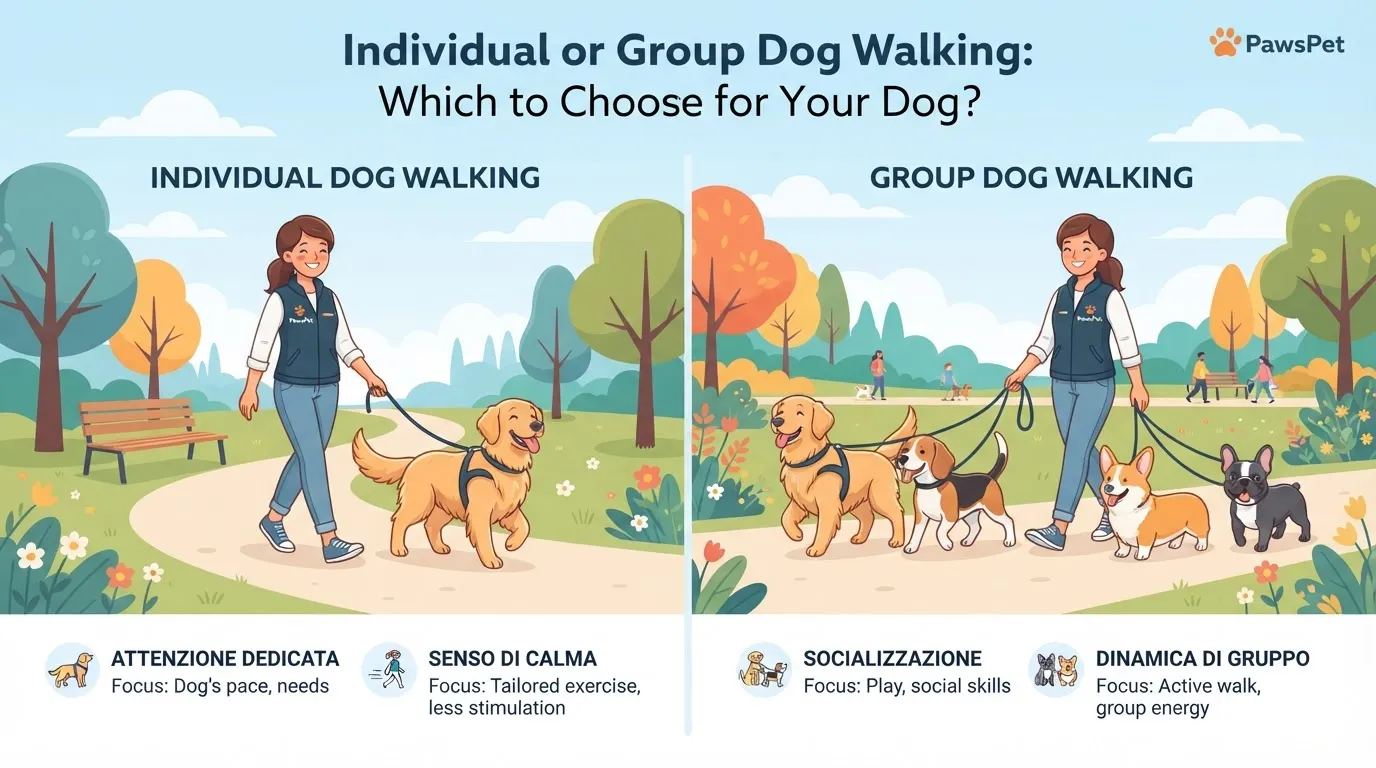
Choosing between individual or group dog walking depends on more than your schedule or budget: what matters most is what your dog needs during the walk. The right service can provide exercise, stimulation, and peace of mind, while a poor match may increase stress, excitement, or handling difficulties.
The best choice starts with observing your dog and having an open conversation with the dog walker.
Individual dog walking: when it may be the best choice
A single-dog walk is dedicated to one dog, or to dogs from the same household. The professional can adapt the pace, route, duration, and activities to the dog’s specific needs.
A single-dog walker may be particularly suitable for dogs that:
- are older, recovering, or have reduced mobility;
- struggle to manage close encounters with other dogs;
- are very young and still learning to walk on a leash;
- become frightened easily in crowded or noisy environments;
- have health or behavioral needs requiring consistent attention;
- need walks with very regular times, breaks, and routes.
One-on-one attention can also make it easier to work on everyday habits, such as pulling on the leash, stopping at crossings, or staying calm around urban stimuli. It does not replace working with a qualified dog trainer when needed, but it can support a more consistent routine.
The main drawback concerns individual dog walking costs, which tend to be higher because the professional’s time is reserved for one client. Still, assess the service as a whole: experience, emergency procedures, updates, insurance, and the quality of the walk matter more than the fee alone.
Group dog walks: benefits and requirements
Group dog walks involve a small group managed by a professional. For a sociable dog that is comfortable around other dogs, they can be a positive opportunity to move, sniff, and share activities in a balanced way.
Possible benefits include:
- a wider variety of environmental and social stimuli;
- the opportunity to walk with compatible dogs;
- a more varied routine for active dogs;
- a generally lower cost than an individual walk.
However, a group is not automatically suitable for every dog. A very exuberant dog may become overexcited; a timid dog may be unable to relax; and a dog with social difficulties may find constant proximity to other dogs stressful.
The setting matters too. A well-run group is not simply a “walk together”: it involves thoughtful group composition, leash management, safe routes, appropriate breaks, and the ability to intervene before tension increases.
Dog compatibility: what to observe before deciding
Dog compatibility is not judged only by whether dogs sniff each other without fighting at the park. Age, energy level, communication style, habits, and sensitivity to stimuli can significantly affect the walking experience.
Before introducing your dog to a group, ask yourself whether your dog:
- regains calm easily after seeing other dogs;
- walks without constantly pulling or reacting on the leash;
- tolerates being near dogs with different walking speeds;
- accepts sharing space and human attention;
- shows signs of discomfort, such as stiffening, avoidance, persistent barking, or freezing.
A preliminary meeting or gradual trial can be useful. A responsible professional observes the dog before adding them to a group and does not force pairings simply to fill a walking group. Even a generally sociable dog may prefer calm companions with a compatible size or temperament.
How to choose the right dog walker
When choosing a dog walker, ask specific questions. The answers will help you understand whether the service is organized around the dogs’ well-being or only around logistics.
For example, ask:
- How many dogs are handled at the same time, and how are they selected?
- Is a preliminary meeting with my dog included?
- What safety equipment is used during the walk?
- How are unexpected events, illness, or difficult encounters handled?
- Will I receive updates about the route, behavior, and my dog’s needs?
- Does the professional have experience with dogs similar to mine?
Avoid choosing based only on immediate availability. A well-organized walk should include realistic timing, attention to safety, and clear communication with the owner. If your dog takes medication, has a health condition, or displays complex behaviors, always inform the dog walker and consult a veterinarian or qualified professional for appropriate guidance.
A practical decision to review over time
The choice does not have to be permanent. A dog may start with individual walks and later try a small group after becoming more confident. Alternatively, you may alternate between the two options depending on the day and your household routine.
Observe your dog after returning home: they should appear content and able to rest, rather than excessively agitated or unusually subdued. With PawsPet, you can organize walk reminders, update your dog’s essential information, and search for professionals through the marketplace more easily.
FAQ
Is an individual walk better for a shy dog?
Often, at least at first. An individual walk reduces social stimuli and allows the dog walker to respect the dog’s pace and preferred distance. Any introduction to a group should be gradual.
Are group walks suitable for puppies?
It depends on the puppy, their vaccinations, socialization, and the composition of the group. Before making a choice, consult your veterinarian and a professional who can assess the individual situation.
How much should cost influence the choice of service?
Cost is an important factor, but it should be considered alongside safety, the number of dogs handled, the professional’s experience, and the quality of communication. The least expensive service is not always the one that best suits your dog’s needs.