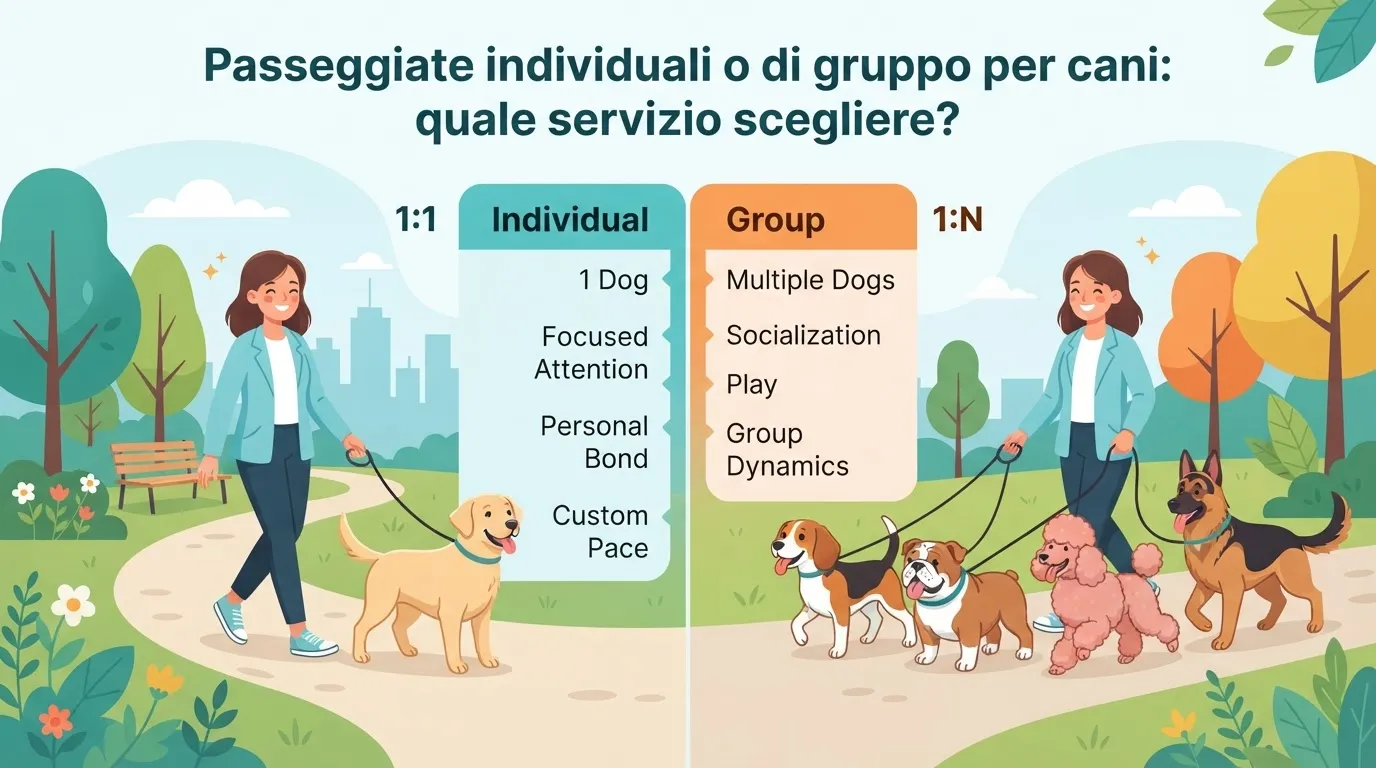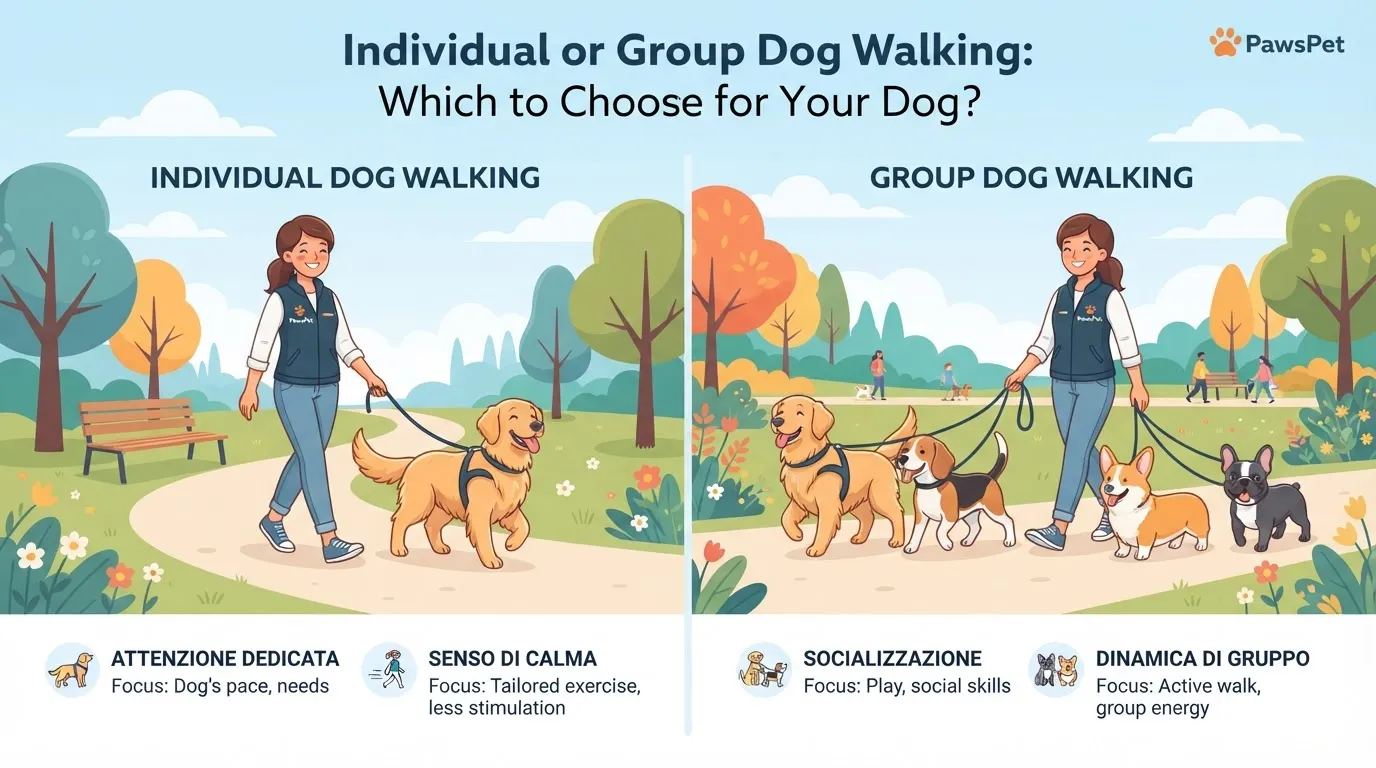
Choosing between individual or group walks depends on more than the time your dog spends outside the home. Their personality, sociability, leash skills and the quality of the dog walker’s service all matter. The best option is the one that allows your dog to move, explore and feel safe without being put under unnecessary pressure.
Individual dog walking: when it is the right choice
Individual dog walking means an outing dedicated to one dog, or to dogs from the same household that already live together peacefully. It is often the most flexible option because the professional can adapt the pace, route and activities to the animal’s specific needs.
It may be particularly suitable for dogs that are:
- elderly, with a slower pace or a greater need for rest;
- puppies still learning how to walk on a leash;
- fearful, reactive or easily overstimulated;
- recovering from a health problem, following veterinary advice;
- not used to other dogs or experiencing social difficulties;
- dependent on very specific schedules, routes or routines.
During an individual walk, the dog walker can respond more closely to practical needs: allowing time to sniff, avoiding crowded areas, choosing quieter routes and respecting rest breaks. This does not mean the dog has to be isolated. They can still encounter other animals in a controlled way, without having to remain in a group throughout the outing.
Group dog walks: benefits and limitations to consider
Group dog walks can be stimulating for sociable, well-balanced dogs that are already comfortable around other dogs. A well-matched group provides opportunities for exploration, exercise and appropriate social interaction, always under the professional’s attentive supervision.
However, “group” should not simply mean putting together any dogs that are available at the same time. Compatibility between dogs needs to be assessed carefully, taking into account:
- size, energy level and play style;
- body language and tolerance of close contact;
- reactions to leashes, noises, bicycles or other animals;
- any resource guarding involving food, toys or spaces;
- the total number of dogs handled at once;
- the dog walker’s experience and equipment.
A very energetic dog is not automatically suited to a group: they may prefer more structured individual activities. Similarly, a calm dog may enjoy the company of one or two compatible companions but struggle in a large or noisy group.
Costs, organization and questions to ask your dog walker
In general, dog walker costs may vary depending on the length of the walk, location, service frequency, travel requirements and number of dogs involved. Individual walks often require a greater investment because the professional’s attention is dedicated entirely to one animal. Group outings may be more affordable, but price should not be the only factor in your decision.
Before entrusting your dog to a professional, ask for clear and verifiable information:
- How many dogs are taken out together?
- How is compatibility assessed before a dog joins the group?
- Is an introductory meeting or trial walk available?
- Which routes are used, and how are emergencies handled?
- Does the dog remain on a leash at all times, or are secure fenced areas used?
- How are updates about the walk, toileting and behavior shared?
- Is the professional insured, and do they have experience with dogs with needs similar to yours?
It is helpful to give the dog walker clear information about your dog’s habits, known fears, signs of discomfort, any veterinary instructions and emergency contacts. An up-to-date information sheet helps prevent misunderstandings and supports a safer service.
How to choose between individual or group walks
Observe your dog in everyday life rather than relying only on their excitement when they see other animals. A dog that pulls to approach another dog may be curious, but not necessarily relaxed or able to walk calmly alongside others.
During the first few outings, monitor several signs:
- they return home calm and rest normally;
- their appetite and usual habits remain unchanged;
- they do not show avoidance or agitation before the appointment;
- their body language remains relaxed during encounters;
- they gradually become more comfortable with the routine.
If you notice intense fear, increasing reactivity, unusual tiredness or persistent changes in behavior, discuss them with the dog walker and, when necessary, with a veterinarian or qualified behavior professional. Sometimes it is enough to reduce the group, shorten the walk or temporarily switch to an individual service.
On PawsPet, you can explore professionals in the marketplace and organize important information about your dog, from contact details to reminders connected with their care routine.
FAQ
Are group walks suitable for every dog?
No. They are better suited to social dogs that are manageable on a leash and compatible with the group. Elderly, fearful or reactive dogs, as well as dogs still learning basic skills, may benefit more from individual outings.
How large should a dog walker’s group be?
There is no single number that works for every situation. What matters is the professional’s ability to manage the dogs, their compatibility with one another, the walking environment and the level of attention each animal needs.
Can a dog switch from individual to group walks?
Yes, if the dog shows signs of well-being and the dog walker considers a gradual introduction appropriate. An introductory meeting with one compatible dog is often a good first step.