Adopting two kittens together can make play and socialization easier, but it requires enough space, resources, and budget from the very first day. A closely bonded pair is not simply “one extra cat”: each animal has individual needs for health, rest, food, and attention.
If you are considering adopting a pair of cats, starting with a practical plan can help create a calm and sustainable home life.
Why adopting two kittens together can be a good choice
Two siblings or kittens already used to living together often understand each other’s body language and may handle the move to a new home with greater confidence. Having a compatible companion provides daily opportunities for play, exploration, and shared rest.
Common benefits of adopting two kittens together include:
- Mutual play: they can release some of their energy through appropriate chasing and playful wrestling.
- Social learning: they can learn more easily to moderate bites, pawing, and stop signals.
- Less boredom when you are away: without replacing interaction with people, a companion can make the environment more stimulating.
- A smoother transition: if they already form a close pair, you can often avoid the delicate introduction between two unfamiliar cats.
However, not every pair is automatically compatible. Ask the shelter, foster carer, or previous owner whether the kittens sleep, play, and eat calmly near each other, or whether they tend to compete for resources and attention.
Separate resources: the foundation of balanced cat cohabitation
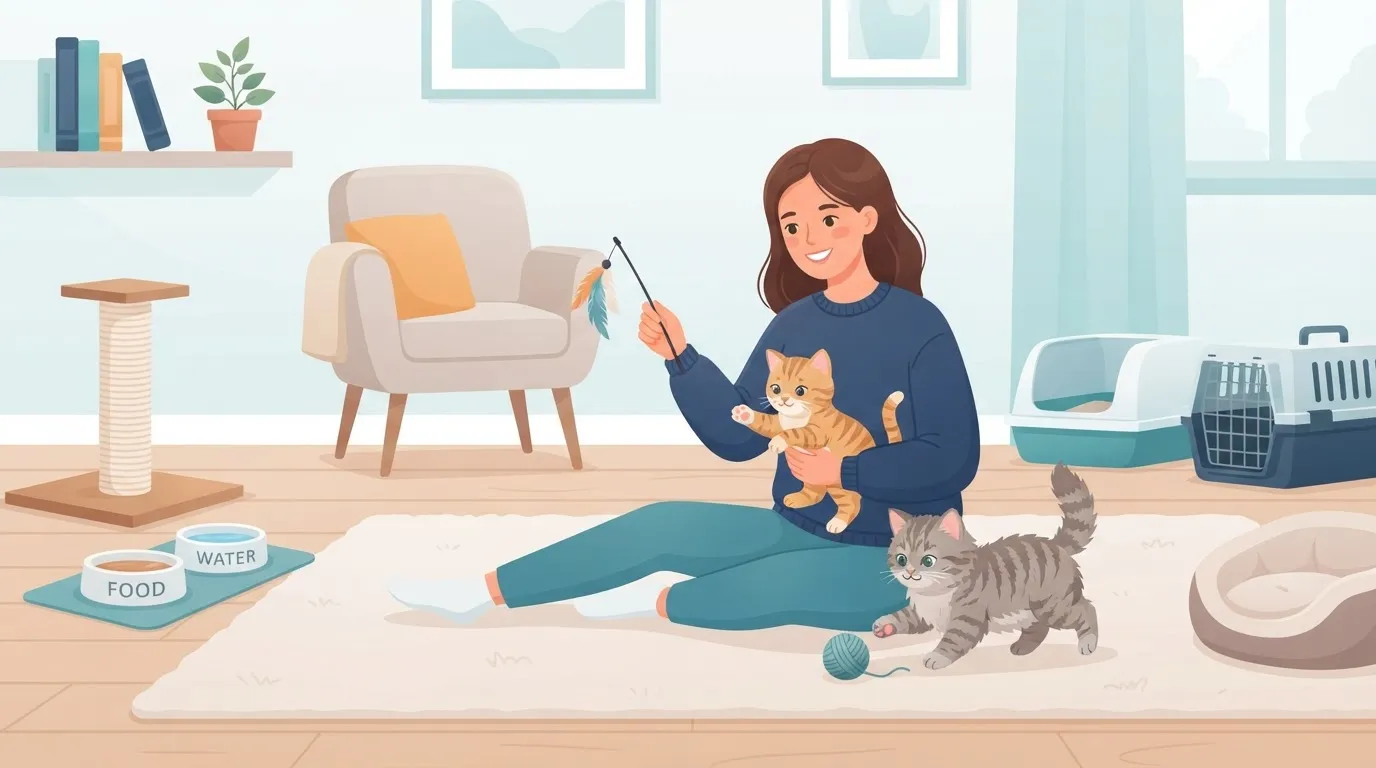
Even when they are inseparable, two kittens need to be able to choose. Making resources available in different parts of the home reduces competition and allows each cat to eat, drink, rest, and use the litter tray without feeling blocked by the other.
Prepare these items before they arrive:
- at least one litter tray per cat plus one extra, placed in quiet, separate areas;
- separate food and water bowls, preferably away from the litter trays;
- several beds, hiding places, and elevated spots;
- stable scratching posts in busy areas and near resting places;
- safe toys to rotate, avoiding string, elastic bands, or small objects left unattended.
A home arranged vertically can be especially helpful: secure shelves, tall scratching posts, and accessible furniture allow cats to create distance when they need it. Even in a small flat, distributing resources makes caring for two cats at home easier.
Costs of two cats: what to plan for
The costs of two cats do not always amount to exactly twice every expense, but it is sensible to consider them as two individuals with separate healthcare needs. Some accessories can be shared, while food, preventive care, and veterinary treatment should be planned for both cats.
Include the following in your initial budget:
- veterinary appointments and checks recommended by the professional;
- identification, vaccinations, and preventive treatments according to the veterinary plan;
- possible neutering or spaying;
- carriers: it is advisable to have one for each cat;
- litter trays, litter, bowls, scratching posts, beds, and toys;
- food suitable for each cat’s age and individual needs.
Over time, the main expenses include food, litter, routine check-ups, parasite treatments when needed, and possible unexpected costs. Do not choose food or postpone an appointment solely to reduce expenses: if you have concerns about diet, growth, appetite, or stools, speak with your veterinarian.
It can be useful to record each cat’s expenses, appointments, and treatments separately. With PawsPet, you can keep health information and reminders organized, avoiding confusion between the two animals’ deadlines and documents.
Settling into the home: even a bonded pair needs calm
Before the kittens arrive, prepare a quiet room with water, food, litter trays, hiding places, and toys. For the first few days, limit access to the rest of the home: the kittens can adjust gradually, becoming familiar with new smells and sounds without feeling overwhelmed.
Follow these practical steps:
- Let them leave the carrier on their own, without forcing them.
- Keep a predictable routine for meals, litter-tray cleaning, and playtime.
- Offer short sessions with a wand toy or a toy they can chase, involving both kittens without creating competition.
- Check that both kittens eat, drink, urinate, and use the litter tray regularly.
- Expand their access to the home only when they seem curious and relaxed.
Occasional hissing, brief chases, or small disagreements can happen. Do not scold them: interrupt calmly, separate resources, and check that each kitten has escape routes. If you notice repeated aggression, persistent fear, isolation, loss of appetite, or changes in toileting habits, ask a veterinarian or a qualified behaviour professional for advice.
Daily routine and signs not to overlook
Good organization does not require a rigid timetable, but it does require consistency. Set aside time each day for individual and shared play, clean the litter trays regularly, and make sure each cat receives its own portion of food.
Observe the kittens separately: a more assertive kitten may eat the other’s portion or always occupy the preferred spot. Weighing them and attending veterinary checks can help monitor healthy growth, especially during the early stages of life.
Adopting a pair of cats means creating an environment that respects two different personalities. PawsPet can help you centralize reminders, health information, and daily activities, so you can care for each kitten more consistently.
FAQ
Is it better to adopt two siblings or two unrelated kittens?
Siblings often already have an established relationship, but compatibility and shared history matter most. Two unrelated kittens can also live well together if they have been introduced appropriately and show relaxed interactions.
Can two kittens share the same litter tray?
They can, but it should not be the only option. Providing several litter trays in different locations limits stress, waiting, and possible conflicts over an important resource.
Do two kittens require twice as much time?
Some activities, such as mutual play, can take place between the kittens. However, each cat still needs individual observation, care, interaction, and its own health checks.