
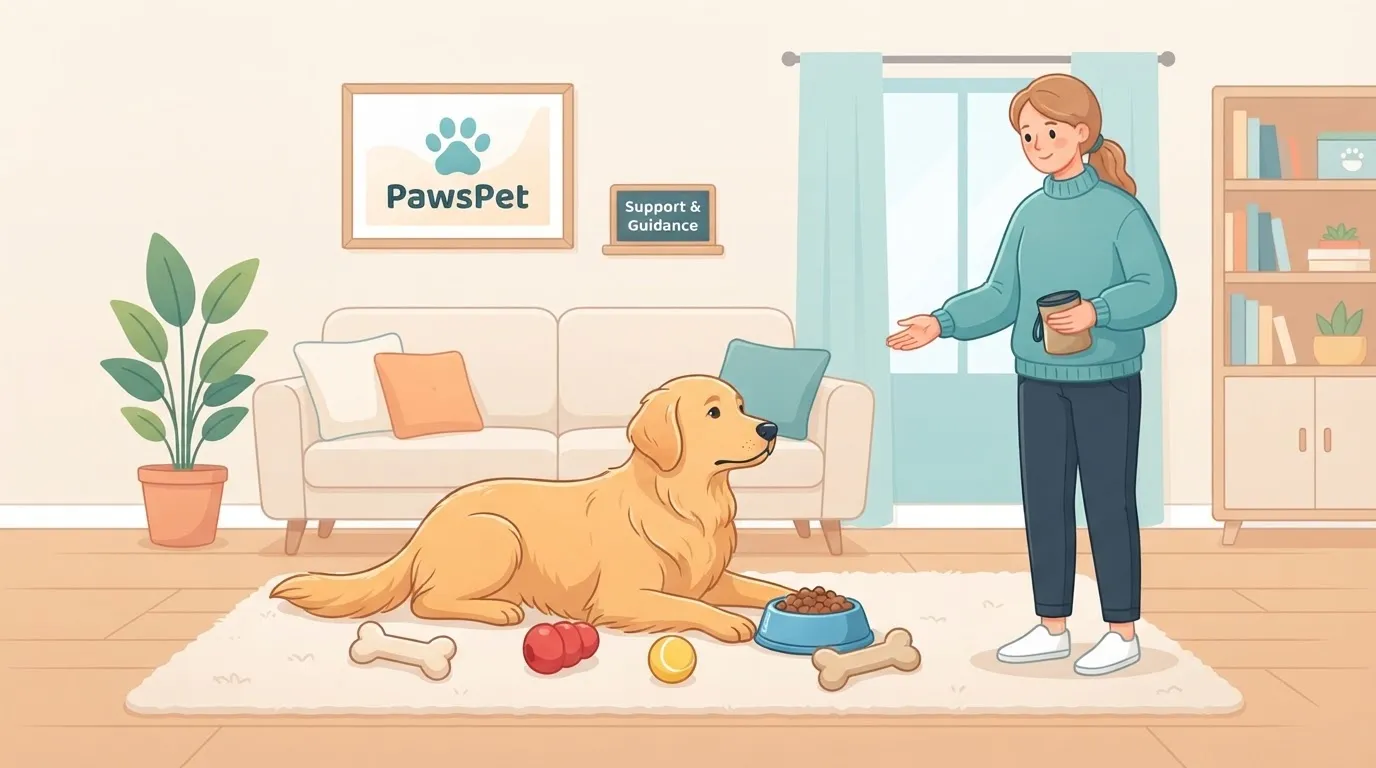
A possessive dog with food and toys is not trying to “be in charge”: it is communicating discomfort about possibly losing an important resource. Growling, stiffening, or moving away with an object are signals to take seriously, without punishment or power struggles.
Dog resource guarding can involve a food bowl, treats, toys, a bed, or objects found during a walk. Careful management reduces conflict and creates the right conditions for seeking appropriate support.
Recognizing the Signals Before Conflict Escalates
Growling is only one possible signal. Dogs often communicate much earlier through their body language: noticing these messages allows you to increase distance and prevent a stronger reaction.
Observe whether, near a resource, your dog:
- stiffens or lowers their head over the bowl;
- covers the toy with their body or moves away while carrying it;
- stares at someone approaching, shows the whites of their eyes, or rapidly licks their nose;
- growls, barks, lunges, or attempts to bite;
- reacts especially when children, other animals, or specific people are present.
A dog growling over their food bowl should not be scolded for growling. Punishing this signal may cause the dog to stop warning you without removing the underlying fear or tension. The priority is to stop the approach, keep everyone safe, and observe the circumstances in which the behavior appears.
Safe Management of Food, Toys, and Spaces
While you wait to begin a training or behavior program, everyday management is essential. This is not giving up on education: it helps prevent the dog from repeatedly experiencing discomfort and keeps the behavior from becoming established.
For food, you can take a few simple precautions:
- feed meals in a quiet area away from frequent foot traffic;
- do not allow people or other animals to approach while the dog is eating;
- avoid taking the bowl away “to get the dog used to it”;
- feed dogs and cats living together separately;
- teach children not to touch or disturb an animal during meals.
If your possessive dog with toys tends to stiffen, temporarily limit access to the most valuable toys when you cannot supervise. During interactions, choose less competitive activities and end the session before the dog becomes overly excited. Do not chase the dog to retrieve an object, and do not put your hands in their mouth.
The environment also matters: baby gates, separate rooms, closed containers, and predictable routines can prevent many difficult situations.
What to Do When the Dog Has an Object
If your dog picks up something they should not have, approaching head-on or trying to pull it away can increase tension. Stay calm and assess the risk first: if the object is dangerous or the dog is showing aggressive signals, avoid improvised interventions.
When the situation is calm and safe, you can offer a trade: move slightly away, offer something of higher value, and let the dog choose to leave the object. The goal is to gradually build the idea that a person approaching can lead to positive consequences, rather than immediate loss.
Avoid these common mistakes:
- putting your hands in the bowl while the dog is eating;
- taking toys or treats away to “test” the dog;
- physically restraining the dog or staring at them;
- scolding the dog after a growl;
- involving children in exchange training;
- waiting for a bite before asking for help.
Trading and teaching the dog to release an object should begin in easy situations, using low-value items and short sessions. If bites or attempted bites have already occurred, it is safer not to practice alone with the resources that trigger the problem.
When Behavioral Consultation Is Needed
Behavioral consultation is recommended if the behavior is frequent, worsening, involves multiple resources, or limits family life. It is especially important to contact a veterinarian and a qualified professional if the dog has bitten, if children live in the home, or if the behavior appeared suddenly.
A sudden change may also warrant a veterinary evaluation: pain, illness, or other physical conditions can affect a dog’s tolerance. The professional can observe the context, assess the signals, and suggest a gradual, realistic, and safe plan for the whole family.
Before the appointment, note:
- which resources the dog guards;
- who is present and at what distance;
- the signals observed and their intensity;
- any episodes involving a bite or physical contact;
- recent changes in routine, health, or household dynamics.
Recording this information in PawsPet’s health management area and notes can help you give the professional a more organized overview without relying only on memory.
FAQ
Can a possessive dog with food live with other animals?
Yes, but the household must be managed carefully. Meals, treats, and high-value toys should be offered in separate spaces, avoiding competition and inadequate supervision.
Should I take the toy away if the dog growls?
No. If the dog growls, increase the distance and do not turn the moment into a confrontation. Safe object recovery and teaching a trade should be planned with a professional if the dog reacts intensely.
Does growling mean the dog is aggressive?
Growling is a communication signal indicating discomfort, not a diagnosis. It should be respected and investigated, especially if accompanied by lunging, biting, or increasing tension.
Consistent management today can help prevent more difficult situations tomorrow. With PawsPet, you can organize notes, reminders, and useful information to share with your veterinarian or chosen professional.


