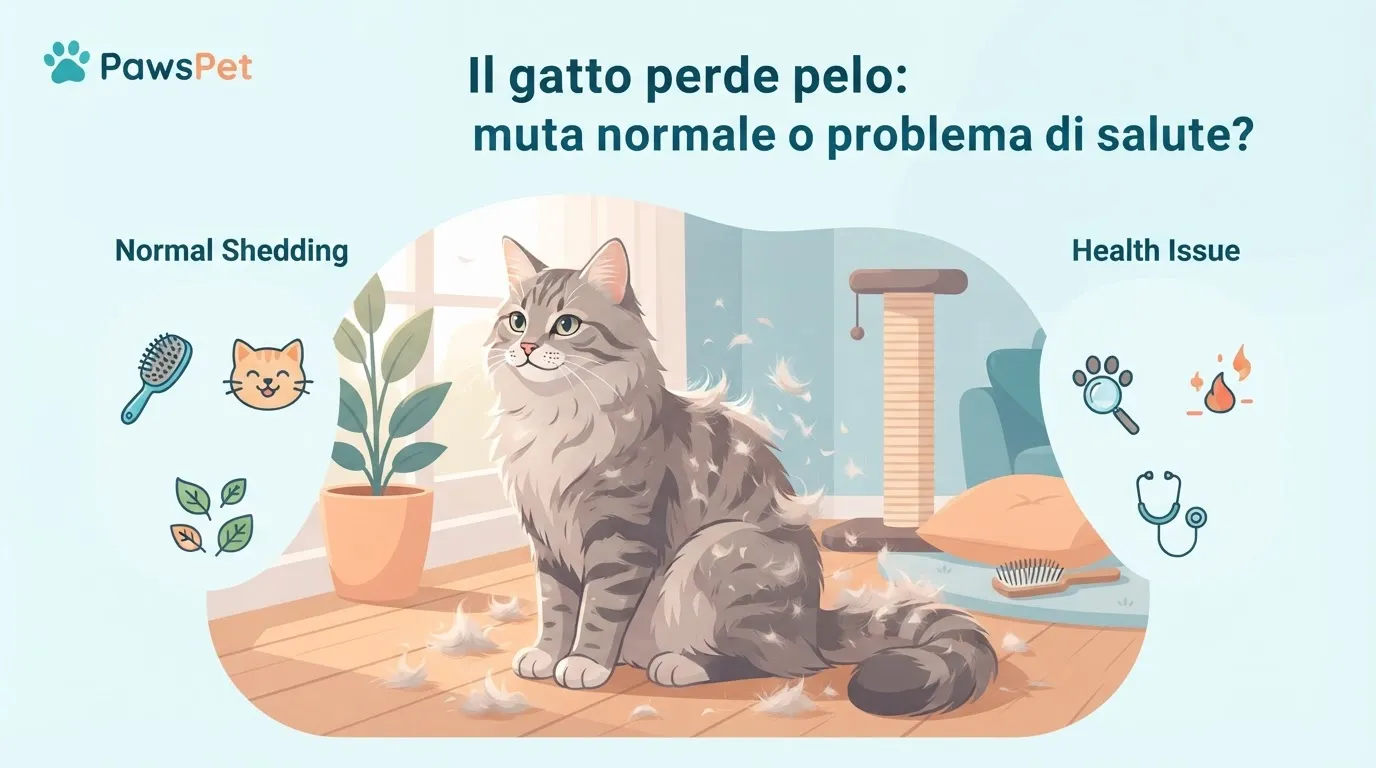
When a cat is losing hair, the first question is whether this is normal shedding or a sign that needs further attention. Some hair on sofas, blankets, and brushes is physiological; bald patches, itching, or irritated skin, however, deserve closer observation.
Regularly checking your cat’s coat helps you recognize hair loss that is consistent with seasonal shedding and act promptly if something changes.
Cat shedding: when hair loss is normal
Shedding is the natural renewal of the coat. In many cats, it becomes more noticeable during seasonal changes, but it can occur throughout the year, especially in cats that live mainly indoors with consistent lighting and temperatures.
During normal shedding, hair loss is fairly even: the coat may look less full for a few weeks, but completely bald areas do not appear. The skin remains clean, and the cat’s behavior does not change.
Signs generally consistent with normal shedding include:
- hair found on the brush, bedding, and household surfaces;
- diffuse hair loss without clearly defined patches;
- no scabs, redness, unpleasant odor, or marked dandruff;
- a cat that does not scratch persistently or lick compulsively;
- a coat that gradually becomes even again as the hair regrows.
Brushing your cat gently and regularly can remove loose undercoat, reduce the amount of hair swallowed during grooming, and make it easier to monitor skin health. Choose a tool suited to the coat’s length and density, without pulling or insisting on knots and sensitive areas.
When a cat is losing hair and there may be a problem
Feline alopecia, meaning localized or very noticeable hair loss, is not a diagnosis but a sign. It can be linked to various factors, including parasites, irritation, infections, allergies, stress, pain, or excessive licking. Only a veterinarian can assess the cause in an individual case.
Schedule a veterinary visit if you notice:
- bald patches on the flanks, abdomen, legs, neck, or around the ears;
- frequent itching, biting at the coat, or repetitive licking;
- red skin, scales, scabs, wounds, pustules, or bleeding;
- broken, dull, or greasy hair in specific areas;
- sudden and severe hair loss;
- simultaneous changes in appetite, litter box habits, sleep, or mood.
Do not apply human creams, essential oils, shampoos not formulated for cats, or parasite treatments intended for other species. Some substances can be irritating or toxic if licked. If your cat has extensive wounds, seems lethargic, or shows significant discomfort, contact your veterinarian promptly.
Practical checks for your cat’s coat, skin, and habits
A weekly check takes only a few minutes and can help you spot changes before they become more difficult to manage. Choose a calm moment, such as after your cat has rested or during a grooming session they enjoy.
Follow these steps:
- Examine the coat in natural light. Look for thinning, broken tufts, mats, dull areas, or uneven hair distribution.
- Gently part the hair with your fingers. Check the skin color and look for dark specks, scabs, scaling, or visible parasites.
- Notice where your cat licks. The abdomen and inner thighs may look bare when a cat is overgrooming, even if you do not see the behavior directly.
- Consider recent changes in routine. Moving house, new animals, home renovations, schedule changes, or insufficient resources can increase stress.
- Record what changes. The start date, affected areas, frequency of itching, and products used are useful information for your veterinarian.
With PawsPet, you can keep your cat’s health records up to date, record observations about the coat, and set reminders for veterinary checkups and prescribed preventive treatments.
How to support skin health without trying unproven treatments
Good daily care does not replace a clinical assessment, but it can support the health of the skin and coat. Provide a complete diet chosen with your veterinarian, fresh water, and a clean, predictable environment with plenty of resources.
To reduce licking linked to boredom or tension, offer quiet hiding places, elevated areas, short but regular play sessions, and opportunities for safe exploration. In multi-cat homes, make sure every cat has easy access to food and water bowls, litter boxes, scratching posts, and resting areas.
Avoid sudden diet changes or supplements chosen independently to “make the hair grow back.” If your cat’s hair loss persists, worsens, or is accompanied by lesions, a veterinary visit is the most useful next step: a professional can examine the skin and coat and recommend any appropriate tests or treatments.
Frequently asked questions
How long does cat shedding last?
The duration varies depending on the season, home environment, coat type, and individual characteristics. Diffuse hair loss without lesions or itching may be normal; if it does not improve or bald patches appear, ask your veterinarian for advice.
Can a cat lose hair from licking too much?
Yes. Persistent licking can break or remove hair, especially on the abdomen and flanks. It may be associated with itching, stress, pain, or other causes, so it is important not to automatically attribute it to behavior alone.
Should I bathe my cat during shedding season?
Usually, this is not necessary. Gentle, consistent brushing is often enough. Bathing should only be considered if your cat tolerates it and with products specifically formulated for cats, preferably following advice from a professional.
Check your cat’s coat calmly, record any changes, and do not wait if you notice unusual signs. With PawsPet, you can organize reminders and health information to help care for your cat every day.