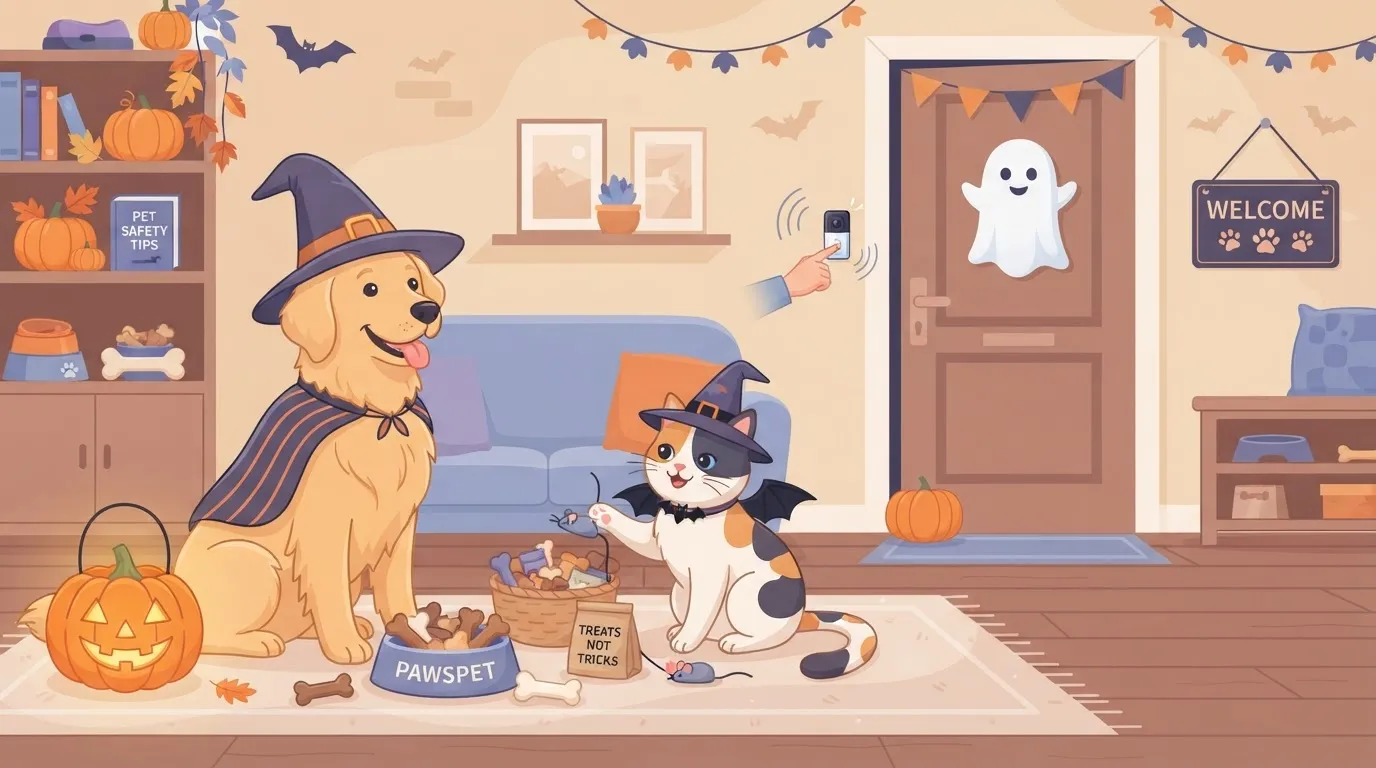
Halloween with dogs and cats can be an enjoyable celebration for the whole family, but it also brings sudden changes for pets: candy left within paw’s reach, doorbell noises, masks, frequently opened doors, and decorations that look tempting to chew. Preparing the environment in advance is the simplest way to reduce risks and respect their comfort levels.
Halloween pet safety does not require complicated solutions. You need a quiet space, clear rules for guests, and a few checks before visitors begin arriving.
Keep candy, snacks, and decorations out of reach
The best-known concern is chocolate and dogs at Halloween, but it is not the only food to keep away from pets. Candy, sweets, chewing gum, and wrappers can cause problems if swallowed or chewed. Cats are often less interested in sweets, but they may still play with colorful paper, ribbons, or packaging.
Before welcoming guests, place all food in a closed container and store it in an inaccessible cupboard. Remember that many Halloween sweets have small wrappers that are easy to swallow.
Pay particular attention to:
- chocolate and cocoa products;
- candy, chewing gum, and sugar-free sweets;
- raisins and baked goods that contain them;
- sticks, toothpicks, paper, ribbons, and wrappers;
- decorative pumpkins with lit candles or tea lights;
- electrical cables, flashing lights, and fragile decorations.
If you suspect that your dog or cat has eaten chocolate, candy, or a non-food object, do not try home remedies. If possible, keep the product packaging and contact your veterinarian or an emergency veterinary service promptly.
Reduce stress from the doorbell, masks, and guests
For many pets, repeated doorbell sounds and a steady stream of people are more tiring than the party noise itself. A dog may bark, become restless, or try to get out through the door; a cat may hide, freeze, or look for an escape route.
Prepare a safe room before visitors are expected. Choose a quiet indoor space with the door closed, fresh water, a bed, and familiar toys. For a cat, add a litter box and a high or covered hiding place. For a dog, a suitable chew may help, as long as it matches the dog’s habits and is supervised when necessary.
You can also:
- close curtains or blinds to limit outside stimulation;
- play calm, consistent background sound;
- ask guests not to enter the pet’s room;
- avoid loud greetings, chasing, and camera flashes;
- check that doors, windows, and gates are securely closed.
Do not force contact with people in costumes. Masks, capes, and unusual movements can confuse even a sociable pet. Let your dog or cat approach if they want to.
Pet costumes: comfort comes before the photo
Pet costumes may look amusing, but not all dogs and cats tolerate them. An outfit is acceptable only if it does not restrict movement, vision, hearing, breathing, or the ability to communicate. For cats especially, a costume can cause significant discomfort and interfere with their natural movements.
Before using a costume, check that it:
- is lightweight, the correct size, and free of dangling parts;
- has no tight elastic, small buttons, or detachable accessories;
- leaves the muzzle free and does not cover the eyes, ears, or whiskers;
- does not cause scratching, stiffening, escape attempts, or unusual postures;
- is worn for only a few minutes and always under supervision.
If your pet shows signs of stress, remove the costume immediately. A soft bandana, a photo beside a safe decoration, or no accessory at all are equally valid choices. Well-being comes before the perfect picture.
Prepare an escape-prevention plan for Halloween with dogs and cats
On Halloween, one moment of distraction is enough for a pet to slip out through the door with a guest. Cats at Halloween may be particularly vulnerable if they are startled by a sudden noise; some dogs, meanwhile, may take advantage of an open door to greet people or wander away.
Check that your pet’s ID tag and identification details are up to date. With PawsPet, you can keep your pet’s health and profile information organized, set useful reminders, and record GPS walks—practical tools for more organized day-to-day care.
For the evening, assign one person to open the door and remind everyone in the household not to leave access points open. If your dog needs a walk, choose a quieter time and always use a properly adjusted leash and harness.
Frequently asked questions about Halloween pet safety
Can my dog have a small piece of chocolate?
It is best to avoid chocolate altogether. The type and amount of chocolate, as well as the animal’s size and health, affect the risk. If your dog eats chocolate, contact your veterinarian for appropriate guidance.
How can I tell if my cat is stressed by guests?
Hiding, holding the ears back, very dilated pupils, hissing, stopping interaction, or repeatedly looking for exits are signals to respect. Give your cat a quiet place without trying to make them socialize.
Can I leave a lit pumpkin in the same room as my pet?
It is safer to choose decorations without open flames and place them out of reach. Candles, tea lights, and pumpkins with small parts may create risks of burns, ingestion, or being knocked over.
A well-organized celebration can protect dogs and cats without taking away from the Halloween atmosphere. With PawsPet, you can centralize reminders and important pet information, making even busy days easier to manage.