Slippery floors, high sofas and repeated jumps can increase the risk of slipping and fatigue, especially for puppies, senior dogs or pets with reduced mobility. Making the relationship between dogs and stairs safer does not mean restricting every movement: it means organizing the home so your dog can move steadily without unnecessary strain.
Why Stairs and Furniture Can Become a Risk
Going up and down stairs requires coordination, balance and good muscle strength. The concern is not limited to an obvious fall: small slips, frequent jumps from a bed and landings on hard floors can also create repeated strain.
Extra care is needed if your dog:
- is very young and still developing motor control;
- is senior, stiff in its movements or less confident;
- has a large body compared with the height of sofas and beds;
- has difficulty climbing, hesitates before steps or walks differently than usual;
- has already received veterinary advice concerning joints, the back or recovery from an injury.
Not every dog needs to avoid stairs completely. The right choice depends on age, physical condition, the home environment and how often the dog uses the stairs. If you notice pain, limping, sudden weakness or marked difficulty standing up, contact your veterinarian without waiting.
Making Stairs and Floors Safer
The first measure for preventing falls is improving traction. Marble, polished hardwood, porcelain tile and painted steps can be slippery, especially when your dog is running or has wet paws.
To improve dog safety at home, you can:
- apply non-slip coverings to every step, securing them firmly and choosing surfaces that are easy to clean;
- place rugs with non-slip backing in passageways and at the top and bottom of stairs;
- keep the route clear of shoes, cables, toys and objects that could cause a trip;
- provide adequate lighting in hallways, landings and stairways, including at night;
- dry floors and paws promptly after rain, bathing or walks;
- use safety gates to limit access when you cannot supervise your dog.
Avoid small rugs that curl up or slide under your dog’s paws: they can be more dangerous than a bare floor. Check regularly that non-slip surfaces are intact and firmly attached to the floor or steps.
Dog Ramps, Steps and Access to Furniture
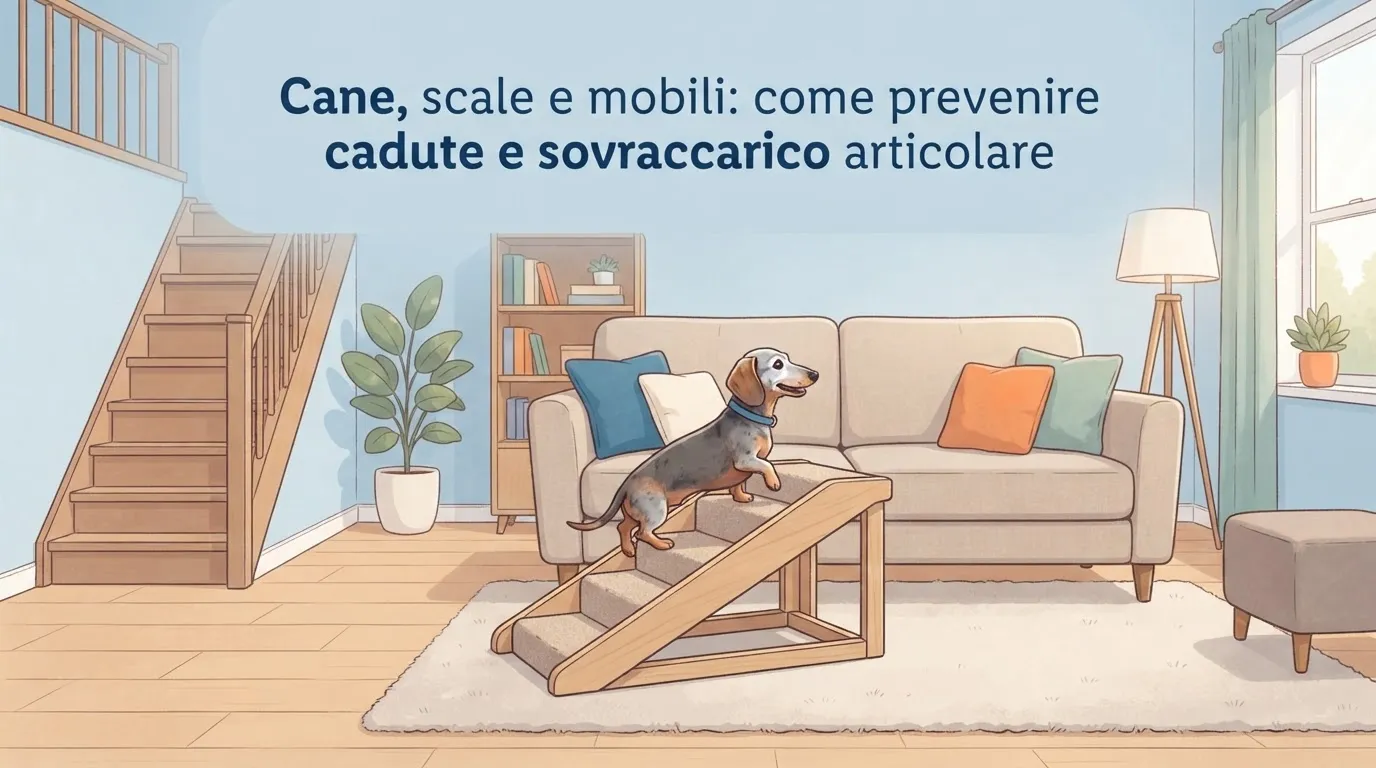
A dog ramp can help your pet reach a sofa, bed, car or small change in level without jumping. When choosing a suitable model, focus especially on stability, width, grip and incline.
A good ramp should have:
- a solid base that does not wobble;
- non-slip covering along the entire route;
- side edges or barriers to help guide the dog;
- dimensions suited to your dog’s size and the furniture it needs to reach;
- a gradual incline that is easier to manage than a steep climb.
Dog steps can work with low sofas or beds that are not too high, but they must be sturdy and securely positioned. Do not force your dog to use a new support immediately: let it explore, reward calm steps and practise in short sessions. If your dog is afraid of or avoids the ramp, do not pull or push it.
When installing a ramp is not possible, consider blocking access to the furniture or helping your dog up and down in a controlled way. Lifting a dog correctly requires care: ask your veterinarian or a qualified professional for advice suited to your dog’s build and condition.
Daily Habits to Protect Your Dog’s Joints
To protect your dog’s joints, the way you manage daily routines also matters. Running up and down stairs, chasing people or other pets and repeatedly jumping off the sofa are habits worth reducing with simple solutions.
Try to:
- teach your dog to move calmly on stairs and ramps, avoiding races and overtaking;
- accompany your dog through more difficult areas, especially when it is tired or drowsy;
- keep the bed, bowls and frequently used items on one floor of the home;
- keep your dog’s nails trimmed, since excessive length can reduce stability;
- choose regular, appropriate physical activity, discussing it with your veterinarian if your dog is vulnerable.
For a senior dog, stairs can gradually become more difficult even without a sudden incident. Watch for changes: moving more slowly, hesitation, slipping, needing to stop or reluctance to go downstairs all deserve professional evaluation.
FAQ About Dogs, Stairs and Furniture
Can a senior dog use the stairs?
It depends on the dog’s mobility, whether pain is present and how safe the environment is. Non-slip stairs used at a slow pace may be manageable in some cases, but your veterinarian can recommend any specific restrictions.
Does a dog ramp always replace steps?
Not always. A ramp is often more gradual, but it must be stable and long enough. For low furniture, some dogs may use sturdy steps; the choice should be adapted to the individual pet.
Should I prevent my dog from getting on the sofa?
If jumping creates a risk of falling or strain, it is better to provide a ramp, block access or create a comfortable resting area on the floor.
Small changes around the home can reduce many everyday risks. With PawsPet, you can use reminders to plan veterinary checkups, nail care and health updates for your dog.