Choosing an at-home veterinarian can make a veterinary visit easier to manage for fragile, less mobile, or particularly travel-stressed animals. It does not always replace a clinic, but in many cases it allows pets to receive basic care and professional assessments in a familiar environment, with less agitation for the pet and greater convenience for the family.
Understanding when a veterinary visit at home is appropriate, which services it may include, and what affects the at-home veterinarian cost can help you make a calmer, more informed decision.
When it makes sense to call an at-home veterinarian
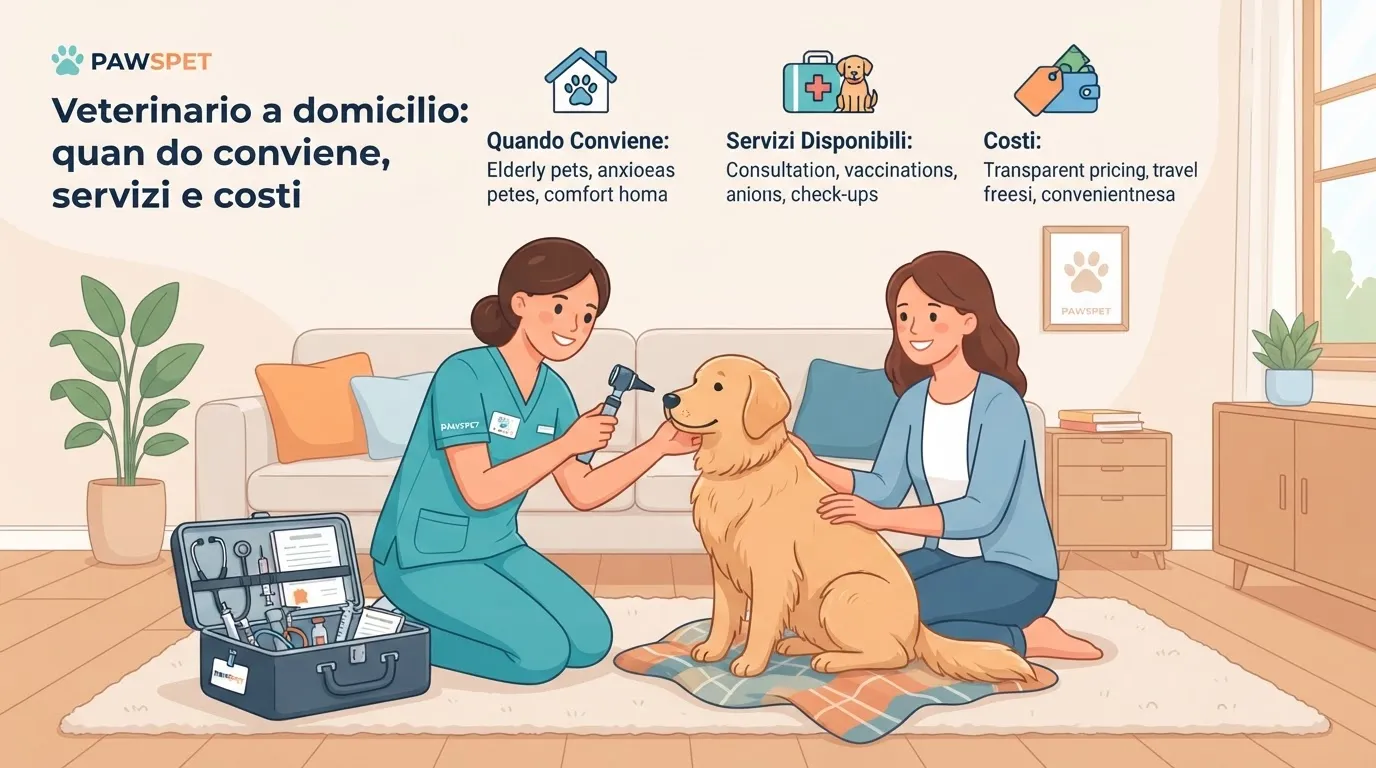
A mobile veterinarian can be a useful option when transport is difficult, risky, or a source of significant distress. A home environment may be especially suitable for a stressed cat that struggles to enter a carrier or reacts fearfully to the noises and smells of a waiting room.
A home visit may also be a good choice for:
- senior dogs with reduced mobility or recovering from a physical problem;
- animals living with other pets who can be observed in their usual environment;
- owners without suitable transportation;
- scheduled checkups, vaccinations, or non-urgent monitoring;
- advice on everyday care, nutrition, or prevention.
When booking, clearly describe your pet’s age, species, observed symptoms, current treatments, and behavior. This information helps the professional determine whether a veterinary visit at home is appropriate or whether an equipped facility would be preferable.
What services can a veterinary visit at home include?
Available services vary depending on the veterinarian’s organization, portable equipment, and the animal’s condition. In general, an at-home veterinarian may perform basic clinical assessments and some scheduled procedures.
Possible services include:
- checkups and medical history collection;
- vaccinations and boosters, when appropriate;
- monitoring for senior animals or pets with conditions already being managed by a veterinarian;
- prescriptions and treatment recommendations following a clinical assessment;
- blood draws or sample collection, if the professional provides this service;
- advice on hygiene, prevention, and caring for the animal at home;
- certificates or specific paperwork, when required and compatible with a home visit.
Not every situation can be managed at home, however. Complex diagnostic tests, X-rays, surgery, hospitalization, intensive monitoring, and many emergencies require a veterinary clinic or hospital. If your pet has difficulty breathing, significant bleeding, loss of consciousness, suspected poisoning, trauma, or severe pain, contact an equipped veterinary facility immediately and follow the instructions you receive.
At-home veterinarian cost: what to consider
The cost of an at-home veterinarian depends on more than the requested service. It may vary according to the city or area being covered, distance, appointment time, level of urgency, animal species, and any tests or treatments required.
To compare options properly, ask before confirming:
- whether the call-out fee or travel charge is included;
- which service is covered by the quoted fee;
- which additional costs may apply for medication, materials, tests, or samples;
- whether there are surcharges for evenings, holidays, or emergencies;
- which payment methods are accepted and what financial documents are provided.
A clear quote does more than help you avoid surprises: it also helps you understand whether the proposed service genuinely meets your pet’s needs. Be cautious of vague information or anyone who recommends treatments without an appropriate professional assessment.
How to prepare for the visit and choose a reliable service
Preparing the environment can make the visit more effective and less stressful. Choose a quiet room, limit noise and frequent movement, and keep your pet’s health record, relevant reports, and an up-to-date list of medications or supplements readily available, along with information about feeding habits.
If you have a cat, avoid chasing it shortly before the appointment. Instead, prepare a safe room where it can feel protected. For a dog, a short, calm walk before the visit may help it relax without tiring it.
When choosing a professional, check that they are a licensed veterinarian and ask how they handle situations requiring referral to a clinic. It is also useful to assess:
- experience with your pet’s species and the issue you described;
- availability for scheduled appointments or emergency management;
- clarity when communicating services and costs;
- how prescriptions, reports, and follow-up instructions are sent.
With PawsPet, you can organize your pet’s health information, set reminders for checkups and vaccinations, and search for pet services in your area more easily.
FAQ about at-home veterinarians
Can an at-home veterinarian handle an emergency?
It depends on the type of emergency and the equipment available. For severe or sudden symptoms, it is generally safer to contact an equipped veterinary clinic immediately, so that diagnosis and urgent treatment can be provided.
Is a veterinary visit at home suitable for a very fearful cat?
Often, yes: staying in a familiar environment may reduce the stress associated with the carrier and waiting room. The veterinarian will still assess whether the cat can be examined safely and with as little discomfort as possible.
How much does a mobile veterinarian cost?
There is no single price. The fee depends on the area, distance, appointment time, service provided, and any tests or medications. Asking for a detailed quote before the visit is the most appropriate approach.