Choosing between a dog sitter or dog walker mainly depends on how long your dog will be without the family and what needs must be managed during the day. A quick bathroom break, a structured walk, or a longer stay at home are different services. Clarifying this in advance helps your dog maintain a calm routine and makes it easier to find the right professional.
Difference between dog sitter and dog walker: tasks and goals
The main difference between a dog sitter and dog walker concerns the type of support provided.
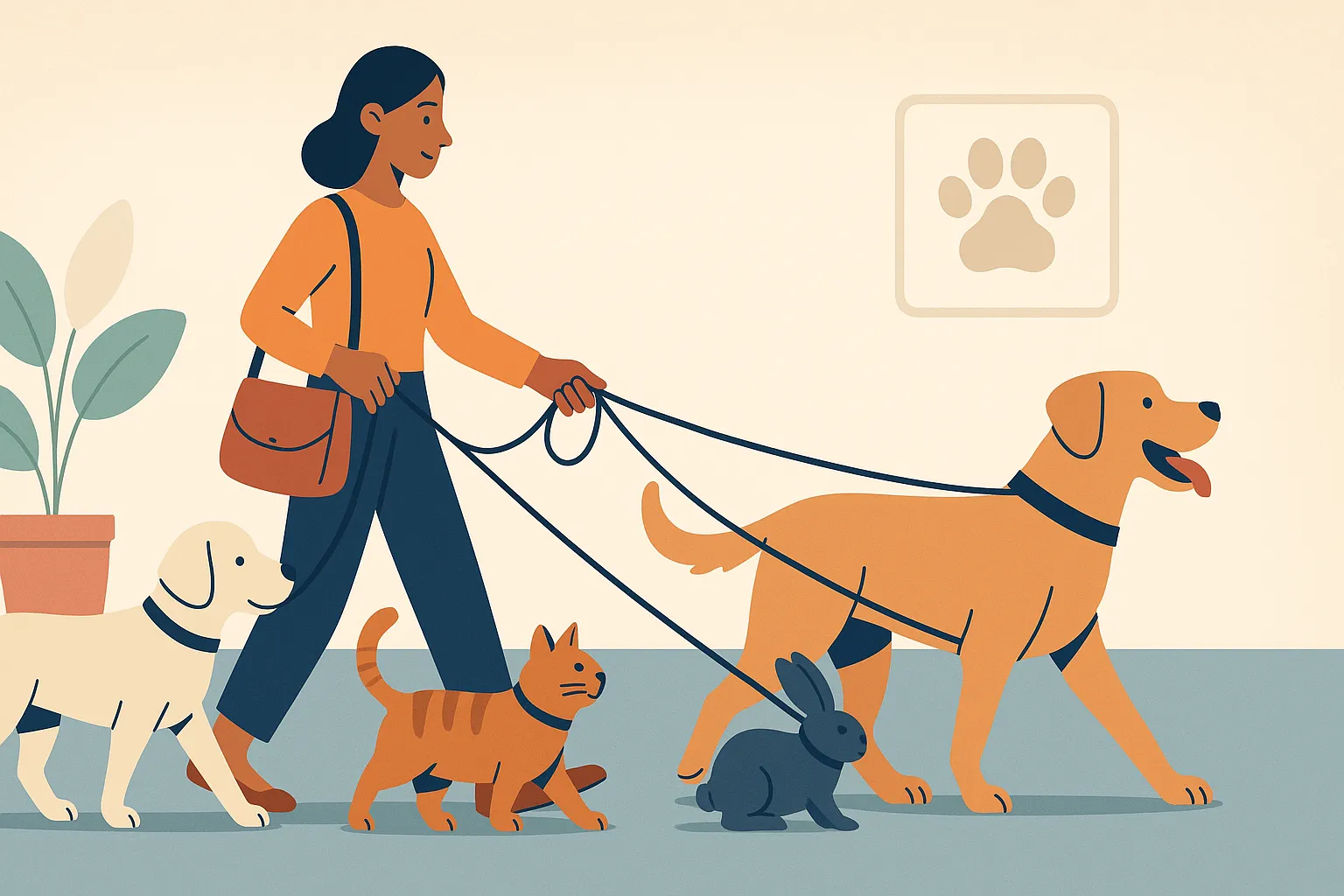
A dog walker primarily takes the dog outside. A dog walking service may include:
- a bathroom break;
- an on-leash walk in a safe area;
- physical activity suited to the dog’s age and habits;
- fresh water upon returning home;
- a brief update for the owner about the route, behavior, and the dog’s needs.
A dog sitter, on the other hand, provides broader and more flexible care. They may stay with the dog at home, make visits during the day, or look after the animal when the family is away for several hours or a few days. Depending on the agreement, they may manage meals, companionship, outings, play, basic cleaning of the dog’s areas, and instructions already prescribed by the veterinarian.
In short: a dog walker mainly meets the need for walks and exercise, while a dog sitter focuses on companionship, daily care, and continuity of the dog’s routine.
When to choose a dog walker
A dog walker is often suitable for dogs that stay home alone during working hours but do not need continuous in-home care. This service can also help when the owner has limited mobility or an especially busy day.
Consider a dog walking service if your pet:
- needs a regular midday outing;
- is used to staying home for several hours;
- benefits from exercise, exploration, and sniffing;
- follows a stable schedule for meals and rest;
- is comfortable with new people after a gradual introduction.
Before entrusting your dog to someone, clearly communicate any sensitivities, such as reactivity toward other dogs, fear of noises, leash difficulties, allergies, areas to avoid, or specific instructions for entering the home. A well-organized walk is not only about the number of minutes spent outside, but also about safety, attention, and respecting the dog’s pace.
When a dog sitter may be more suitable
A dog sitter may be preferable when your dog needs more interaction during the day or when the family will be away for many hours. This is also a common choice for puppies, senior dogs, or animals that struggle with being alone, while always considering the individual situation.
This service may be useful when your dog needs:
- several outings spread throughout the day;
- companionship and supervision at home;
- meals managed according to the owner’s instructions;
- a routine kept as close as possible to the usual one;
- regular updates while you are away from home.
For longer absences, ask clearly whether the professional offers visits, daytime stays, or overnight care. Agreeing in advance on schedules, responsibilities, and communication methods helps prevent misunderstandings and protects the dog’s well-being.
Dog walker and dog sitter costs: what can affect them
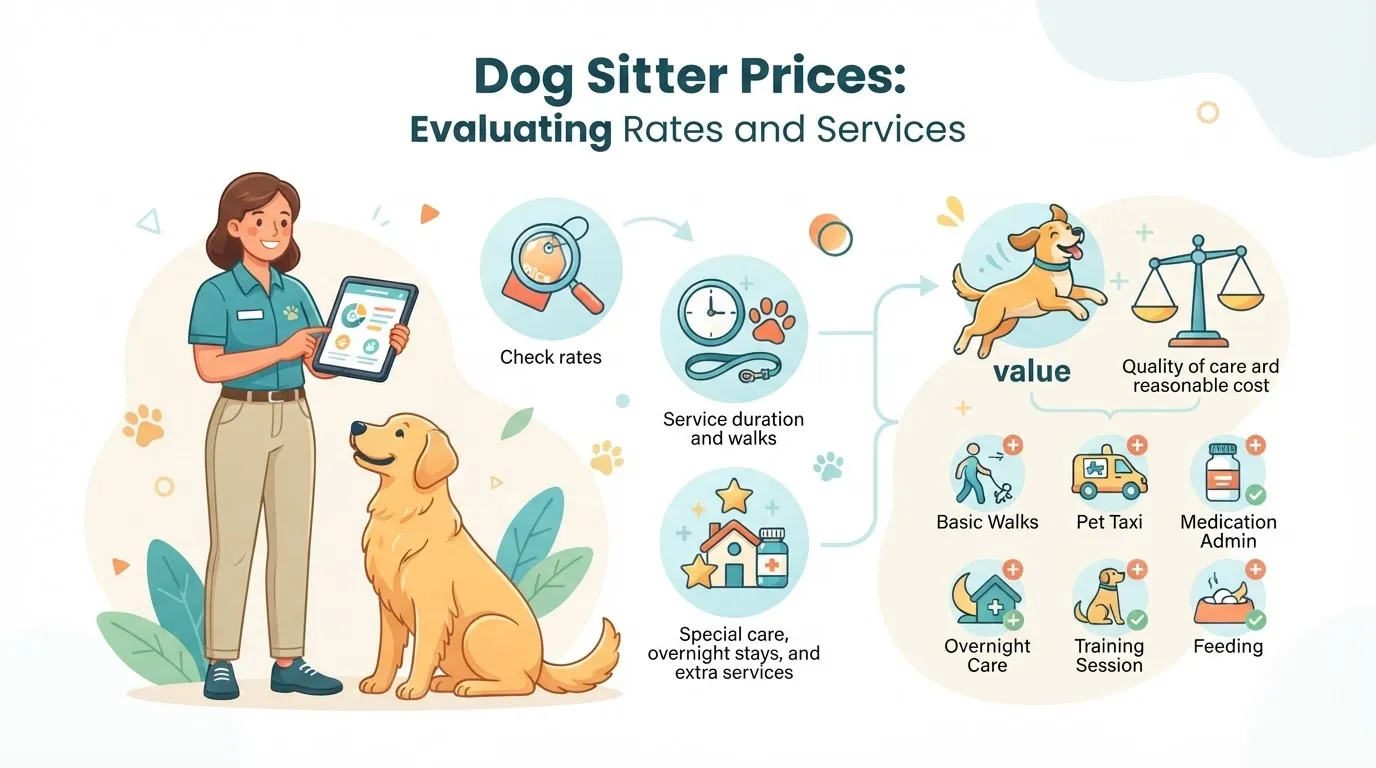
The cost of a dog walker and the cost of a dog sitter vary depending on the service. Avoid choosing based only on the price: the real value depends on the quality of care, the professional’s experience, and how well the service matches your dog’s needs.
Factors that may affect the cost include:
- the length of the walk or visit;
- the number of outings required;
- the area and travel time;
- the presence of multiple pets in the same household;
- individual care or walks in a small group;
- specific requests, such as detailed updates or longer stays;
- the time of year, holidays, and the urgency of the request.
Ask for a clear quote specifying the duration, what is included, any additional charges, and the cancellation policy. If your dog has particular health or behavioral needs, discuss them openly. The professional can tell you whether they are able to manage them or suggest support from a qualified veterinarian or behavior professional.
How to choose the right professional
A meet-and-greet is essential before starting. Observe how the dog sitter or dog walker interacts with your dog: they should respect the dog’s pace, ask questions, and avoid forcing contact.
Prepare a practical information sheet with:
- usual mealtimes, walk times, and rest periods;
- the veterinarian’s contact details and an emergency contact;
- leash habits and signs of discomfort;
- instructions about access, keys, and areas of the home;
- permissions or restrictions regarding parks, meetings with other dogs, and transportation.
A good professional will also explain how they handle unexpected situations, delays, unfavorable weather, and updates. To compare profiles and services, the PawsPet marketplace can help you find professionals who are compatible with your routine’s needs.
FAQ
Does a dog walker take several dogs out together?
It depends on the professional and the agreement. Always ask whether the walk will be individual or in a group, how many dogs will be present, and how compatibility between them is assessed.
Can a dog sitter give medication to a dog?
Only if the professional is willing to do so and receives clear instructions from the owner and veterinarian. For treatments, new symptoms, or health concerns, contact your veterinarian.
How long should a dog walker’s visit last?
There is no standard duration that suits every dog. Age, health, energy level, habits, and weather conditions all affect the appropriate length. Agree on a service tailored to your dog.
By choosing a service that fits your pet’s routine, you can make time away easier to manage and walks safer. With PawsPet, you can organize the details of everyday care and find support when you need it.