If you spend many hours away from home, work irregular shifts, or simply want your dog to get more stimulation and exercise during the day, professional dog walking services can be a practical and safe solution.
In this article, we’ll take a practical look at:
- what a professional dog walk service really includes
- the differences between solo and group walks
- average dog walking prices in major Italian cities
- what to ask a dog walker before trusting them with your dog
- how to assess reliability, skills, and insurance coverage
The goal is to help you understand how much dog walking costs, what it’s reasonable to expect, and how to choose the right professional for your dog and your lifestyle.
What professional dog walking is (and what it is NOT)
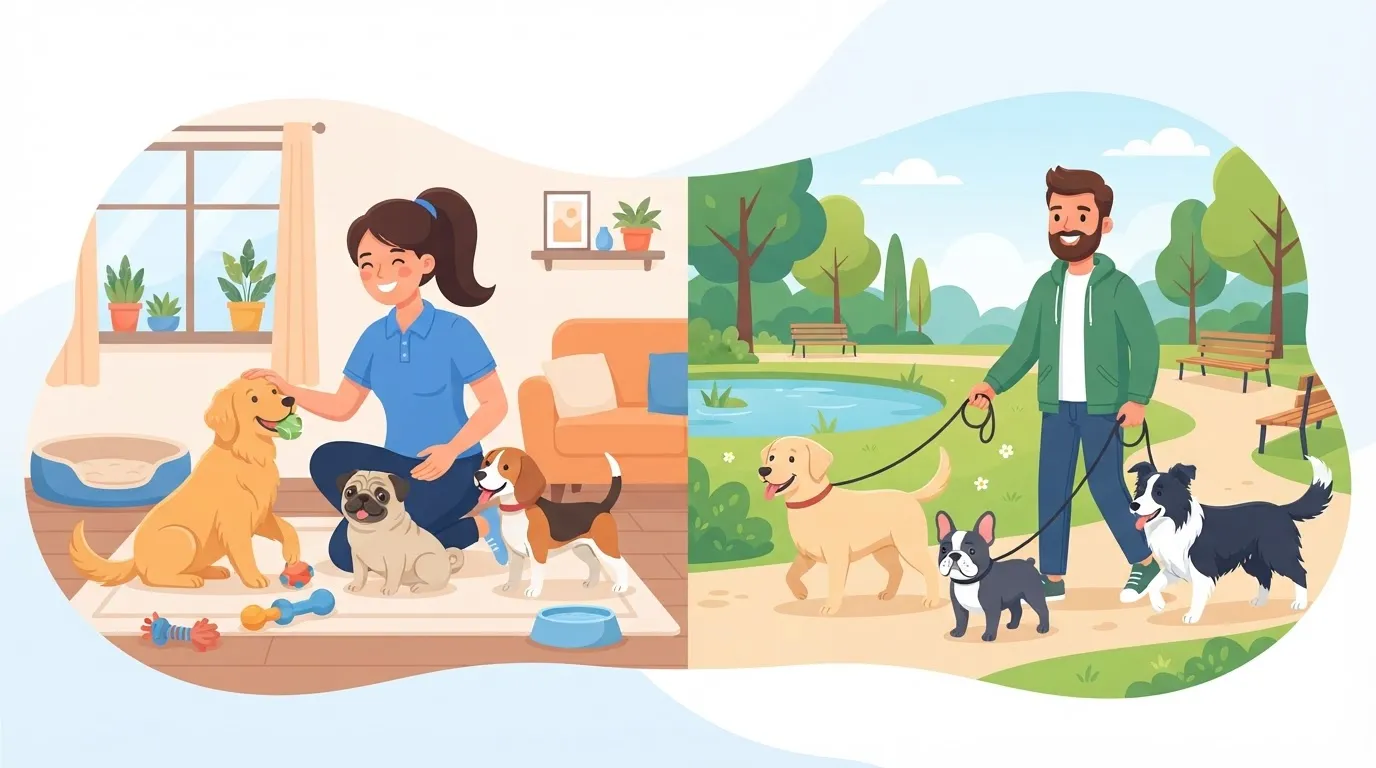
Dog walking is a service in which a professional (dog walker or dog sitter) picks up your dog from home and takes them for a walk for a set amount of time, usually between 30 and 60 minutes.
It should be distinguished from:
- In-home pet sitting: also includes care inside the house (meals, companionship, and any medication administration agreed with the veterinarian).
- Boarding or daycare: the dog spends several hours or days in a dedicated facility.
In professional dog walking:
- the focus is on a quality walk
- there is often a regular schedule (e.g. 3 times a week at 1:00 p.m.)
- the dog’s routines and habits are taken into account
- the professional should have basic skills in canine behavior and outdoor management
A dog walker does not replace a trainer or a veterinarian: however, they can work with them and apply shared instructions (for leash handling, interactions with other dogs, and activity levels).
What a good professional dog walking service includes
Not all dog walk services are the same. Here’s what a well-structured service should realistically include.
1. Introductory meeting and initial trial
Before starting, a good dog walker offers:
- Introductory meeting (in person or via video call):
- information about the dog’s routine, health, and personality
- review of house rules (doors, off-limits areas, etc.)
- handling of any difficulties (fear, reactivity, leash issues)
- Trial meeting:
- short walk with the owner present
- assessment of dog–walker compatibility
- first observation of the dog’s behavior outdoors
This step is essential to understand whether the dog walker’s style matches your dog’s needs.
2. Walk duration and type
Dog walking services are usually organized by time slots:
- 20–30 minutes: short walk, often for puppies, senior dogs, or quick bathroom breaks
- 45 minutes: standard duration in many cities
- 60 minutes or more: designed for very active dogs, sporty breeds, or dogs left alone for many hours
Some professionals also offer:
- split walks (e.g. 2×30 minutes per day)
- evening or nighttime walks (at an extra cost)
When agreeing on the service, it’s important to clarify:
- actual walking time vs. any travel time
- starting point (outside your home, nearby park, dog-friendly area)
- whether the dog is transported by car (and under what safety conditions)
3. Solo walk vs. group walk
A major distinction in professional dog walk services is between:
Solo walk
The dog walker goes out with one dog at a time (or multiple dogs from the same household).
Advantages:
- maximum attention to the individual dog
- ideal for shy, senior, medically fragile, or socially difficult dogs
- easier management of special needs (pace, breaks, routes)
Disadvantages:
- usually more expensive than group walks
Group walk
The dog walker goes out with 2–4 dogs (serious professionals avoid large groups in urban areas).
Advantages:
- greater socialization for compatible dogs
- more varied stimulation and social enrichment
- generally lower cost
Disadvantages:
- less personalization
- not suitable for all dogs (fear, aggression, overexcitement, leash issues)
- harder to manage emergencies or unexpected situations
A professional dog walker always evaluates:
- compatibility of size, age, and temperament
- the dogs’ basic training level
- the settings chosen for walks (avoiding crowded, overstimulating places).
Additional services often included (or optional)
Many owners search online for a “dog walker near me” without realizing that offers can include very different elements. Here are the most common ones.
Services often included in the base price
- Bathroom break management (waste pickup, compliance with local rules)
- Basic cleanup on return (wiping paws, removing heavy mud)
- Water refill and, if agreed, meal feeding
- Quick drying if it rains (within the technical limits of the available time)
Optional services or add-ons
- Sending photos, videos, and live updates
- Written post-walk report (duration, route, notable behavior)
- Secure key handling (with specific procedures)
- Medication administration as directed by the veterinarian (always to be assessed very carefully)
- Basic training exercises (loose-leash walking, sit, stop)
- Car transport to specific parks / green areas outside the city
How much dog walking costs: average prices in Italy
Talking about “how much dog walking costs” is complicated because prices depend on many factors:
- city / area (city center, suburbs, small towns)
- the dog walker’s experience
- type of walk (solo or group)
- duration and weekly frequency
- any extras (weekends, holidays, nighttime, transport mileage)
Below is an indicative estimate (not binding) of the average prices you can expect in the main Italian urban areas.
Indicative price ranges
Major metropolitan cities (Milan, Rome, Turin, Florence, Bologna)
Solo walk:
- 30 minutes: €10–18
- 45 minutes: €15–22
- 60 minutes: €18–28
Group walk:
- 45 minutes: €12–18
- 60 minutes: €15–22
Packages (e.g. 3–5 outings per week) may lower the hourly cost.
Medium-sized cities and provinces
Solo walk:
- 30 minutes: €8–14
- 45 minutes: €10–18
- 60 minutes: €14–22
Group walk:
- 45 minutes: €9–15
- 60 minutes: €12–18
In suburban or very small areas, prices may drop further, but transport costs often increase.
Typical surcharges
Many dog walkers apply small extras for:
- Weekends and holidays: +10–30%
- Evening/night hours: +20–40%
- Dogs with special needs (complex handling, reactivity): extra fee to be agreed
- Car transport beyond a certain radius: per-kilometer or per-zone rate
When comparing prices, consider what is actually included: a slightly more expensive service that is well organized, insured, and communicative may be more cost-effective in the long run.
How to evaluate a professional dog walk service
Beyond price, there are several “invisible” elements that make the difference.
1. Training and skills
Always ask:
- whether the dog walker has taken canine education or dog handling courses
- whether they have previous experience with dogs similar to yours (size, age, behavior issues)
- how they handle complex situations (off-leash dogs approaching, traffic, loud noises)
You don’t necessarily need dozens of certificates, but it’s important that they:
- can read a dog’s body language
- recognize signs of stress, fear, or aggression
- know how to prevent problems, not just react when they happen
2. Organization and reliability
Positive signs:
- clear schedules and respect for timing
- prompt communication in case of delays or unexpected issues
- written contract or agreement with service conditions
- traceable systems for bookings, payments, and cancellations
A professional dog walker treats their work as a real job, not as an occasional favor.
3. Insurance and safety
One of the most important points to clarify:
- is there professional liability insurance?
- what does it cover exactly (damage to third parties, other dogs, the dog during the walk)?
- what are the procedures in case of an accident or the dog escaping?
It’s fair to note that no policy eliminates risk 100%, but a responsible professional:
- works to minimize dangers
- has clear emergency procedures
- knows the dog’s veterinarian contact details and local rules (leash, muzzle where required)
What to ask a dog walker before starting
If you’re searching for a “dog walker near me” on an app or marketplace, before confirming the service take a few minutes to exchange real information.
Key questions to ask
- How long have you been doing this job, and what kind of dogs have you worked with?
- Do you do solo walks or group walks? How many dogs at most?
- If it’s a group walk, how do you select compatible dogs?
- How do you handle encounters with unfamiliar dogs (on leash or off leash)?
- Do you have professional liability insurance? What does it cover?
- What happens if it rains heavily, snows, or the weather is bad?
- How do you handle senior dogs, dogs with medical conditions, or dogs on ongoing treatment?
- Do you send updates, photos, or reports after the walk? How often?
- How does key handling work?
- What are your cancellation and payment terms?
Quick checklist for the first meeting
- Does the dog seem comfortable with the person?
- Is the professional genuinely interested in the dog’s habits (not just the fee)?
- Do they ask specific questions about fears, physical limits, and medical history?
- Do they explain how they handle leash, harness, and collar use (avoiding coercive tools)?
- Do they have a calm, respectful, non-forced approach?
If something doesn’t feel right, it’s perfectly reasonable to look for another dog walker: trust is central.
How to tell whether the service is working for your dog
After a few weeks of professional dog walking services, watch for signs:
Positive signs
- your dog shows balanced excitement when the dog walker arrives (not panic, not avoidance)
- they come home tired but calm, not overly agitated
- over time you notice better leash behavior
- no new problematic behaviors appear linked to outings (fear, sudden aggression)
Warning signs
- your dog starts hiding or stiffening when the dog walker arrives
- they come home overly agitated, panting, or frightened
- you notice recurring minor incidents that aren’t explained (scratches, limping, wounds)
- you receive little or no feedback about what happens on walks
In these cases, it’s important to:
- discuss it openly with the professional
- consider checking with a veterinarian if you notice behavior changes or physical signs
- consider changing the walk type (from group to solo) or switching dog walkers
Practical tips to set up the service the right way
Before starting
- prepare a dog profile sheet with:
- identifying details
- veterinarian contact information
- any allergies, medical conditions, treatments
- daily routine and words/instructions your dog knows
- agree on preferred routes and areas to avoid
- clarify what the dog walker can and cannot do:
- no unclipped leash without your consent
- no crowded dog parks if your dog is insecure
- no contact with strangers without assessment
During the collaboration
- ask for brief periodic feedback (e.g. weekly)
- observe changes at home (calmness, sleep, appetite)
- update the dog walker on any new developments (new vet visits, trainer guidance, diet changes)
How PawsPet can help you manage dog walking
If you use an app to find pet services, it’s helpful to keep everything centralized.
With PawsPet you can:
- keep your dog’s full profile (details, size, needs) at hand
- save health, feeding, and behavior notes to share with the dog walker
- set reminders for regular walks, medications, or vet checkups
- manage the contacts of professionals in one place (dog walker, trainers, veterinarians)
If you are a professional dog walker, listing your activity on PawsPet allows you to:
- become more visible to owners looking for professional dog walking services in your area
- clearly present rates, walk duration, and included services
- receive structured requests with the key information about the dog before the first meeting
FAQ on professional dog walking services
1. How much does a dog walker cost on average?
The average cost of a dog walker generally ranges between €10 and €20 for 45–60 minutes in major cities, with slightly lower prices in provincial areas. The biggest factors are the type of walk (solo or group), weekly frequency, and any extras (weekends, holidays, evening hours).
2. Is a solo walk or group walk better for my dog?
It depends on your dog’s personality and needs.
- If your dog is shy, senior, medically fragile, or reactive, a solo walk is often better because it’s more personalized.
- If your dog is social, balanced, and used to other dogs, they may enjoy a group walk very much, since it offers socialization and stimulation.
A good dog walker will help you decide which option fits best.
3. What insurance should a dog walker have?
There isn’t one single mandatory policy for everyone, but it is advisable for the dog walker to have professional liability insurance covering damage to third parties, other animals, and, where possible, the dog entrusted to them. Always ask exactly what is covered and what the limits are.
4. What should I leave ready for the dog walker at home?
Usually, you only need:
- leash, harness/collar your dog normally uses
- any waste bags and wipes
- written instructions about meal times and special needs
- your trusted veterinarian’s contact details
It’s also useful to leave a short note with emergency contacts and house rules.
Conclusion: how to choose the right dog walking service
Choosing a professional dog walking service means much more than “finding someone to take the dog out.” It means:
- ensuring exercise, stimulation, and well-being for your four-legged companion
- handling your work schedule and commitments more calmly
- building a trusting relationship with a professional who becomes part of your dog’s daily life
To choose wisely:
- define the type of walk (solo/group, duration, frequency)
- evaluate the dog walker’s experience, training, and approach
- clarify prices, extras, and terms in advance
- observe how your dog truly feels in the weeks that follow
If you want to organize your dog’s daily care better and keep everything under control (profile, health, professional contacts, reminders), try the PawsPet app: it helps you coordinate dog walkers, trainers, and veterinarians with ease, always keeping your four-legged friend’s well-being at the center.