A senior cat can continue to enjoy a good quality of life for a long time, but it often communicates its needs through small, gradual changes. Observing habits, mobility, appetite and behavior makes it possible to act early with your veterinarian and adapt the routine without disrupting your cat’s sense of balance.
Recognizing the Signs of Cat Aging
There is no single age at which every cat becomes a senior: age, individual health, lifestyle and medical history all matter. Rather than focusing only on a number, observe changes compared with your cat’s usual habits.
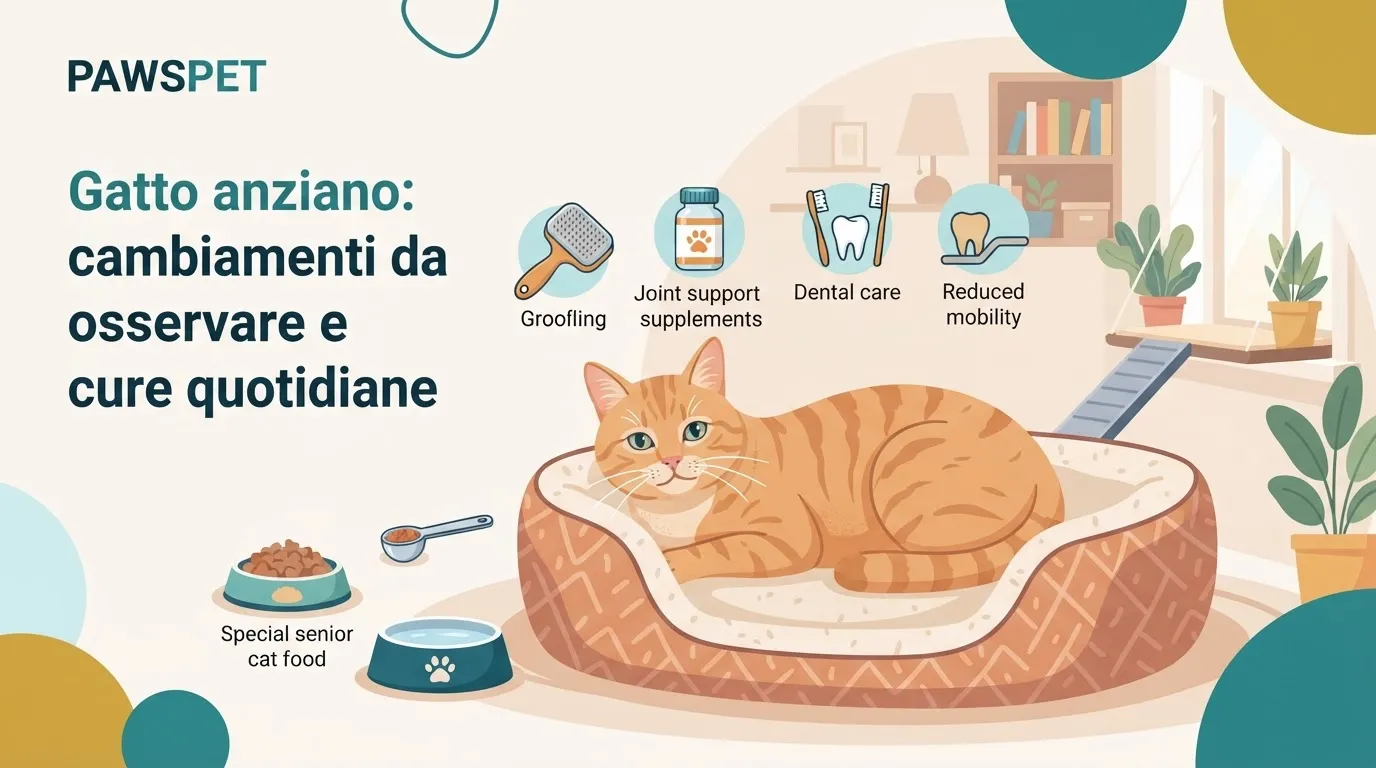
Common signs of cat aging include:
- less interest in jumping onto sofas, shelves or scratching posts;
- longer periods of sleep and less play;
- a less well-groomed coat or the appearance of mats, especially along the back;
- increased sensitivity to cold or a preference for secluded places;
- changes in the amount of food or water consumed;
- different litter box habits, such as difficulty getting inside, eliminating outside the box or changes in frequency;
- unusual vocalizations, disorientation or irritability.
A single episode does not necessarily indicate a problem, but a persistent change deserves attention. Do not automatically attribute weight loss, pain, breathing difficulties, recurring vomiting, intense thirst or significant changes in stools and urine to “old age”: contact your veterinarian for an assessment.
Senior Cat Care: Checkups and Daily Monitoring
Senior cat care is more effective when prevention becomes part of the routine. Regular veterinary visits help assess weight, teeth, joints, skin, eyes, hearing and other factors that are not visible at home. Your veterinarian can suggest the appropriate checkup schedule and any tests based on your cat’s individual situation.
In everyday life, keep track of a few simple details:
- Weight and body shape: gradual weight loss or gain can go unnoticed without regular checks.
- Appetite and hydration: note whether your cat eats less, refuses different textures or drinks more than usual.
- Litter box use: observe the amount, frequency and ease with which your cat uses it.
- Movement: watch for hesitation on stairs, lower jumps, stiffness after resting or limping.
- Behavior: record changes in sleep, sociability, grooming and vocalizations.
A simple diary makes the information you share with your veterinarian more precise. With PawsPet, you can use health management and reminders to organize appointments, prescribed treatments and useful observations instead of relying only on memory.
Making the Home More Comfortable and Safe
An accessible environment reduces daily effort and helps a senior cat maintain independence. Major changes are not usually necessary: small adjustments in the areas your cat uses most can often make a difference.
Try these changes:
- choose a stable litter box with a low entry and place it in a quiet location;
- add a second litter box if your home is large or has multiple floors;
- keep food and water bowls away from the litter box and easy to reach;
- use non-slip rugs in frequently used areas, especially on smooth floors;
- create warm, soft resting areas protected from drafts;
- place steps or ramps to help your cat reach a favorite sofa, bed or windowsill;
- keep pathways free of obstacles and avoid moving furniture, bowls and litter boxes constantly.
Play also remains important for senior cat health, as long as it is brief and respects your cat’s pace. Choose slow activities, scent-based games and stimulation that does not require sudden jumps. Stop if your cat seems tired, uncomfortable or reluctant.
Nutrition, Grooming and Time Together
A senior cat’s diet should be chosen with your veterinarian, especially if your cat has medical conditions, weight loss, dental problems or ongoing treatments. Avoid sudden food changes and do not introduce supplements or specialized diets without professional advice.
To support a comfortable feeding routine:
- offer meals in a calm place with clean bowls;
- check that your cat can chew without discomfort;
- always provide fresh water in multiple locations;
- ask your veterinarian about textures and portions suited to your cat’s needs.
Grooming also deserves attention. Gentle brushing helps remove dead hair and allows you to check the skin, mats and areas that may be painful. If your cat dislikes being handled, work for just a few minutes at a time and do not force the interaction.
Your relationship matters as much as the practical aspects of care: predictable routines, respectful contact and quiet spaces can reduce stress. A senior cat does not need to be treated as fragile, but it may need a slower pace and an environment that respects its changing needs.
FAQ About Senior Cats
When should I take my senior cat to the veterinarian?
In addition to scheduled checkups, contact your veterinarian if you notice reduced appetite, weight loss, difficulty urinating or defecating, obvious pain, limping, unusual breathing, frequent vomiting or persistent behavioral changes.
Do senior cats still play?
Yes, many senior cats remain interested in play, but they often prefer shorter and less intense sessions. Slow-moving toys, scent-based stimulation and ground-level activities may be more suitable than repeated jumping.
How can I help a senior cat that no longer jumps?
Make essential resources easy to reach and add steps, ramps or intermediate surfaces. If the difficulty appears suddenly or seems connected to pain, ask your veterinarian for an evaluation.
Small observations and consistent adjustments can make a significant difference to your senior cat’s well-being. With PawsPet, you can collect health information and set useful reminders to make daily care more organized.