Leaving a cat alone at home requires more planning than it may seem: even the most independent animals need fresh water, clean resources, a safe environment, and regular checks. The answer to how long a cat can stay alone mainly depends on age, health, habits, and the length of your absence.
For a few hours, an adult cat in good health can generally stay at home with the right routine in place. For a full day or a weekend, however, it is important to arrange reliable visits rather than relying only on larger food and water bowls.
How Long Can a Cat Stay Alone at Home?
There is no single time limit that applies to every cat. An adult, healthy cat that is used to spending several hours without people may manage a normal working day if it has access to everything it needs. However, the longer the absence, the more the risks linked to unexpected problems increase: spilled water, uneaten food, a dirty litter box, vomiting, illness, or doors accidentally being closed.
Extra caution is needed in these situations:
- kittens, which need more meals, supervision, and interaction;
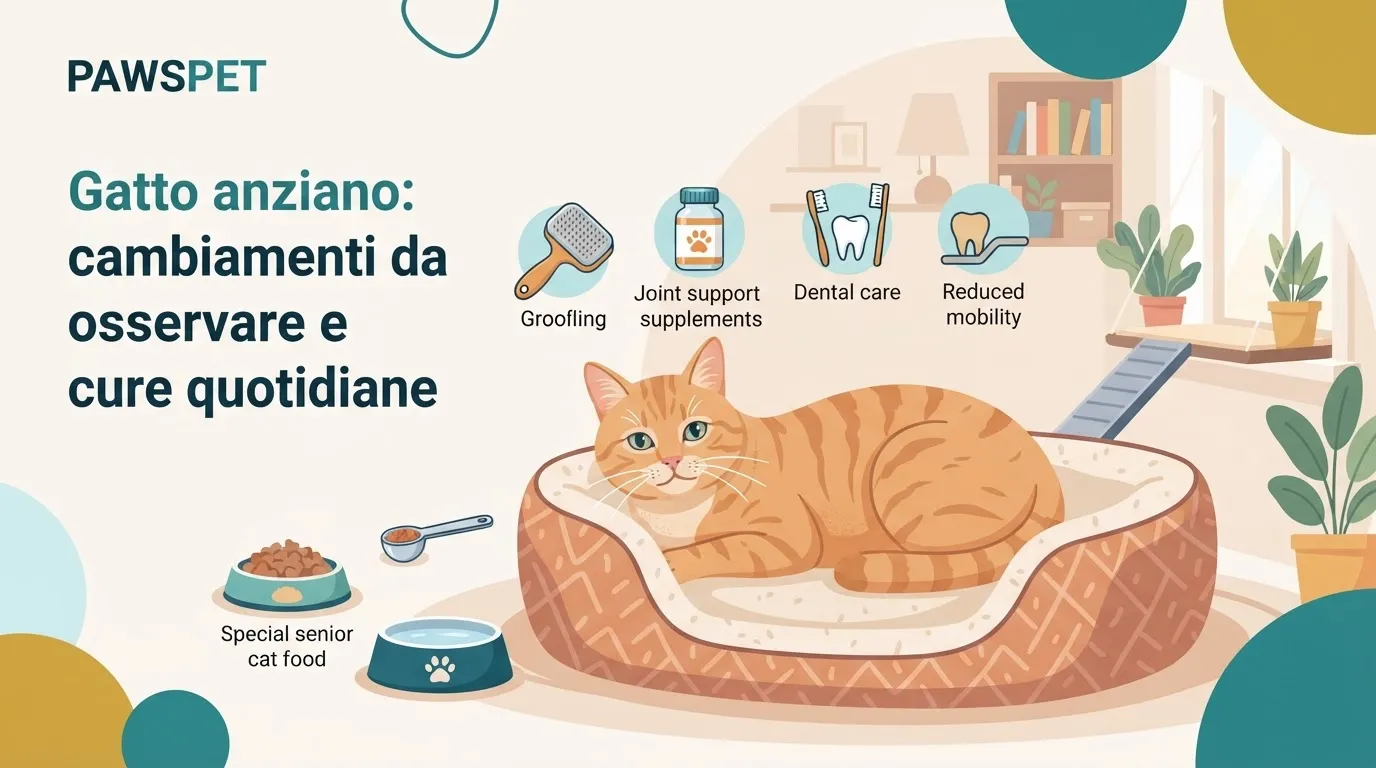
- senior cats, especially if they have mobility difficulties or recent changes in their habits;
- animals with medical conditions, treatments, or a diet prescribed by a veterinarian;
- cats showing anxiety, persistent vocalization, destructive behavior, or urinary problems;
- newly adopted cats and cats that have recently moved to an unfamiliar environment.
For an absence lasting several days, such as leaving a cat alone for the weekend, the most responsible solution is to arrange at least one daily visit from a competent person. In some cases, such as when medication or specific care is needed, more frequent checks may be necessary: ask your veterinarian for guidance.
Preparing the Home, Water, Food, and Litter
Before leaving your cat alone, check the home using the same approach you would use to childproof a space for a curious child: look at each area from the cat’s point of view and remove anything that could become dangerous.
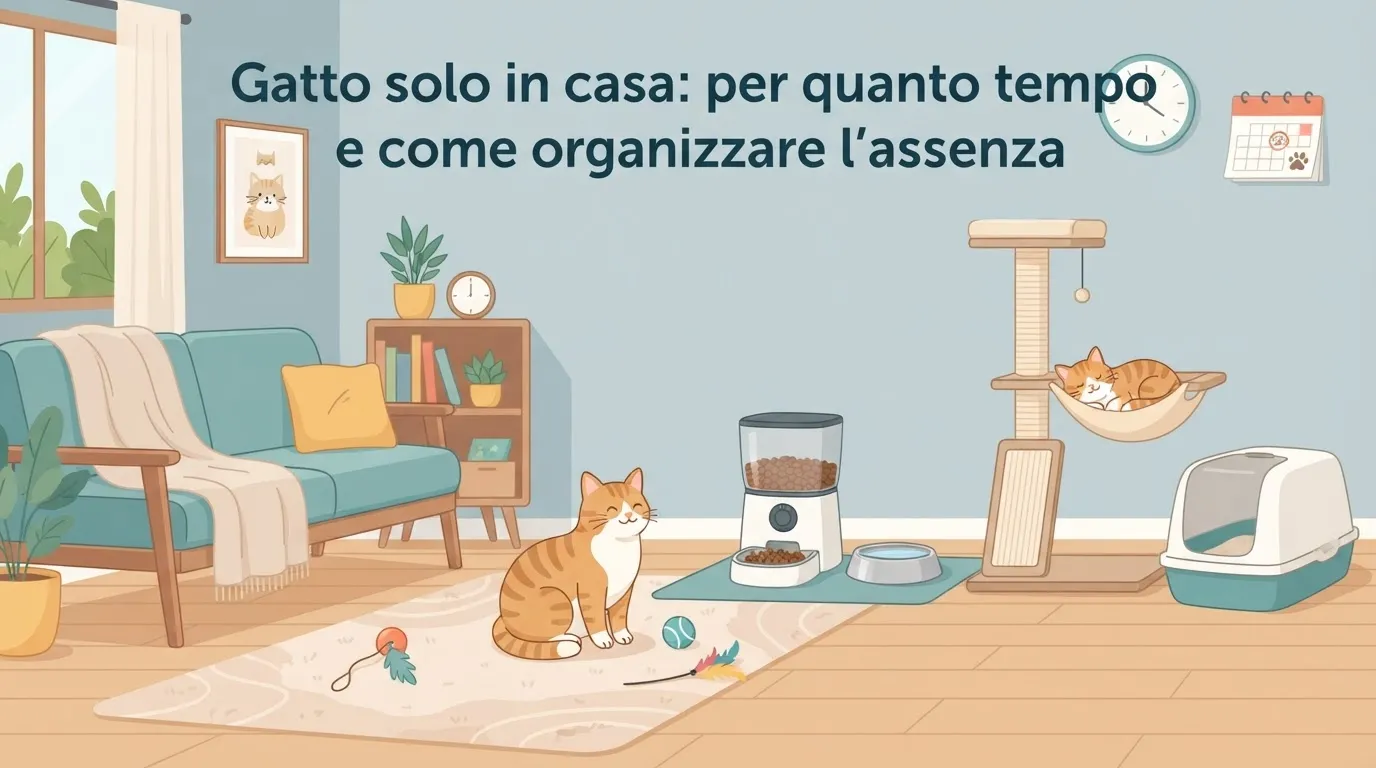
Prepare the essential resources carefully:
- Water: place several bowls in different rooms, away from the litter box and busy areas. A water fountain can be useful only if the cat already knows it and if a backup bowl is also available.
- Food: keep the usual diet. If you use an automatic feeder, test it for several days before leaving and provide a small additional amount according to your cat’s normal habits.
- Litter: clean the litter box shortly before you leave. For longer absences, add an extra litter box and make sure the cat sitter checks it during every visit.
- Rest and comfort: leave beds, scratching posts, shelves, or quiet spots that your cat normally uses. Do not completely change the environment just before leaving.
- Enrichment: safe toys, sturdy cardboard boxes, and familiar activities can make the day more stimulating. Avoid toys with strings, cords, or small parts if no one can supervise the cat.
Cat Safety: What to Check Before Leaving
A safe home environment reduces unexpected problems during the owner’s absence. Spend a few minutes on a practical checklist:
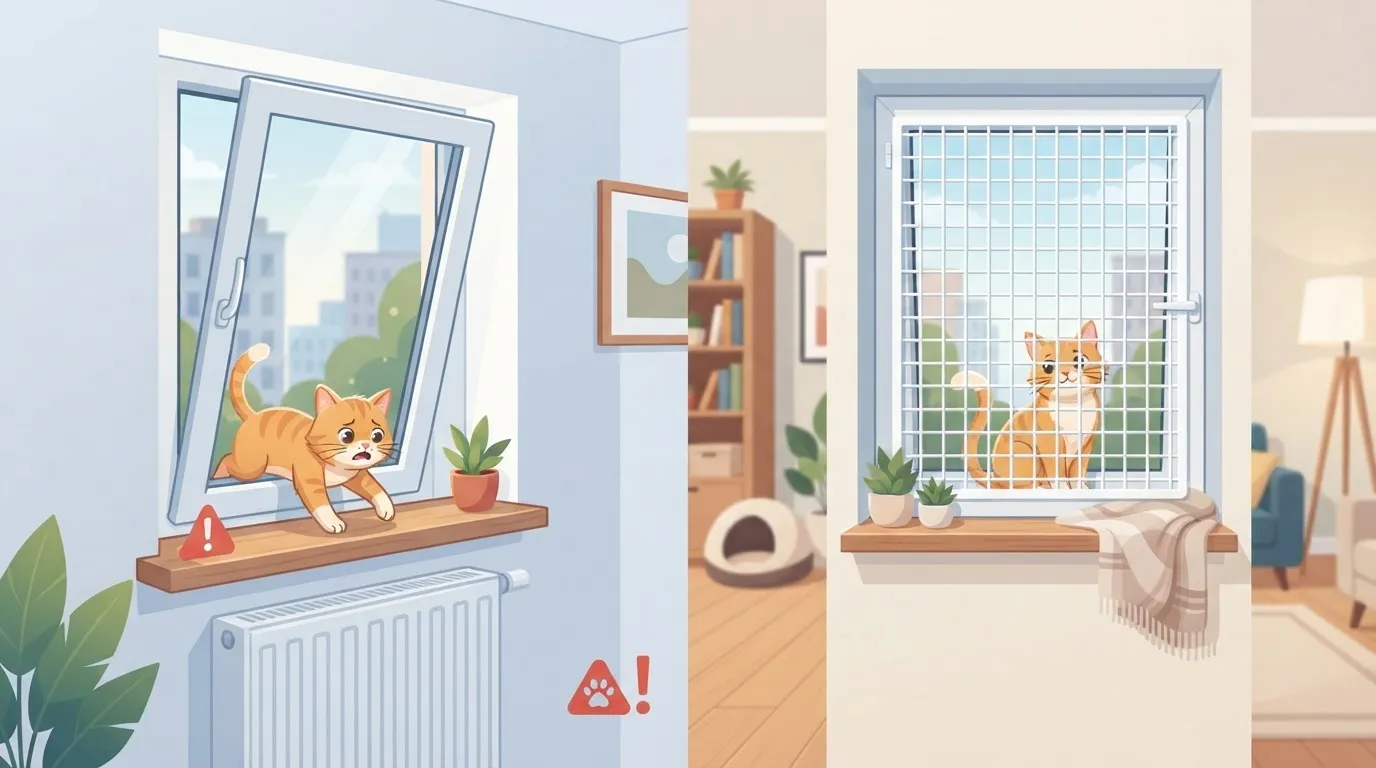
- Close windows, balconies, and outdoor access points securely, checking screens and protective barriers.
- Remove potentially toxic plants, cleaning products, medications, bags, rubber bands, strings, and small objects that could be swallowed.
- Secure electrical cables, stovetops, buckets of water, and unstable containers.
- Leave open the doors to rooms your cat needs to access, preventing it from becoming trapped without water or a litter box.
- Check temperature and ventilation, without relying on solutions that could switch off or create excessive drafts.
- Tell a trusted person where to find the carrier, veterinary contacts, health records, and important instructions.
If your cat wears a collar, check carefully that it is suitable and safe for use at home. In general, keeping the microchip details up to date remains an important safeguard in case of an accidental escape.
When Do You Need a Cat Sitter?
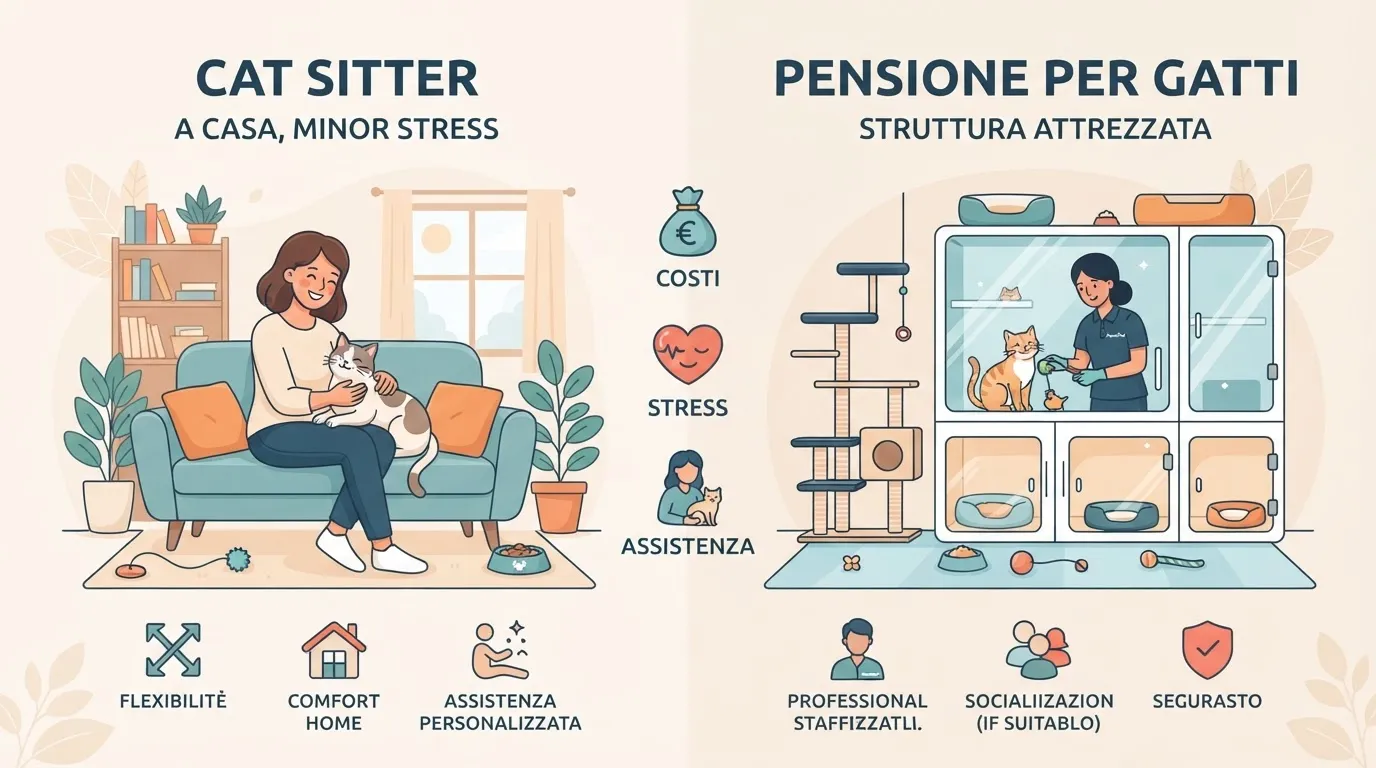
Understanding when you need a cat sitter is straightforward: if you cannot personally check that your cat is well, someone should do it for you. A visit is not only about filling the bowls; it also involves checking behavior, appetite, litter box use, and overall condition.
A cat sitter is especially useful when:
- your absence lasts longer than a day;
- your cat needs medication or monitoring;
- you have several animals with different routines;
- your cat is elderly, very young, or medically fragile;
- you want to avoid the stress of moving your cat to a boarding facility.
Before leaving, arrange a meeting at your home. Show the sitter where the food, litter box, carrier, and necessary supplies are kept; explain schedules, preferences, fears, and your cat’s usual signs. Leave written instructions and an alternative emergency contact.
Through the PawsPet service marketplace, you can make it easier to find pet care professionals and keep useful information about your animal’s routine in one place.
A Clear Routine Makes Your Absence Easier
When you need to leave your cat alone at home, preparation matters more than the amount of food you leave out. Keep routines predictable, avoid sudden changes, and plan a human check-in for every extended absence.
With PawsPet, you can collect health information, useful contacts, and care reminders, so anyone looking after your cat while you are away has clearer instructions.
FAQ
Can a cat stay alone overnight?
For a healthy adult cat, this may be possible in well-organized circumstances, but arranging a visit is preferable if the absence is extended or if there are specific needs. Kittens, senior cats, and cats undergoing treatment should not be left without checks.
Should I leave lots of dry food if I am going away for the weekend?
No: leaving extra food does not replace having someone present. Your cat might eat too much, refuse the meal, soil the feeding area, or develop a problem that goes unnoticed. For a weekend away, arrange regular visits.
What should a cat sitter check during a visit?
Water, food, the litter box, behavior, any vomiting or unusual stools, the condition of the home, and whether the cat is present. If the sitter notices unusual or concerning signs, they should contact the owner and, if necessary, a veterinarian.