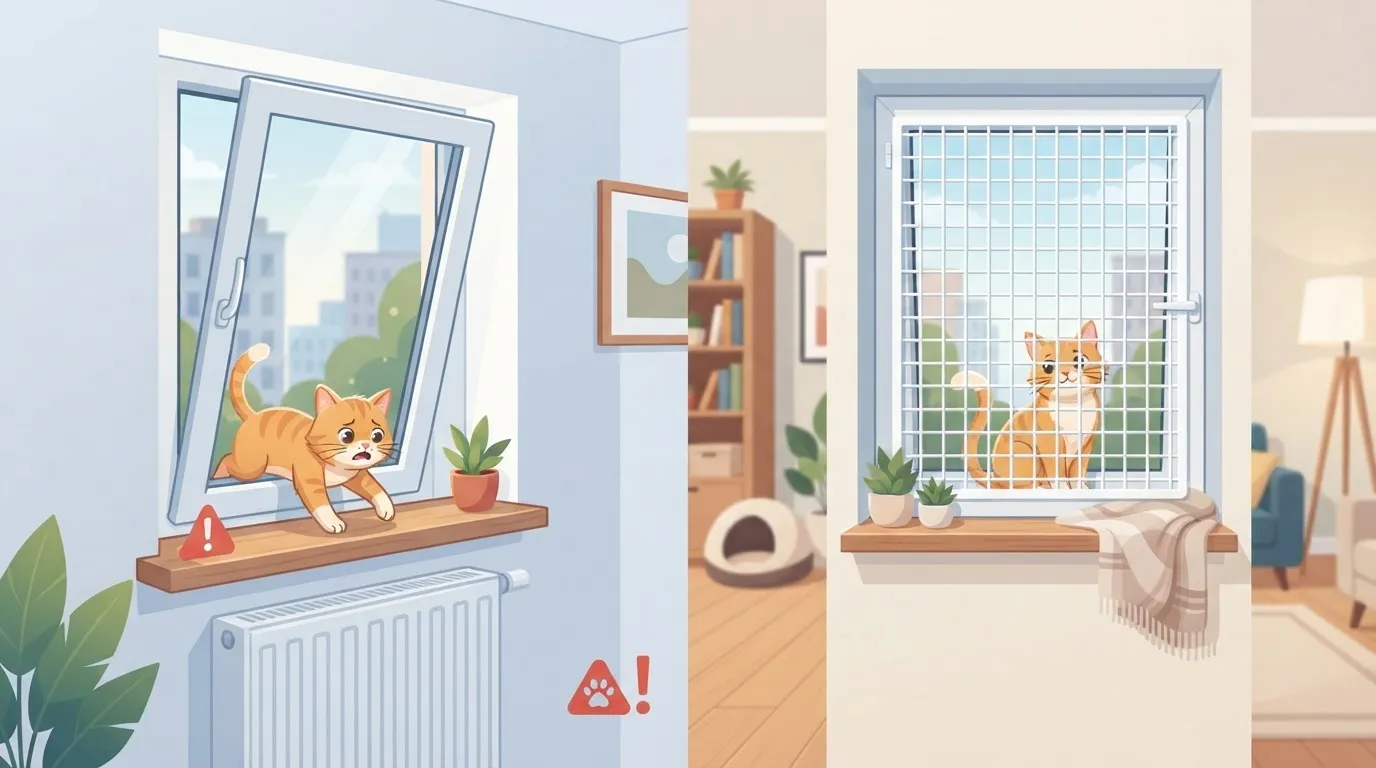
Tilt-and-turn windows provide practical, controlled ventilation, but they can pose a serious danger to a curious or frightened cat. A cat trying to pass through the angled opening may become trapped and be unable to free itself.
Securing windows is an important part of cat home safety: a few checks and suitable protection can reduce a risk that is often underestimated.
Why cats and tilt-and-turn windows are a dangerous combination
A tilt-and-turn window opens to create a narrow gap, usually wider at the top and much narrower at the bottom. A cat may try to pass through it to follow a sound, watch a bird, reach a balcony, or simply explore.
During the attempt, the body can slide toward the narrowest part of the opening. The animal may become trapped around the abdomen, chest, or pelvis, without enough room to push against the frame with its paws.
This situation can become urgent because the cat may:
- become distressed and worsen the entrapment;
- suffer injuries or abrasions;
- have difficulty breathing or maintaining a normal position;
- remain exposed to heat, cold, or a fall, depending on the window’s location.
The danger does not concern only young, slender, or especially active cats. Even an adult cat that is familiar with the home may attempt to pass through an opening in an unusual situation, such as during a storm, when guests visit, or when another animal is outside.
How to make tilt-and-turn windows safe for cats
The most cautious solution is to avoid leaving a tilt-and-turn window open when the cat can access it freely. If this opening position is necessary for ventilation, install cat protection for tilt-and-turn windows designed to close the dangerous side gaps.
Common options include:
- protective grilles or nets specifically made for tilt-and-turn windows, secured to the frame or wall;
- rigid side guards, often shaped to cover the corners created by the opening;
- window restrictors, which can prevent the tilt position from being used without supervision;
- reinforced, correctly secured screens, which may be useful in some situations but should be assessed carefully because not all screens can withstand climbing or pushing.
A simple net placed over the opening or attached with weak adhesive is not a reliable barrier. A cat may push it, scratch it, or find a gap along the edges. Choose stable systems suitable for the window’s dimensions and install them according to the manufacturer’s instructions.
Practical checks before leaving your cat alone
A cat-safe home depends on simple, repeatable habits. Before leaving, quickly check all openings that the animal can access.
In particular, make sure that:
- tilt-and-turn windows are fully closed or protected on both sides;
- screens are intact and firmly anchored;
- patio doors, balconies, and skylights do not have unprotected gaps;
- there is no furniture allowing the cat to reach windows that appear to be out of reach;
- every member of the household knows the rule: never leave a tilt-and-turn window open without protection.
It is useful to observe your cat’s behavior during the first few days after installing the protection. Some cats may try to jump, climb, or put their paws into the edges. If you notice persistent attempts, have the system reassessed by a qualified installer or choose a more robust solution.
If your cat becomes trapped: what to do immediately
If you find your cat stuck in a window, stay calm and do not pull the animal. Ask someone for help if needed, gently support its body, and open or close the window only as much as necessary to free it without increasing pressure on the body.
After freeing the cat, observe it carefully. Even if it appears to walk normally, contact a veterinarian if you notice pain, labored breathing, weakness, difficulty moving, unusual vocalizations, bleeding, or behavior that is very different from normal. In the event of clear distress or injury, promptly contacting a veterinary facility is the safest choice.
Do not dismiss the incident as a simple fright: prevention remains essential, because a second attempt could have more serious consequences.
FAQ about tilt-and-turn windows and cat safety
Is a screen enough to protect a cat from a tilt-and-turn window?
Not always. A standard screen may not withstand weight, scratching, or pushing. For tilt-and-turn windows, specific protective systems that close the side gaps and are firmly secured are preferable.
Can I leave the tilt-and-turn window open if my cat is calm?
It is not recommended. Even a normally calm cat may react to sudden stimuli and try to pass through the opening. Safety should not depend on the animal’s expected behavior.
Are tilt-and-turn window guards also useful for older cats?
Yes. An older cat may be less agile, but it may still try to reach a window or slip during an attempt. Cat-safe windows protect animals of every age.
Checking your home’s openings today can help prevent an emergency tomorrow. With PawsPet, you can use reminders to add regular checks of screens, windows, and other important elements of your cat’s safety routine.