Increased thirst, more frequent urination, and weight loss should not automatically be attributed to getting older. They may be symptoms of diabetes in cats, a condition that requires veterinary diagnosis and a consistent routine, but that can often be managed effectively day to day.
Recognizing the signs early and organizing treatment, nutrition, and checkups properly can help a diabetic cat maintain a good quality of life.
Diabetes in cats: symptoms to watch for
Feline diabetes involves difficulty regulating blood glucose. Signs may develop gradually, and they do not always appear together. Paying attention to daily habits is therefore important.
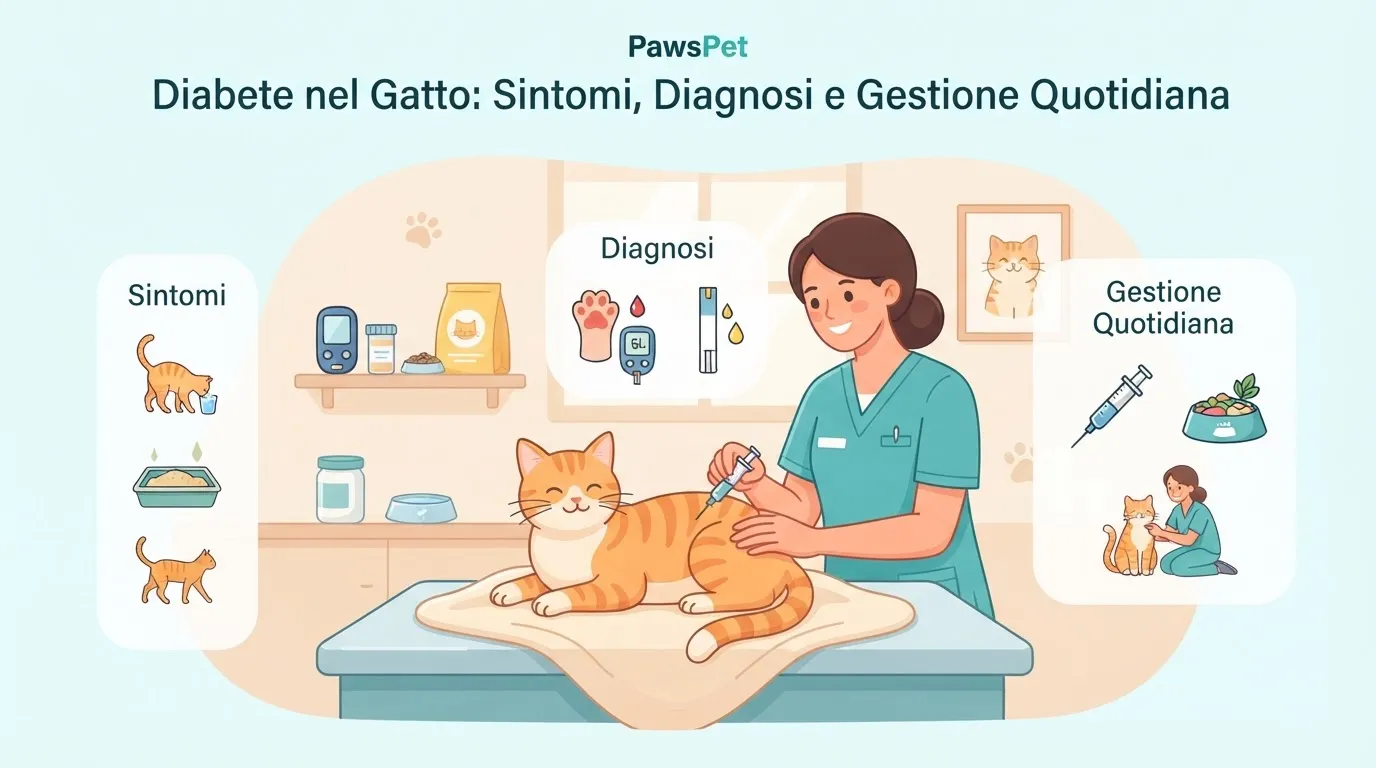
Some of the most common cat diabetes symptoms include:
- increased thirst;
- larger amounts or more frequent urination, including outside the litter box;
- increased appetite accompanied by weight loss;
- tiredness, or less interest in play and movement;
- a less well-groomed coat or generally unkempt appearance;
- weakness in the hind legs or a plantigrade stance, with the cat placing more weight on its hocks.
These signs alone do not identify a specific disease: they may also be caused by kidney, thyroid, or intestinal problems, or by other conditions. If you notice persistent changes, schedule a veterinary appointment rather than waiting for your cat to get worse. If your cat seems very lethargic, vomits repeatedly, refuses food, or breathes unusually, contact a veterinarian promptly.
Diagnosis: why a veterinary visit and tests are needed
Diabetes in cats cannot be diagnosed solely from symptoms observed at home. The veterinarian assesses the animal’s overall condition, weight, hydration, and any other possible illnesses, and may request blood and urine tests.
A single high blood glucose reading is not always conclusive because the stress of a veterinary visit can temporarily raise it. For this reason, the professional interprets the results as a whole and, when necessary, schedules additional checks or tests to assess blood glucose trends over time.
Before the appointment, prepare specific information:
- when increased thirst, hunger, or weight loss began;
- the amount and type of food given;
- any medications or supplements currently being used;
- changes in litter box habits;
- weight recorded during the previous weeks, if available;
- any other illnesses or previous treatments.
An organized timeline helps the veterinarian establish a realistic plan for feline diabetes management.
Treatment and nutrition for a diabetic cat
Treatment is determined exclusively by the veterinarian based on the cat’s condition. In many cases, it may include cat insulin, administered at precise times and in a specific way, together with an individualized feeding plan and regular checkups.
Never change the insulin dose, timing, or type on your own. Even if your cat seems better, every adjustment must be agreed with the veterinarian: improper management can cause blood glucose fluctuations.
A diabetic cat’s nutrition should be assessed on a case-by-case basis. The professional may recommend a specific food, a weight-management strategy, or a meal schedule compatible with the treatment. The goal is not to follow dietary trends, but to provide a consistent intake suited to the cat’s individual needs.
To make the routine safer:
- give meals and treatment at the recommended times;
- make sure your cat eats before treatment or as instructed;
- avoid snacks, table scraps, and unapproved food changes;
- weigh your cat regularly if the veterinarian recommends it;
- store insulin and supplies according to the instructions provided.
Organizing daily management without added stress
A predictable routine is helpful for both the cat and the family. Set up a quiet area for meals and any treatment administration, avoiding chasing or rough handling. At first, it may help to pair the routine with a calm voice and a small reward approved by the veterinarian.
Keep a diary recording meal times, treatment administration, appetite, behavior, weight, and any unusual observations. With PawsPet, you can collect your pet’s health information and set reminders for treatments, appointments, and checkups: a practical way to avoid losing important details during veterinary follow-up.
Tell the veterinarian promptly about unusual behavior such as trembling, sudden weakness, disorientation, marked sleepiness, or refusal to eat. Do not try do-it-yourself solutions: the response plan for these situations should be agreed in advance with the professional caring for your cat.
Checkups and cooperation with the veterinarian
Diabetes requires ongoing monitoring, especially during the initial stages or after treatment changes. Bring your home diary to appointments and ask clearly which parameters to observe, when to contact the clinic again, and how to manage missed meals.
Consistency matters more than perfection: recording an unexpected event is more useful than leaving it out because you are worried you did something wrong. With a shared plan, attention to signs, and regular checkups, managing a diabetic cat becomes clearer and more sustainable.
PawsPet can help you keep reminders, health records, and daily habits organized, so you always have essential information readily available.
FAQ
Can diabetes in cats be cured?
It depends on the cat’s clinical situation and individual response to treatment. Some cats may achieve remission, but only the veterinarian can assess this and decide whether treatment should be changed.
Can I give insulin to my cat at home?
Yes, if the veterinarian has prescribed the treatment and correctly shown you the technique, timing, and precautions. Do not improvise doses or administration methods.
What should I do if my diabetic cat will not eat?
Do not give or change treatment without professional instructions. Contact the veterinarian or the service designated by the clinic caring for your cat, and describe exactly what happened.