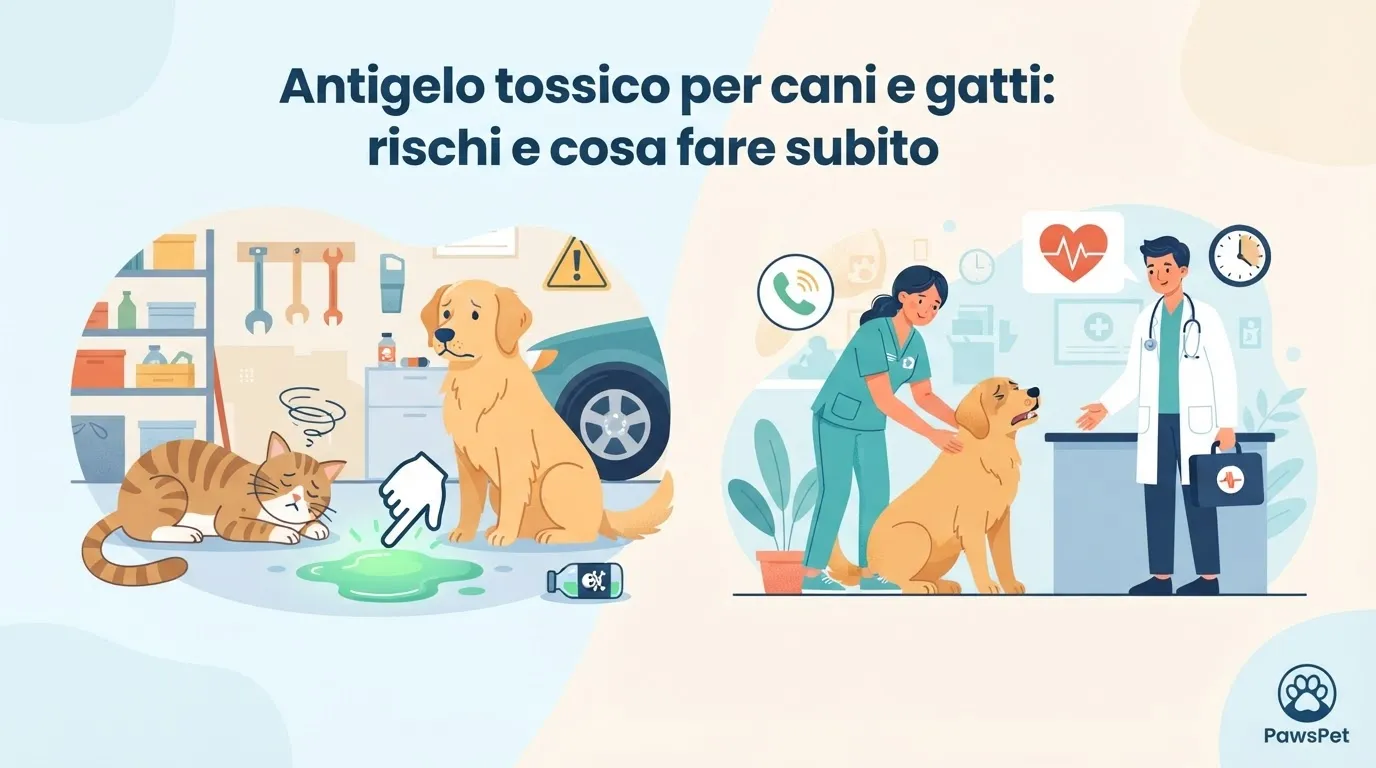
Antifreeze is useful for car maintenance, but it can pose a serious household and environmental danger to pets. Even a small leak in a garage, driveway, or near a vehicle may attract dogs and cats. If you suspect antifreeze ingestion, act immediately and contact a veterinarian rather than waiting for obvious symptoms.
Why antifreeze is toxic to dogs and cats
Many antifreeze products contain ethylene glycol, a substance that may also be found in radiator products, coolants, and some technical solutions. Ethylene glycol poisoning is a veterinary emergency: once absorbed, the substance is converted by the body into harmful compounds.
The risk does not only concern an animal that directly licks an open container. Exposure can also happen when:
- there is a leak under a car or on the garage floor;
- liquid spills during topping up and is not cleaned properly;
- the animal walks through a contaminated area and then licks its paws;
- unlabeled or open containers are within reach;
- leftover liquid is disposed of improperly.
Curious dogs and puppies may taste puddles or unknown liquids during a walk. Cats may be exposed mainly in garages, yards, basements, and shared residential areas. You cannot determine on your own whether an ingested amount is safe: every suspicion warrants immediate contact with a veterinarian.
Possible signs: do not wait for them to appear
After antifreeze ingestion, signs may initially be nonspecific. For example, a dog or cat may seem lethargic, disoriented, unsteady, nauseated, or may vomit. Unusual thirst, changes in urination, or general deterioration may also develop in the following hours.
However, the absence of symptoms does not rule out danger. Waiting to “see what happens” may delay necessary care. If you saw your pet lick a leak, found an open container, or saw it drink from a suspicious puddle, treat the incident as urgent even if your pet appears well.
Pay particular attention if:
- you notice colored or clear liquid under a vehicle;
- an automotive product was recently used, transferred, or spilled;
- you find traces on the muzzle, fur, or paws;
- liquid is missing from an accessible container;
- your pet shows sudden changes after being in a garage or outdoors.
What to do immediately if ingestion is suspected
If you suspect toxic antifreeze exposure in a dog or cat, immediately call your regular veterinarian, an emergency veterinary clinic, or a veterinary emergency service. Clearly explain what you know, even if some information is incomplete.
It may help to prepare these details:
- The estimated time of exposure or ingestion.
- The product name, if available, and a photo of the label.
- The amount that may have been ingested, without forcing an unreliable estimate.
- The symptoms you observed and when they began.
- Your pet’s weight, age, and known health conditions.
Do not give milk, food, large amounts of water, human medication, or home remedies. Do not try to induce vomiting unless specifically instructed by a veterinarian: an improper intervention may worsen the situation or create additional risks.
If liquid is present on the fur or paws, limit licking by using a clean towel or an Elizabethan collar, if one is already available. Then follow the professional’s instructions before washing your pet or transporting it.
Preventing exposure at home, in the garage, and on walks
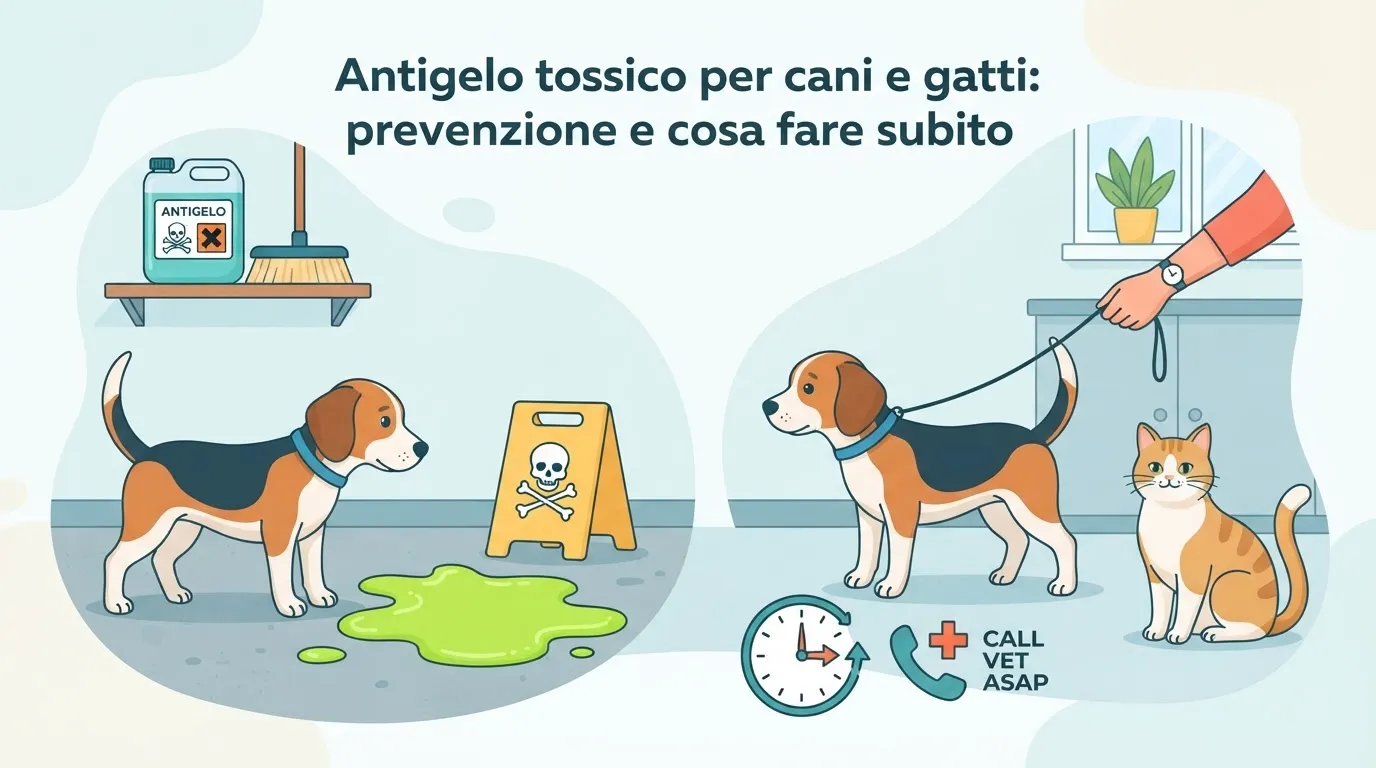
Preventing dog and cat poisoning starts with a few consistent habits. Store antifreeze and automotive products in their original, tightly closed containers, in a high cabinet or a locked area. Do not transfer them into water bottles, cups, or unlabeled containers.
After every use:
- check the floor, driveway, and area beneath the vehicle;
- absorb spills immediately, following the product’s safety instructions;
- dispose of materials and residue according to local rules;
- keep pets and children away until the area is clean and dry;
- periodically check the vehicle for leaks.
During walks, prevent your dog from drinking from puddles near parking areas, repair shops, or busy roads. A properly managed leash and the “leave it” cue can help interrupt interest in unknown liquids. For cats with outdoor access, check that nearby garages and yards do not have accessible maintenance areas.
Adding your veterinarian’s and emergency clinic’s contact details to your pet’s health profile in PawsPet can make it faster to retrieve important information during stressful moments.
FAQ about antifreeze and pets
If my dog licked a puddle, should I call the veterinarian?
Yes, if the puddle was near a car, garage, or maintenance area and you suspect it may contain antifreeze. Do not wait for symptoms to appear.
Can I make my cat vomit after suspected ingestion?
No. Do not do this without specific veterinary instructions. In cats and dogs, this practice can be dangerous and does not replace an urgent professional assessment.
Are “less toxic” antifreeze products safe for pets?
No. Products formulated with substances other than ethylene glycol should still be treated as potentially dangerous. Safe storage, immediate cleanup, and veterinary contact after exposure remain essential.
An organized garage, quick checks around the car, and readily available veterinary contacts are practical winter safety measures. With PawsPet, you can organize reminders and your pet’s health information to handle unexpected situations with greater clarity.