Toxic antifreeze is a risk for dogs and cats that should not be underestimated, especially during the colder months or in garages, yards and parking areas. If you suspect that a pet has ingested antifreeze, do not wait for symptoms to appear: contact a veterinarian or emergency veterinary facility immediately.
Why antifreeze is dangerous for dogs and cats
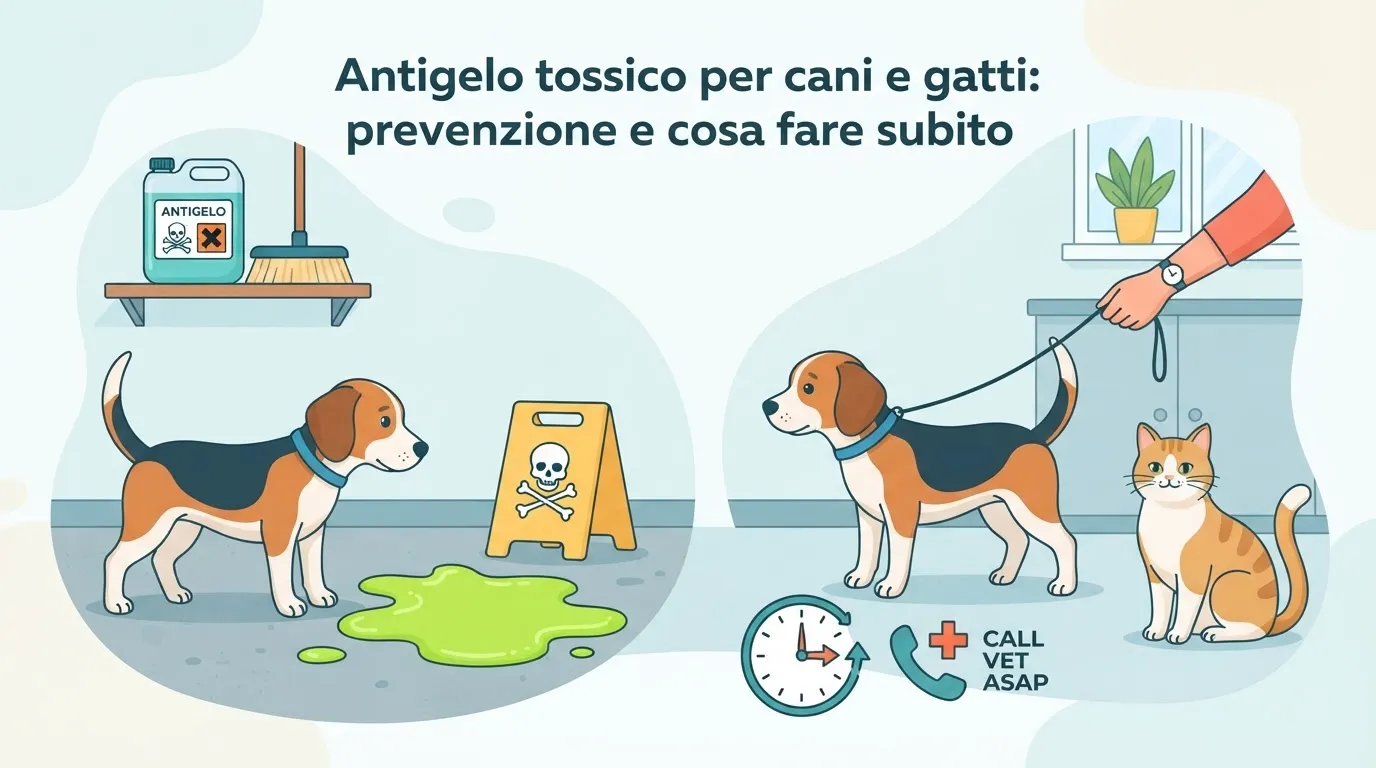
Many antifreeze products contain ethylene glycol, a substance that can be highly harmful if swallowed. The danger does not come only from an open bowl or bottle: small puddles beneath a vehicle, soaked cloths, overturned containers and residue on floors or shoes can also cause exposure.
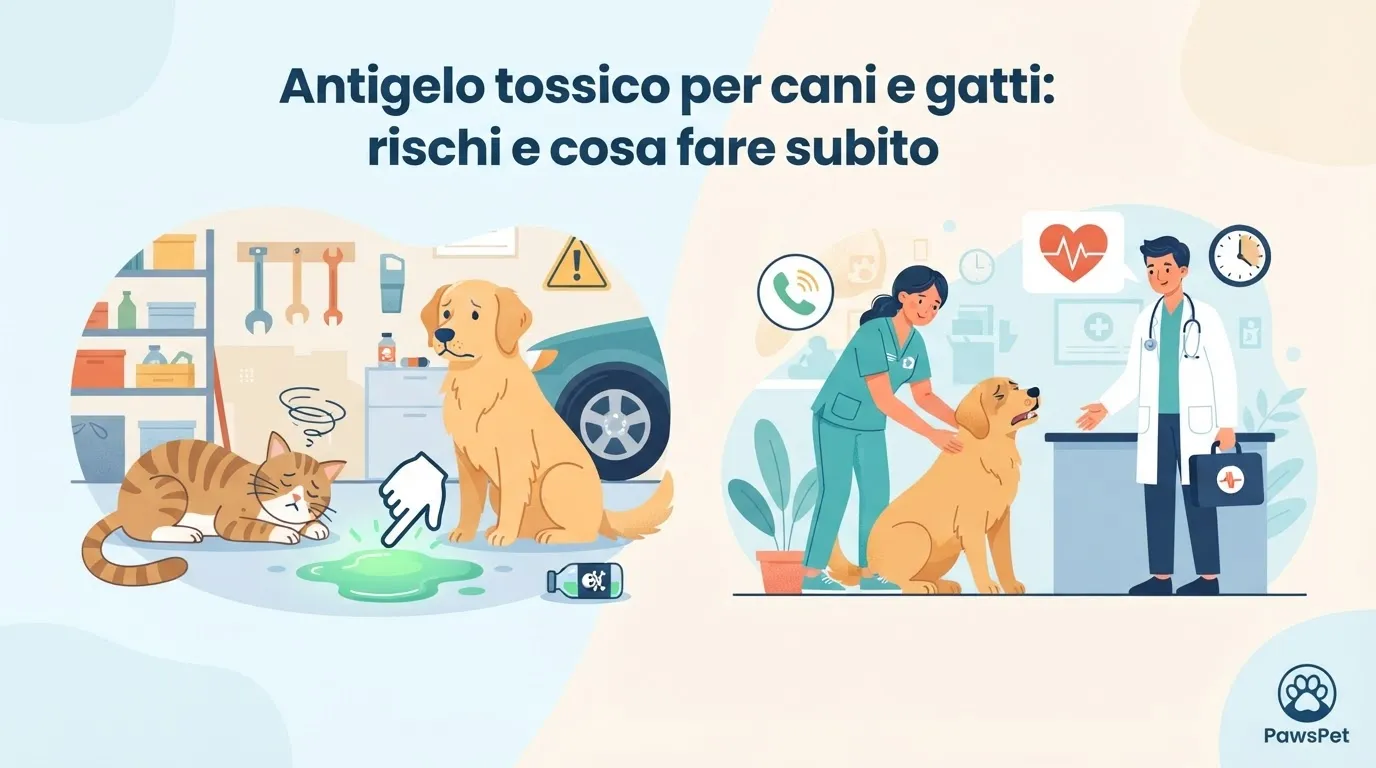
Dogs and cats may be attracted to the liquid, but ingestion can also happen when they lick their paws or fur after coming into contact with contaminated surfaces. Cats, in particular, may be exposed less obviously: they move through garages, yards or shared residential areas and then groom themselves by licking.
Ethylene glycol poisoning requires urgent veterinary assessment because timing can affect the available treatment options. It is not possible to determine at home whether the amount ingested is safe or dangerous.
Signs to watch for without waiting for a diagnosis
Symptoms can vary depending on the animal, the amount ingested and the time that has passed. In the early stages, some signs may seem nonspecific and can therefore be confused with other problems.
Watch for signs such as:
- sudden lethargy or unusual behavior;
- staggering, weakness or difficulty coordinating movements;
- nausea, vomiting or excessive drooling;
- unusual thirst or more frequent urination;
- altered breathing, tremors or rapidly worsening general condition.
These signs alone do not confirm poisoning in a dog or cat, but when there may have been exposure, they are enough to act urgently. Do not wait for the animal to “feel better”: in some cases, symptoms can progress even after an initially mild-looking phase.
What to do immediately if you suspect antifreeze ingestion
If you suspect antifreeze ingestion, the priority is to prevent further contact and obtain qualified assistance as quickly as possible.
Follow these practical steps:
- Move the animal away from the source. Place it in a safe area, away from liquids, containers and contaminated surfaces.
- Contact a veterinarian immediately. Call your regular veterinarian or the nearest emergency veterinary clinic, explaining that antifreeze or ethylene glycol may be involved.
- Bring useful information. If possible, bring the product container, a photo of the label, or provide the product name and listed ingredients.
- Report the timing and circumstances. Explain when the possible exposure occurred, whether you saw the animal lick the liquid and which symptoms you observed.
- Avoid home remedies. Do not induce vomiting or give food, milk, large amounts of water, medication or other substances without specific veterinary instructions.
If the product has wet the animal’s paws or fur, ask the veterinarian how to proceed during transport. In general, prevent the animal from licking itself and limit contact with the contaminated area without delaying the urgent call.
How to prevent toxic antifreeze exposure in dogs and cats
Prevention depends mainly on keeping products organized, cleaning spills promptly and handling automotive products carefully. Do not rely on the idea that your pet “has never drunk anything off the ground”: a single opportunity can be enough.
To reduce the risk:
- store antifreeze and automotive products in their original, intact, sealed containers;
- keep bottles in cupboards or on shelves that animals cannot access;
- clean drops and leaks beneath the car immediately, following the product’s safety instructions;
- do not leave rags, buckets or trays containing residue in the garage or garden;
- check for vehicle leaks and have them addressed by a professional;
- inform family members, neighbors and pet sitters about the risk, especially in shared spaces.
When buying alternative products, always read the label: wording such as “less toxic” does not automatically mean harmless to dogs and cats. Apply the same precautions to any technical fluid or automotive cleaning product.
Organizing a rapid family response
During an emergency, it helps to know whom to call and where to go. Keep your veterinarian’s and emergency veterinary clinic’s contact details up to date, and share them with anyone who cares for the animal.
With PawsPet, you can centralize your pet’s health information and set useful reminders, such as reminders for regular vehicle checks or for verifying that potentially dangerous products are stored safely. Good organization does not replace veterinary care, but it can help you respond more calmly and effectively.
FAQ
Is antifreeze toxic even if my dog or cat only licked a small amount?
Yes, even an apparently small amount may be significant. If licking or ingestion is suspected, contact a veterinarian immediately without waiting for symptoms.
Can I make my pet vomit if it drank antifreeze?
No. Do not do this without direct instructions from a veterinarian. Some home interventions may be dangerous or delay appropriate treatment.
What should I bring to the veterinarian?
Bring the product container, label or a clear photo, if available. Also provide the approximate time of exposure and the symptoms you observed.