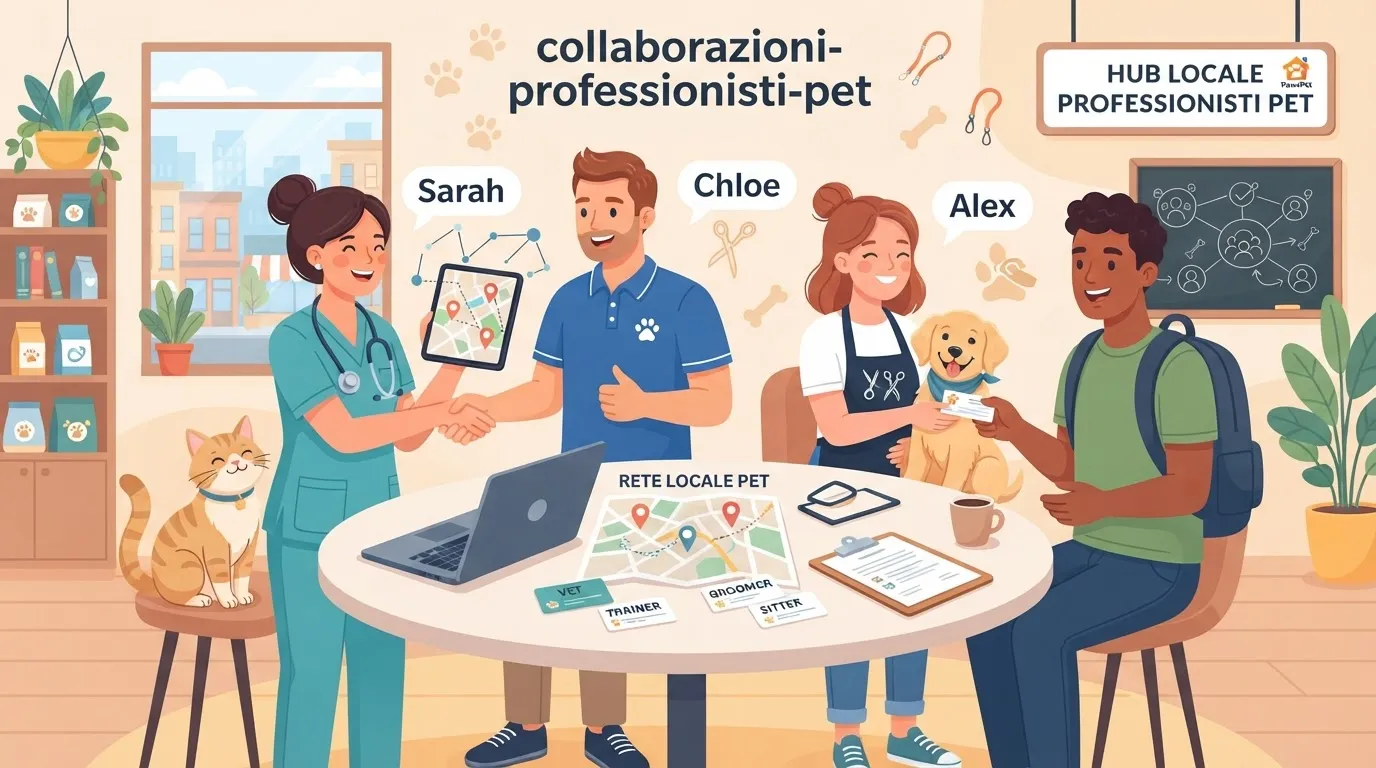
Collaborations between pet professionals help meet families’ needs more effectively and make everyday work more sustainable. A well-organized local network enables pet sitters, trainers, veterinarians, groomers and other providers to refer each client to the most suitable professional, without overlapping responsibilities or unrealistic promises.
The goal is not to create a simple exchange of contacts. A local pet services network works when roles, communication and client consent are clear from the beginning.
Start with concrete needs and compatible professionals
Before looking for partnerships, identify the requests you receive most often and those you cannot or should not manage on your own. For example, a pet sitter may meet clients who need training support before arranging in-home care. A trainer may need a reliable professional to look after an animal while the family is away.
Map the useful services in your area:
- pet sitters and dog walkers;
- dog trainers and qualified behavior consultants;
- veterinarians and veterinary practices;
- groomers;
- boarding facilities, daycare centers and transport services;
- professionals specializing in nutrition or rehabilitation, when appropriate.
Geographic proximity matters, but it is not enough. Also assess compatibility of approach, availability, client communication and professional clarity. A strong trainer–pet sitter partnership exists when both professionals recognize their operational boundaries and share a commitment to the animal’s well-being.
Define roles, boundaries and referral criteria
Pet services collaboration agreements do not necessarily require complex documents, but they should be explicit. An initial discussion helps prevent misunderstandings, especially when health, safety or behavior issues arise.
Agree on:
- Which requests to refer: for example, a pet sitter may refer a client to a trainer when daily care is affected by fear, reactivity or separation difficulties.
- Who maintains the client relationship: the professional receiving the referral presents their own service, quote and working methods independently.
- What not to share or do: no professional should provide veterinary diagnoses, prescribe treatments or take the place of someone with expertise they do not have.
- How to handle urgent situations: agree on a simple procedure for contacting the owner and directing them to a veterinarian when necessary.
- Whether to include fees or reciprocal referrals: if financial arrangements exist, they should be transparent and communicated in compliance with the rules applicable to your activity.
There is no need to refer every client to every professional. A small number of verified, up-to-date contacts that match the specific needs of the person and animal is more useful.
Handle client consent and data carefully
Client trust is central to collaborations between pet professionals. Before sharing a name, phone number, health information or details about an animal’s behavior, obtain clear consent.
You can use a simple approach: explain which professional you would like to involve, why you believe the contact could be useful and which information you intend to share. The client should be free to accept or choose another contact instead.
To work in an organized way:
- collect only the information necessary for the referral;
- avoid personal comments or unsolicited assessments;
- check that partners’ contact details are up to date;
- retain any consent records according to procedures appropriate to your activity;
- invite the client to speak directly with the new professional about details, costs and availability.
On PawsPet, the services marketplace can help families find local professionals and compare the available options. For people working within the network, clear profiles and up-to-date information make referrals simpler and more credible.
Keep the network useful after the first contact
A local pet services network grows through the quality of its relationships, not through the number of business cards collected. Schedule simple opportunities to stay in touch: a short regular call, a professional meeting or an update about the services offered may be enough.
After making a referral, ask yourself:
- Did the client find an appropriate response?
- Was the professional available and consistent with how they were presented?
- Were there any communication difficulties?
- Did the complementary service improve the animal’s care?
You do not need to know confidential details about the client’s experience. However, with consent, general feedback can help you decide whether to maintain the partnership. If a partner does not respond, works beyond their professional boundaries or creates unclear expectations, it is appropriate to reassess the agreement.
FAQ about collaborations between pet professionals
How do I propose a collaboration to another pet professional?
Contact them with a concrete proposal: explain who you are, which services you offer, what type of clients you might refer and which professional boundaries you respect. An introductory meeting is often the best way to determine whether you are compatible.
Can I share a client’s information with a trainer or veterinarian?
Only after obtaining the client’s consent and limiting the information to what is necessary. Health information requires particular caution, and any clinical assessment should be left to the veterinarian.
Is a local network also useful for people who work alone?
Yes. Partnerships do not reduce your independence. They help you handle complex requests more responsibly, giving clients reliable points of contact without taking you outside your professional role.
Building a network takes time, but every clear collaboration can improve the experience of animals, families and professionals. With PawsPet, you can strengthen your local presence and make it easier for families to connect with complementary pet services.