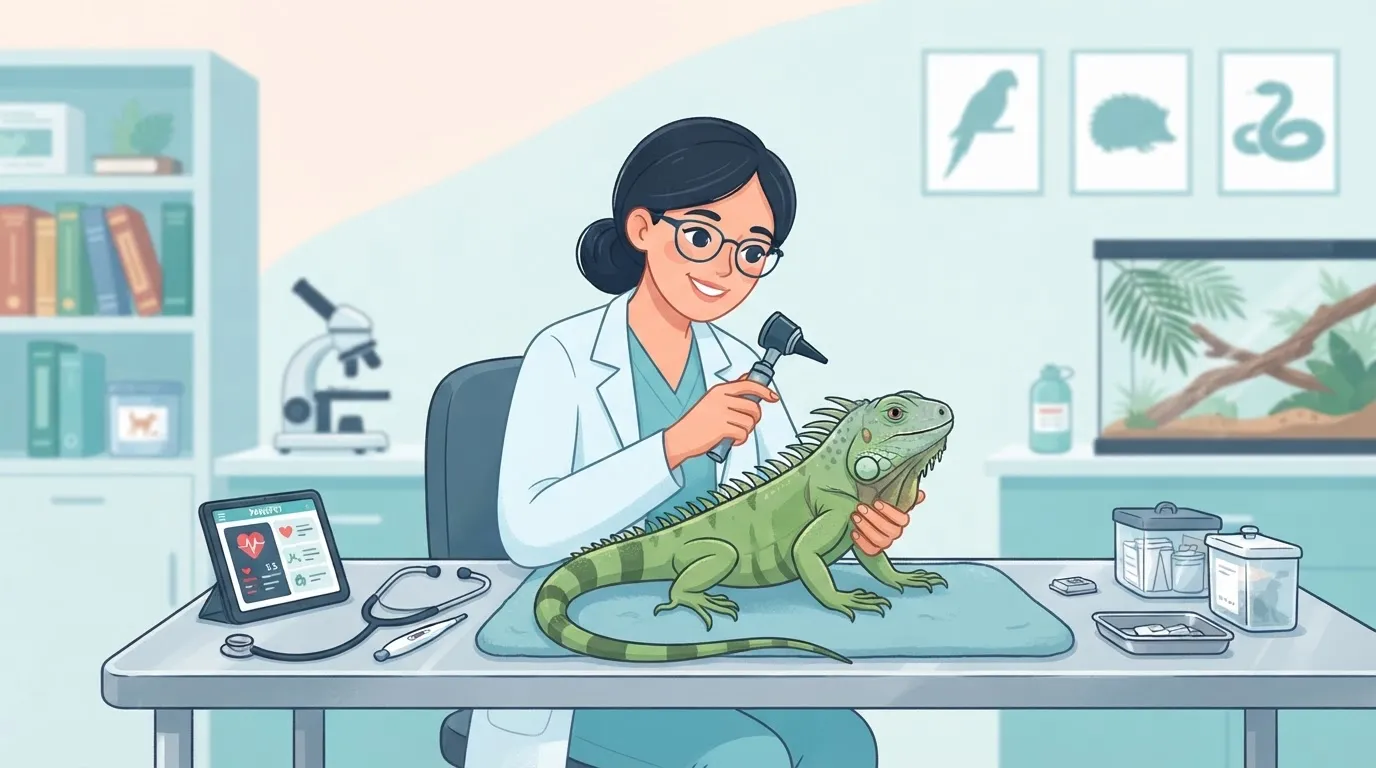
Finding an exotic pet veterinarian is not just about choosing the nearest practice: rabbits, parrots, small mammals, and reptiles have clinical needs that differ considerably from those of dogs and cats. A well-prepared first visit helps the veterinarian gather useful information and establish appropriate care from the beginning.
Why Experience with Exotic Pets Matters
The term “exotic pets” includes species with very different anatomy, diets, behaviors, and signs of illness. A rabbit, for example, may show subtle changes in appetite or droppings, while a parrot may hide discomfort until the problem is already noticeable.
A rabbit-savvy veterinarian or parrot veterinarian understands the main care needs of each species and knows what to assess during the appointment. This does not mean every practice must provide every service, but it should be transparent about its expertise and, when necessary, refer you to a suitable colleague.
Searching for an “exotic pet veterinarian near me” is a useful starting point, but it is also worth checking availability, approach, and continuity of care, especially if your pet has complex needs.
Skills to Check Before Booking
Before making an appointment, contact the practice and ask simple but specific questions. The goal is not to test the professional, but to understand whether the practice is suitable for the species you care for.
You can ask:
- whether the veterinarian regularly sees rabbits, rodents, ferrets, parrots, or your pet’s specific species;
- whether suitable equipment and spaces are available for handling small mammals or birds;
- whether the clinic can perform diagnostic tests or works with referral facilities;
- how emergencies, hospital stays, and follow-up appointments are managed;
- whether the practice provides guidance on diet, environment, and preventive care;
- whether you can send information, habitat photos, or previous medical records in advance.
Pay close attention to communication as well. A good professional listens to the animal’s history, explains what they are assessing, and clarifies the limits of a general evaluation. Be cautious of rushed answers or absolute reassurance without a thorough examination.
How to Prepare for a First Exotic Pet Visit
A first exotic pet visit is more useful when the veterinarian receives a complete picture of the animal’s daily routine. Prepare the information a few days in advance, without suddenly changing the diet or habits shortly before the appointment.
Bring or note down:
- the animal’s age, sex, and origin, if known;
- foods offered, approximate amounts, and feeding frequency;
- drinking, droppings, urination, and activity habits;
- the size, materials, and cleaning routine of the cage, enclosure, or aviary;
- temperature, lighting, and environmental enrichment, where relevant;
- any medical reports, ongoing treatments, and dates of previous visits;
- photos or short videos of unusual behaviors observed at home.
For transport, choose a stable, secure carrier that is appropriately sized for the species. Protect the animal from temperature changes, excessive noise, and contact with other animals. Ask the practice for specific instructions if you have a bird, reptile, or animal that is particularly sensitive to stress.
What to Watch for in Rabbits and Parrots
During a rabbit veterinary visit, the professional may assess general condition, teeth, eyes, ears, skin, abdomen, mobility, and coat quality. At home, report any change in the amount of droppings, interest in food, posture, or movement. If you notice a sudden loss of appetite, lethargy, or breathing difficulties, contact a veterinarian promptly.
For a parrot veterinarian, seemingly minor details are also important: unusual vocalizations, fluffed-up feathers, changes in droppings, alterations in grip on perches, or reduced interaction. Do not try to manage persistent symptoms on your own with supplements, leftover medication, or non-prescribed remedies.
A check-up does not replace daily observation: recording small changes makes it easier to describe accurately what is happening at home.
Organizing Check-Ups and Records Over Time
After the first appointment, keep recommendations, medical reports, and due dates organized. The recommended check-up schedule varies according to species, age, living conditions, and health status: your veterinarian will indicate the most appropriate frequency.
With PawsPet, you can collect your pet’s identification and health information, save documents, and set reminders for visits, prescribed treatments, or check-ups. If you are looking for a professional, the marketplace can help you compare services available in your area and prepare for a more informed enquiry.
FAQ
How can I find a rabbit-savvy veterinarian?
Ask the practice directly whether it regularly sees rabbits and which services it can provide for this species. Also check how emergencies or referrals to specialist facilities are handled.
Should I bring my parrot to the first visit even if it seems healthy?
An initial check-up can be useful for meeting a professional you can turn to in the future and for receiving personalized preventive guidance. The need for and frequency of check-ups should be assessed with your veterinarian.
What should I do if my exotic pet shows a sudden change?
Contact a veterinarian rather than waiting for the problem to resolve on its own, especially if you notice breathing difficulties, marked weakness, refusal to eat, or behavior that is very different from normal.