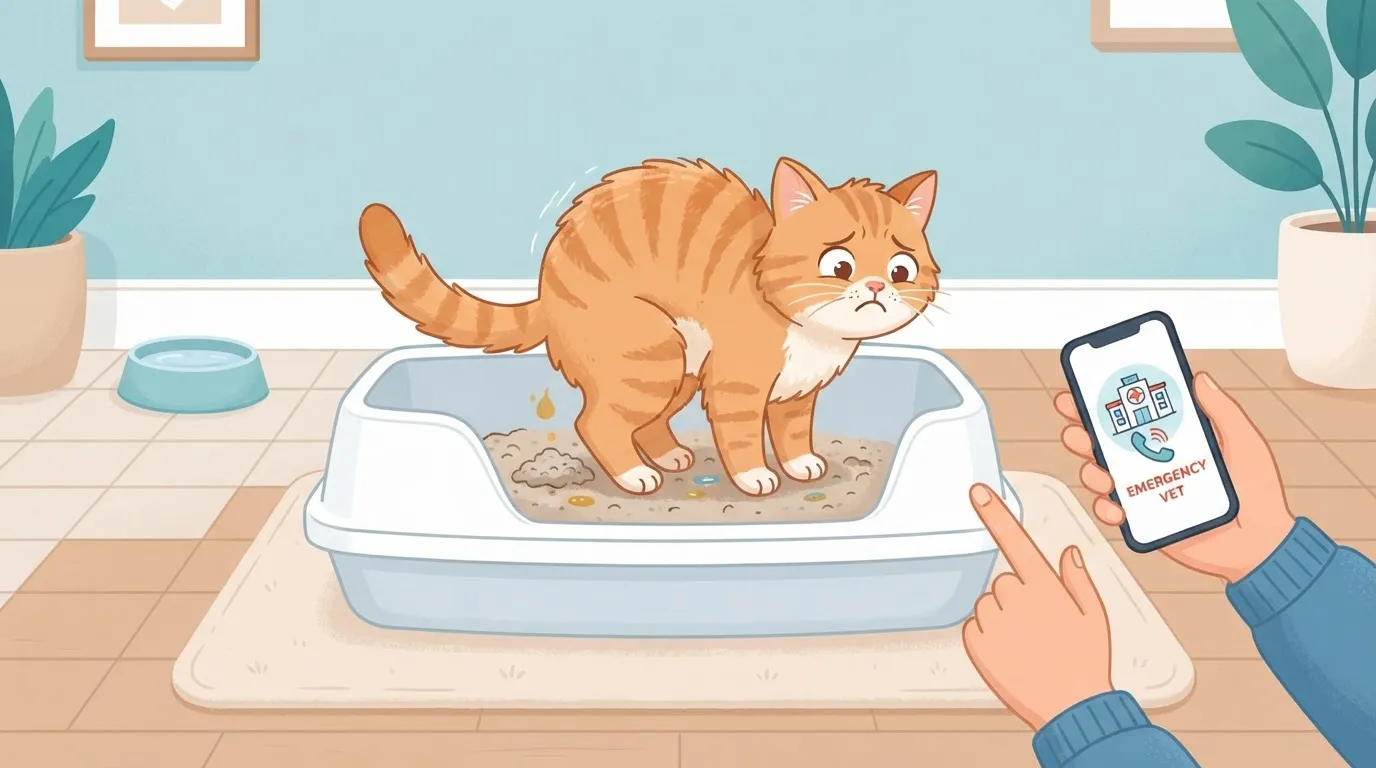
If your cat cannot urinate, or keeps going to the litter box and produces only a few drops or nothing at all, you need to act quickly. A possible cat urinary blockage can worsen in a short time: contact your veterinarian or an emergency veterinary clinic immediately, without waiting to see whether the problem resolves on its own.
Difficulty urinating does not always mean there is an obstruction, but it is not possible to safely distinguish between different causes at home. Observing the warning signs, limiting risks, and providing the veterinarian with accurate information can make an important difference.
When a Cat Cannot Urinate, It Is an Emergency
A urethral obstruction in cats occurs when the flow of urine is partially or completely blocked. It is more common in male cats because their urethra is narrower and longer, but any cat showing difficulty urinating should receive prompt veterinary assessment.
Treat the situation as urgent if you notice one or more of these signs:
- the cat repeatedly assumes a position to urinate but no urine comes out;
- it stays in the litter box for a long time, strains, or vocalizes;
- it produces only a few drops, very frequently;
- it repeatedly licks the genital area;
- it seems restless, hides, or avoids contact;
- it urinates outside the litter box in unusual places;
- the abdomen seems tense, or the cat reacts painfully when touched;
- lethargy, vomiting, weakness, or loss of appetite appears.
If your cat is straining without producing urine, appears to be in obvious pain, is vomiting, or is markedly lethargic, do not wait until the veterinary office opens normally: call an emergency veterinary service.
Cat Difficulty Urinating: How to Recognize the Signs
A cat that struggles to urinate may have a lower urinary tract problem, inflammation, crystals, stones, or other conditions that require testing. Symptoms can look similar, so avoiding rushed conclusions is essential.
A common mistake is to confuse straining to urinate with constipation. A cat may crouch and push in both situations. If you are unsure, prioritize ruling out a urinary problem, especially if your cat:
- repeatedly visits the litter box;
- leaves very small clumps or no trace at all;
- has blood in its urine;
- shows a sudden change in behavior;
- is an adult male with a history of urinary episodes.
Check the litter box without stressing your cat. Note when you last saw a normal urination, how often the cat attempts to urinate, and whether there is urine, blood, or vomit. This information will be useful to the veterinarian.
What to Do Immediately While Contacting the Veterinarian
The priority is to arrange an examination as soon as possible while keeping your cat calm and safe during transport.
Follow these practical steps:
- Call the veterinarian immediately. Explain that your cat is trying to urinate but cannot, or is producing only minimal amounts.
- Prepare the carrier. Use a clean absorbent layer and a light blanket if your cat tolerates it.
- Keep the cat indoors and under observation. Prevent it from hiding outdoors or in places that are difficult to reach.
- Write down the symptoms. Record the last normal urination, any blood, changes in appetite, and medications or supplements taken.
- Keep the environment calm. Noise, chasing, and unnecessary handling may increase stress and discomfort.
If possible, also tell the veterinarian about any previous feline urinary health episodes, your cat’s usual diet, and recent changes to the household routine.
What Not to Do If a Urinary Blockage Is Suspected
When a cat cannot urinate, some home attempts may delay necessary care or worsen its discomfort.
Avoid:
- pressing or massaging the abdomen to try to make urine come out;
- giving human medication, painkillers, diuretics, or leftover products kept at home;
- forcing water or food with a syringe;
- waiting until the next day if the cat continues straining without urinating;
- dismissing the behavior as “acting out” or stress without veterinary assessment.
The veterinarian can assess your cat’s general condition, check for a blockage, and decide which tests and treatment are appropriate. Follow-up care, including diet or prevention of recurring episodes, should be defined according to the identified cause.
After the Visit: Daily Monitoring and Prevention
After a urinary episode, follow the instructions you received carefully and monitor the litter box, appetite, water intake, and behavior. Small but persistent changes warrant a call to the veterinarian, especially in cats with a previous history.
A simple routine may help:
- clean the litter box regularly and check the clumps;
- provide several sources of clean water around the home;
- reduce sources of stress and ensure access to quiet spaces;
- attend any scheduled follow-up appointments;
- keep a record of treatments, visits, and recurring symptoms.
With PawsPet, you can keep your cat’s health information in one place, set reminders for checkups and treatments, and have useful details readily available when you need to contact a professional.
FAQ
My cat is only producing a few drops of urine. Should I be concerned?
Yes, especially if your cat is trying to urinate frequently, seems painful, or is producing increasingly smaller amounts. Contact your veterinarian that day; if no urine comes out, treat it as an emergency.
Can I wait for my cat to urinate on its own?
No, if your cat is straining but not urinating or shows lethargy, vomiting, or pain. A possible urinary blockage requires immediate veterinary assessment.
Is blood in a cat’s urine always an emergency?
Blood in the urine requires prompt contact with a veterinarian. If it is associated with an inability to urinate, pronounced straining, or worsening general condition, go immediately to an emergency veterinary clinic.