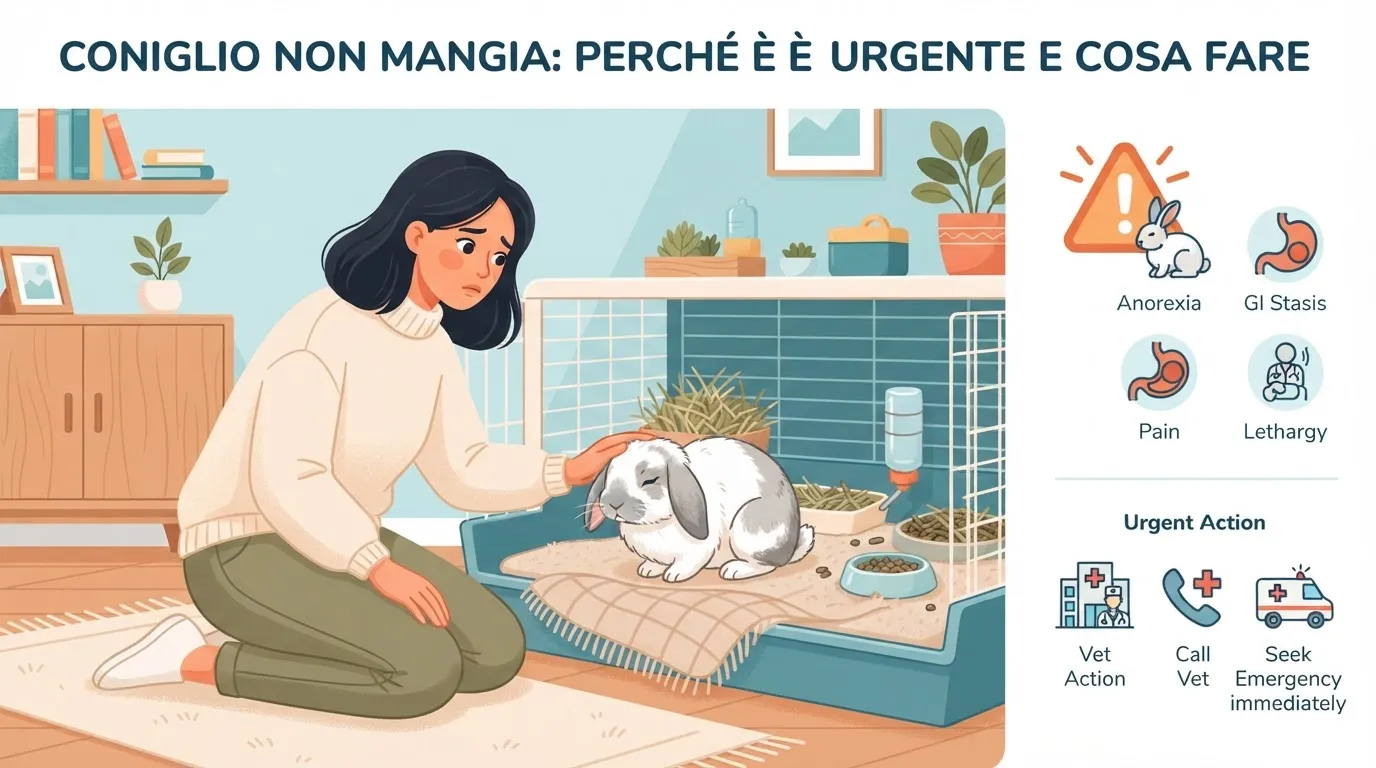
A rabbit does not stop eating “just because” as casually as some other species might: refusing food can worsen quickly and requires immediate attention. If your rabbit refuses food, produces fewer droppings, or seems different from usual, contact a veterinarian experienced with exotic pets as soon as possible.
The priority is to recognize the signs, keep your rabbit safe, and gather useful information for the appointment without trying improvised remedies that could delay treatment.
Why a Rabbit Not Eating Is an Emergency
A rabbit’s digestive system works continuously through regular fiber intake, especially hay. When a rabbit stops eating, even for a few hours, intestinal movement can slow down. This situation is often associated with gastrointestinal stasis in rabbits, meaning a reduction or stoppage of normal gastrointestinal motility.
The problem is not necessarily the initial cause: a rabbit may stop eating because of pain, dental problems, stress, urinary disorders, intestinal changes, or other conditions that must be assessed by a veterinarian.
Do not wait for your rabbit to “get hungry again” if food refusal occurs together with one or more of these signs:
- no droppings, or droppings that are much smaller, drier, or less numerous than usual;
- a hunched posture, unusual stillness, or reluctance to move;
- tooth grinding, which may indicate pain;
- a tense abdomen or sensitivity when touched;
- an unkempt coat, lethargy, or hiding;
- refusal of foods that are usually appealing;
- unusual breathing, marked weakness, or a body temperature that appears low.
If your rabbit shows severe weakness, difficulty breathing, collapse, or a very swollen abdomen, treat the situation as a rabbit emergency and seek urgent veterinary care.
What to Do Immediately If Your Rabbit Refuses Food
The most prudent choice is to call your veterinarian or an available clinic immediately. Clearly explain how long your rabbit has not been eating and what changes you have noticed. Even if the rabbit continues drinking or accepts a small bite, a significant drop in appetite deserves professional advice.
In the meantime, you can take simple, safe steps:
- Offer fresh hay and clean water. Place them close to your rabbit in a quiet environment that is easy to access.
- Check the litter tray and droppings. Note the quantity, size, shape, and consistency of the droppings, without handling them more than necessary.
- Maintain a comfortable temperature. Avoid drafts, excessive heat, and direct heat sources.
- Reduce stress and handling. Keep your rabbit in a quiet place, separated from other animals if necessary.
- Prepare information for the veterinarian. Write down the last time your rabbit ate, drank, and produced normal droppings.
If your veterinarian has previously prescribed a specific protocol for this rabbit, follow it only according to the instructions you received. Each episode may have different causes.
What to Avoid at Home
When a rabbit is not eating, acting quickly can lead to counterproductive steps. Avoid giving human medicines, painkillers, laxatives, oils, supplements, or products found online without veterinary guidance.
Do not force-feed with a syringe if your rabbit is very lethargic, cannot swallow properly, has a swollen abdomen, or has not been assessed: in some conditions, this could be risky. Vigorous abdominal massages or attempts to make the rabbit run are not substitutes for a diagnosis.
Do not suddenly change the diet by offering large amounts of fruit, treats, or sugary foods to “stimulate the appetite.” These may further disrupt digestive balance. The goal is not to persuade your rabbit to eat just anything, but to arrange a prompt examination and limit sources of stress.
How to Prepare for the Veterinary Visit
A precise description can help the professional assess the situation more effectively. If possible, bring a small amount of recent droppings or a photo of the litter tray, and note:
- the usual diet and any recent changes;
- access to hay, water, and materials that may have been swallowed;
- shedding, environmental stress, or new animals in the home;
- unusual behaviors, such as reduced urination or difficulty chewing;
- medicines, supplements, or treatments already given;
- any previous dental, digestive, or urinary problems.
Transport your rabbit in a stable carrier with a non-slip base, hay available, and a light cover if this helps the rabbit feel more protected. Do not leave the rabbit unattended in a car or expose it to sudden temperature changes.
Everyday Prevention: Notice Changes Early
Not every case of gastrointestinal stasis can be predicted, but a careful routine can help you notice early changes. Hay should form the basis of the diet, with water always available and a feeding plan established with your veterinarian according to your rabbit’s age and condition.
Check appetite, droppings, water intake, and behavior every day. Regular veterinary visits are also important for identifying dental problems or conditions that rabbits may hide.
With PawsPet, you can keep your rabbit’s health records up to date and set reminders for checkups and appointments. An organized history can also be useful during an urgent visit.
FAQ
How long can a rabbit go without eating?
It is not advisable to wait many hours to see whether your rabbit starts eating again on its own. A rabbit that skips a meal or clearly reduces its food intake should be assessed promptly by a veterinarian, especially if it produces few droppings or seems lethargic.
Is it a problem if my rabbit eats only vegetables but not hay?
Yes, it can be an important sign. Refusing hay may indicate, among other possibilities, dental pain or digestive discomfort. Contact a veterinarian for an assessment, even if your rabbit accepts softer foods.
Can I give my rabbit pineapple or oil for gastrointestinal stasis?
Do not give home remedies without specific veterinary instructions. If gastrointestinal stasis in a rabbit is suspected, the cause must be identified and treatment adapted to the rabbit’s condition.