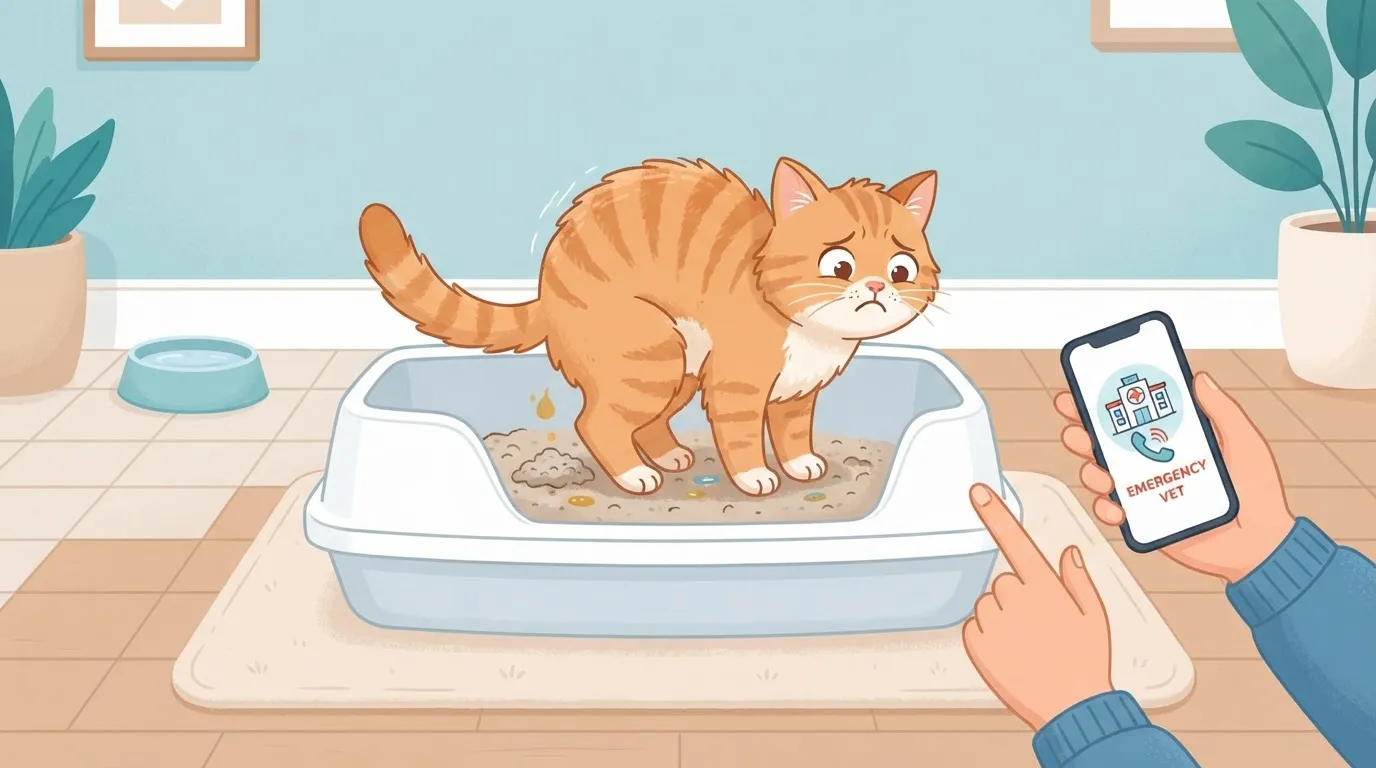
If your cat cannot urinate, or repeatedly enters the litter box without producing urine, treat the situation as a veterinary emergency. A possible urinary blockage can worsen quickly: do not wait for the problem to resolve on its own. Contact your veterinarian or a veterinary emergency clinic immediately.
Recognizing the signs early, staying calm, and acting carefully can make a significant difference to your cat’s well-being.
When a Cat Not Peeing May Be an Emergency
Difficulty urinating in cats can have several causes, including lower urinary tract inflammation, pain, stones, crystals, or a possible urethral obstruction. The urethra is the tube through which urine leaves the body; if it becomes blocked, the bladder cannot empty properly.
Urethral obstruction is particularly common in male cats, whose urinary passage is narrower. However, any cat having difficulty urinating should be assessed promptly by a veterinarian.
It is not possible to determine with certainty at home whether the problem is a urinary blockage. However, some behaviors mean you should call without delay:
- the cat assumes a position to urinate but nothing comes out;
- it produces only a few drops repeatedly;
- it vocalizes, appears restless, or seems to be in pain in the litter box;
- it repeatedly licks the genital area;
- it urinates outside the litter box in an unusual way;
- there is blood in the urine;
- it is lethargic, vomits, stops eating, or tends to hide.
If you observe one or more of these signs, especially a complete lack of urine, treat the situation as a feline emergency.
How to Distinguish Urinary Difficulty from Constipation
A cat straining in the litter box may appear constipated, but the posture and behavior can be similar in an animal with urinary difficulty. That is why it is risky to wait, assuming the problem only involves the intestines.
Observe without handling or restraining the cat:
- check whether the litter box contains recent urine clumps of the usual size;
- note how often the cat enters and leaves the litter box;
- check whether it leaves drops on the floor, on fabrics, or near the litter box;
- observe whether it seems painful, restless, or unusually quiet.
Never press on the abdomen to try to empty the bladder: you could cause pain or make the situation worse. Also avoid home remedies, human medications, non-prescribed supplements, or sudden diet changes. If a urinary blockage is suspected, the only safe choice is prompt veterinary assessment.
What to Do Immediately: A Practical Checklist
When you think your cat is not peeing, focus on simple actions that can help the veterinarian.
- Call your veterinarian or a veterinary emergency clinic immediately. Explain how long it has been since you observed urine, which signs you have noticed, and whether the cat is male or female.
- Keep the cat in a quiet environment. Reduce noise and contact with other animals, and do not force the cat to walk or drink.
- Prepare the cat for safe transport. Use a secure carrier with a blanket or absorbent towel on the bottom.
- Gather useful information. Note the last normal urination, any previous episodes, the type of food the cat eats, and any medications or products it has taken.
- Do not delay to keep monitoring the situation. If the cat continues straining without urinating, every delay may increase the risk of complications.
If the cat is very weak, vomiting, breathing unusually, or unable to stand, tell the emergency clinic during the call. The staff can advise you on how to arrive as quickly and safely as possible.
After the Visit: Prevention and Daily Monitoring
After a urinary episode, follow the plan provided by the veterinarian carefully. Preventive measures depend on the identified cause and may include checkups, a specific diet, stress management, or targeted treatments. Do not change a therapeutic diet or stop any medication without consulting the professional.
At home, it may help to:
- clean the litter box every day so you can notice changes in the amount of urine;
- provide several bowls of fresh water in quiet areas;
- encourage hydration according to your veterinarian’s recommendations;
- provide enough litter boxes and keep them clean and accessible;
- reduce sources of stress, such as conflict between animals or sudden changes in routine.
With PawsPet, you can record episodes, treatments, and veterinary instructions in the health management section, as well as set reminders for checkups and medications. Having an organized history can help you provide more precise information during appointments.
FAQ
How long can a cat go without urinating?
It is not safe to wait for a predetermined number of hours if your cat is straining without producing urine or appears to be in pain. Contact a veterinarian or veterinary emergency clinic immediately for guidance.
My cat is only passing a few drops of urine. Should I be concerned?
Yes. Frequent small amounts may indicate urinary difficulty and do not rule out a urethral obstruction. A veterinary assessment is needed, especially if the behavior is sudden or associated with pain.
Can I give water by syringe to a cat that is not urinating?
Do not force water or food without veterinary guidance, particularly if the cat is nauseated, lethargic, or in pain. The priority is to reach a qualified professional quickly.