Choosing between a GPS tracker for dogs and a Bluetooth tracker first means understanding how and where your dog spends time. If you want a tool that can help when your dog wanders off during a walk, the two devices offer very different levels of coverage. Knowing their limitations, costs, and battery life helps prevent unrealistic expectations.
GPS for Dogs or Bluetooth: How They Really Work
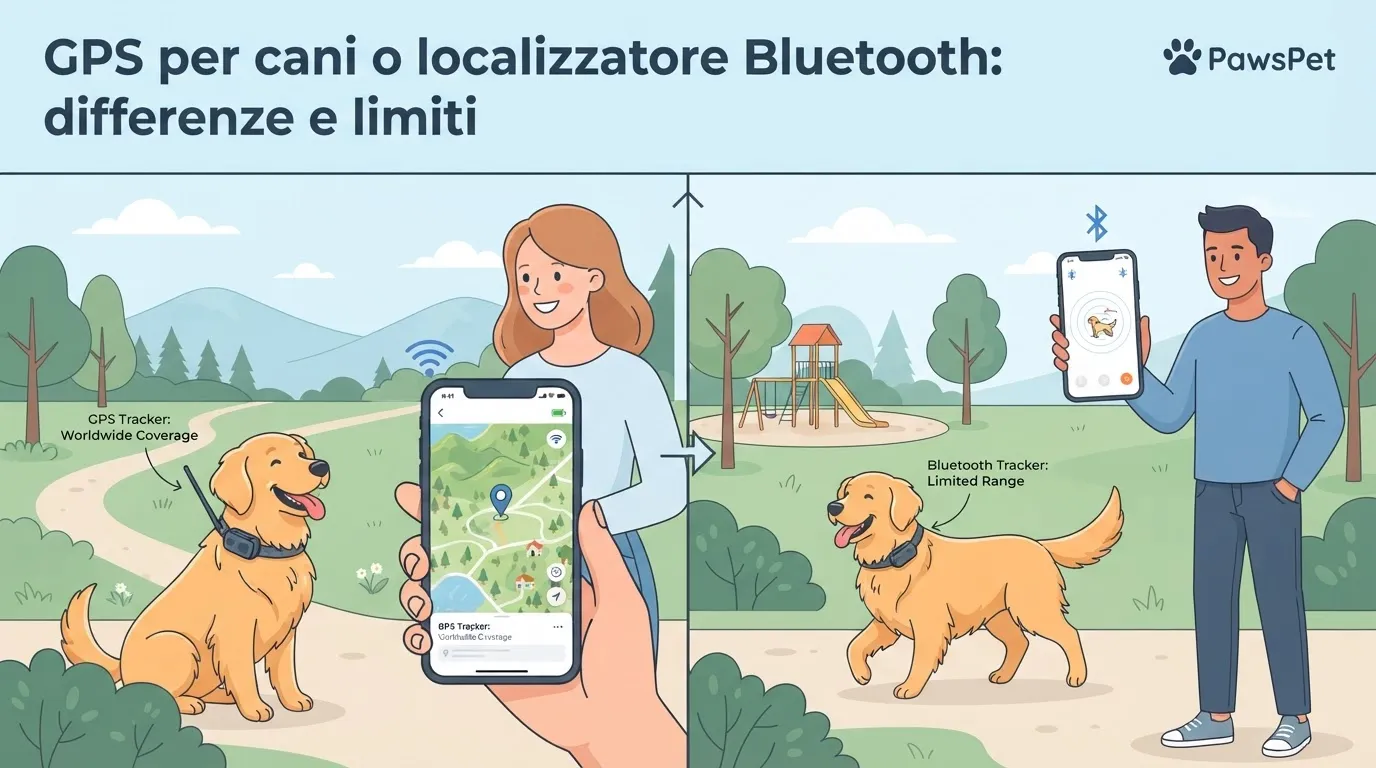
A GPS tracker for dogs detects location through satellites and sends the data to your smartphone using a mobile network. To view the location in real time, the device therefore needs both a satellite signal and available mobile coverage.
A Bluetooth dog tracker, on the other hand, communicates with your phone only over a short distance. Some models can use a network of nearby compatible devices to provide an approximate location update, but they are not GPS trackers: they cannot independently send the location from anywhere.
In practice:
- GPS is designed to track your dog even when they are far away;
- Bluetooth can help you find an object or pet nearby;
- Bluetooth location updates may depend on other compatible phones in the area;
- neither device replaces a leash, secure harness, recall training, or supervision.
GPS Coverage and the Limitations of Bluetooth Trackers
GPS coverage is especially useful during hikes, walks in open areas, travel, and situations where your dog could quickly move beyond your phone’s range. However, even a GPS tracker can have practical limitations.
Accuracy and update frequency may decrease in places where the signal is obstructed, such as densely built areas, covered car parks, ravines, dense woodland, or locations without mobile coverage. Before relying on the device, check your provider’s coverage in the areas you visit regularly.
The limitations of Bluetooth trackers are even more significant if your dog goes missing:
- the direct range from your phone is limited;
- walls, vegetation, and changes in elevation can reduce the signal further;
- in isolated areas, there may be no nearby devices able to detect the tracker;
- location updates may not be immediate or continuous.
A Bluetooth tracker can be a useful additional tool for checking that your dog is nearby at a campsite, in the garden, or at home. It is not, however, the most reliable choice when the main risk is wandering far away.
Battery Life, Subscriptions, and Comfort: What to Assess Before Buying
When comparing a dog tracker, do not focus only on the advertised technology. The most useful solution is one your dog can wear comfortably and that you can keep active consistently.
Consider these factors:
-
Weight and attachment
The tracker should be suitable for your dog’s size and securely attached to their collar or harness. Check it regularly to make sure it does not swing excessively, cause rubbing, or create a risk of snagging. -
Real-world battery life
GPS uses more power than a Bluetooth device, especially when updates are frequent. Check how battery life changes with everyday use and make charging part of your routine. -
Tracker subscription
Many GPS trackers require a data plan to transmit location information. A dog tracker without a subscription is often a Bluetooth model, but avoiding a recurring fee also means more limited coverage. Consider the total cost over time, not just the initial price. -
Durability and app
Look for a device suitable for rain, mud, and movement, with clear notifications and an app that is easy to use. Features only matter if you can access them quickly when needed.
How to Use a Tracker More Safely
Before an important walk, test the device under normal conditions. Check the connection, alerts, battery level, and the time needed to receive an update. Do not wait for an emergency to learn how to use the app.
To make the tracker part of a complete safety strategy:
- keep your dog’s microchip and contact details up to date according to the procedures in your area;
- attach a readable ID tag to the collar, without including unnecessary information;
- check the battery before travelling, going outdoors, or leaving your dog with a pet sitter;
- teach reliable recall with support from a qualified trainer if your dog tends to wander;
- if your dog goes missing, act quickly and contact the relevant authorities or local organisations.
PawsPet can help you organise GPS walks and set reminders to recharge the device, so the technology remains ready when it can be genuinely useful.
FAQ
Does a GPS tracker for dogs work without mobile coverage?
It may detect your dog’s location through satellites, but to send that location to your phone in real time it normally needs a data connection. In areas without coverage, you may receive incomplete or delayed updates.
Can a Bluetooth tracker find a lost dog?
It may help if your dog is nearby or in an area frequented by compatible devices. However, it does not provide the continuous tracking offered by a GPS tracker using a mobile network.
Is it safe to leave the tracker on the collar all the time?
That depends on the tracker’s weight, attachment, and your dog’s behaviour. Check that it does not cause irritation or snagging, and carefully consider using it without supervision, especially in environments with fences, branches, or other elements where it could become caught.