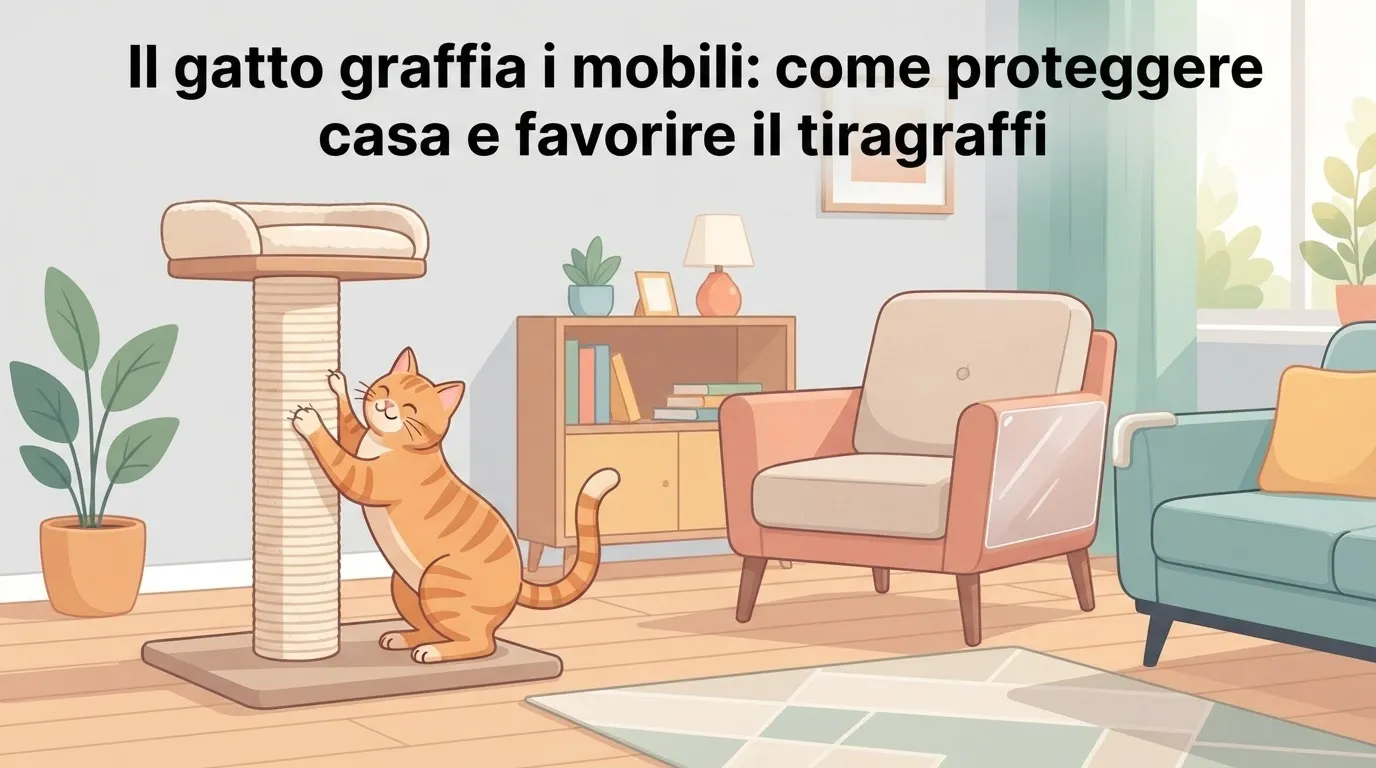
If your cat scratches the sofa, chairs, or other furniture, it is not doing so out of spite. Scratching is a natural behavior that helps maintain the claws, leave visual and scent marks, and release tension. The goal is not to stop your cat from scratching, but to offer more suitable surfaces and make the furniture less appealing.
With a few targeted changes to the environment, you can protect your sofa and furnishings without punishment while also supporting your cat’s well-being.
Why cats choose furniture and sofas
Furniture is often irresistible because it is stable, raised enough, and covered with materials that give the claws a good grip. A sofa near a window, entrance, or area where the family spends a lot of time can also become an important place for marking territory.
Observe when and where the behavior occurs. Your cat may scratch:
- after waking up, to stretch;
- near doors and passageways, to mark an area;
- near its bed or resting places;
- during moments of excitement, play, or anticipation;
- in environments with too few resources or after recent changes.
If the behavior appears suddenly, becomes very intense, or is accompanied by changes in appetite, litter-box use, or mood, speak with your veterinarian. A professional assessment can help rule out possible causes of physical discomfort or significant stress.
Choosing the right scratching post for your cat
There is no single ideal scratching post for every cat. Some prefer scratching vertically, while others choose inclined or horizontal surfaces. The best choice starts with the habits your cat already shows.
If your cat scratches the side of the sofa, offer a sturdy vertical scratching post. It should be tall enough for your cat to stretch out fully and stable enough not to wobble. If your cat targets rugs or mats instead, try cardboard, sisal, or horizontal scratching pads.
It can be helpful to offer several alternatives:
- a tall scratching post near the piece of furniture your cat targets most;
- a horizontal surface in the relaxation area;
- an option near the place where your cat sleeps;
- a column or structure with platforms for cats that enjoy climbing.
The material also matters: sisal, corrugated cardboard, wood, and durable fabrics may suit different preferences. At least initially, avoid covering the scratching post with materials that are too similar to those you want to protect.
Place the scratching post where it is actually needed
A common mistake is placing the scratching post in a little-used room and expecting the cat to abandon the sofa on its own. For the new surface to work, it must be convenient and available exactly where the need arises.
Start by placing the scratching post next to the corner of the sofa or furniture your cat scratches. Once your cat uses it regularly, you can gradually move it toward its permanent location, a few centimeters at a time.
To make the area more inviting:
- play near the scratching post with a wand toy or a lightweight toy;
- use a calm voice, offer welcome petting, or give a small treat when your cat uses it;
- you can sprinkle a very small amount of catnip if your cat shows interest;
- keep the surface clean and stable.
Do not take your cat’s paws and move them against the scratching post to “show” how to scratch. Your cat may experience this as restraint and associate the scratching post with something unpleasant.
How to protect your sofa and furniture without scolding
While you are encouraging a new habit, protecting your sofa from your cat can be a useful temporary measure. Secure sofa covers, washable throws, or purpose-made corner protectors can reduce damage and change the surface’s texture.
If you catch your cat scratching the furniture, avoid shouting, spraying water, or using punishment. These responses may increase tension and encourage your cat to scratch when you are not present. Calmly interrupt the behavior, redirect your cat to the nearby scratching post, and reward the appropriate choice.
You can also make the environment more enriching with:
- short, predictable daily play sessions;
- elevated observation points and quiet hiding places;
- separate resources if several cats live together, such as food bowls, litter boxes, and resting areas;
- stable routines during moves, visits, or changes within the household.
Taking note of problem areas and your cat’s preferences can help you understand which solutions work. With PawsPet, you can organize useful reminders, such as checking the condition of scratching posts or replacing worn surfaces.
FAQs about cats scratching furniture
How long does it take for a cat to use a scratching post?
It depends on the cat’s preferences, the post’s location, and the quality of its surface. If the scratching post is stable, placed in the right spot, and associated with positive experiences, many cats begin exploring it quickly. Consistency remains essential.
Should I trim my cat’s claws to prevent damage to the sofa?
Claw care can be useful in some cases, but it does not replace the need to scratch. Ask your veterinarian or a qualified professional how to proceed safely, especially if your cat is not accustomed to being handled.
Is one scratching post enough?
Often, it is not. In homes with several rooms, multiple cats, or different problem areas, offering several scratching surfaces increases the chances that your cat will choose the appropriate alternative.
Protecting your home and respecting natural feline behavior can go hand in hand: observe, adapt the environment, and reward every good choice. PawsPet can help you maintain an organized routine for your cat’s everyday well-being.