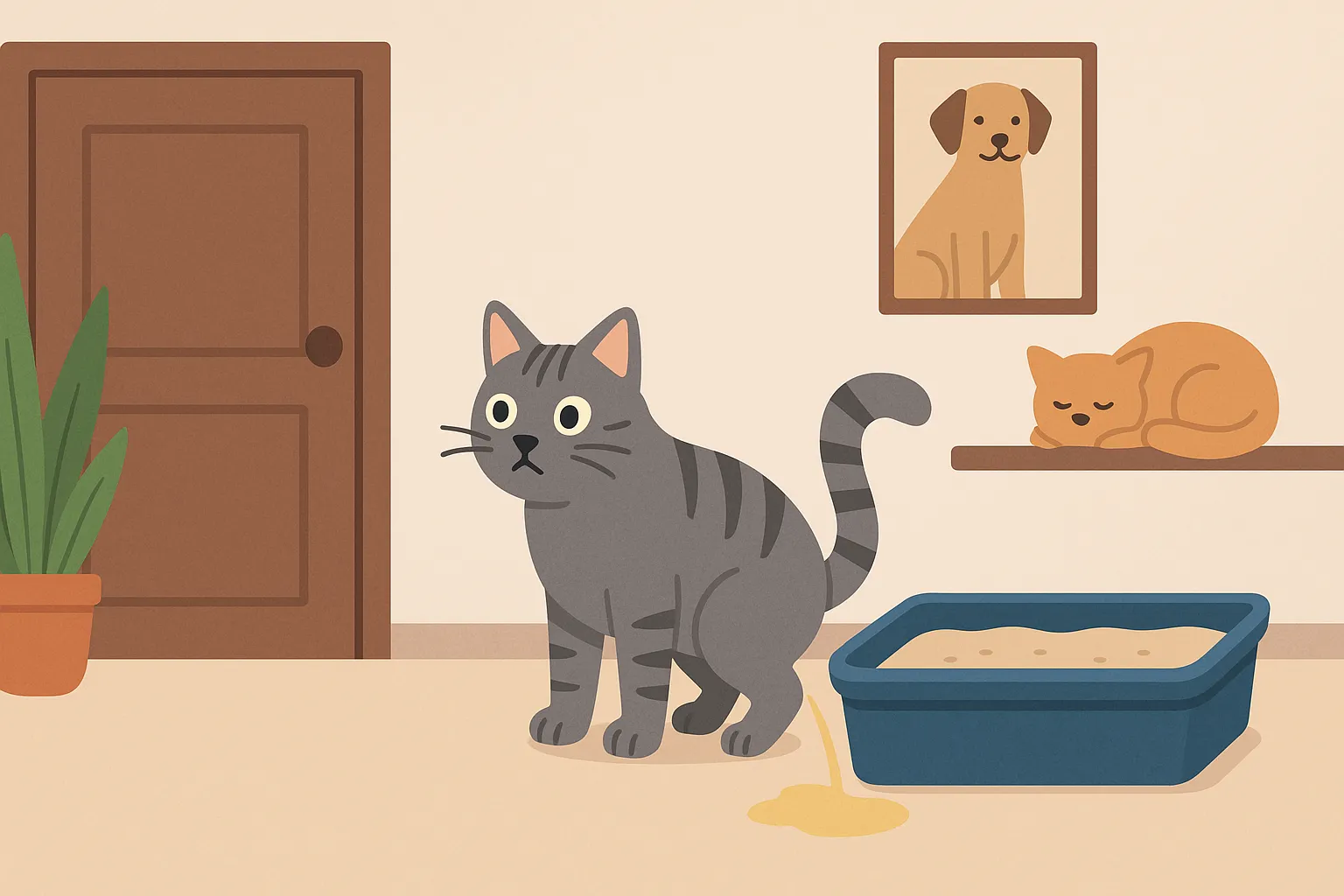
When a cat pees outside the litter box, the frustration is huge: floors to clean, lingering odor, and the fear that it may become a hard-to-break habit. Many owners go through this problem in silence, feeling guilty (“Did I do something wrong?”) or, on the contrary, thinking the cat is doing it “out of spite.”
In reality, in most cases the cat is not using the litter box because something is wrong: it may be a medical issue, a source of stress, or litter box management that does not suit its needs.
In this article we’ll look at:
- why a cat poops or pees outside the litter box
- how to tell the difference between a medical problem, a behavioral problem, and urine marking
- the most common litter box management mistakes
- practical solutions to get your cat back to using the box
- when it’s time to contact your veterinarian or a behaviorist
1. First rule: no “spite,” only discomfort
A key concept to keep in mind:
cats do not pee outside the litter box out of revenge or spite.
Eliminating is a vital function. If your cat no longer uses the litter box it used to use, it means that:
- it feels pain or discomfort when urinating or defecating
- it associates the litter box with something negative
- it is stressed or does not feel safe
- the litter box (type, location, cleanliness) no longer meets its needs
Thinking of a cat as “spiteful” leads to wrong reactions (yelling, punishment, locking it in a room with the litter box) that make the problem worse.
2. Difference between peeing outside the litter box and urine marking
Not all “litter box problems” are the same. It may be:
- inappropriate elimination (the cat is truly going in the wrong place)
- urine marking (the cat is communicating and marking territory)
Understanding the difference helps you choose the right solutions.
2.1 Signs of inappropriate elimination
It is more likely to be a litter box or medical issue if:
- the cat urinates on horizontal surfaces (floor, bed, rugs, sofa)
- the urine is a puddle, meaning a normal amount
- the cat often squats as it would in the litter box
- it may also be associated with feces outside the litter box
- other signs appear: meowing in the litter box, going in and out often, excessive licking of the genitals
In this case, possible causes include:
- urinary or intestinal problems
- joint pain (e.g. arthritis: the cat cannot comfortably enter a high-sided box)
- a disliked or unsuitable litter box
- stress or environmental changes
2.2 Signs of urine marking
We talk about urine marking when:
- the cat sprays urine on vertical surfaces (walls, doors, furniture)
- it is standing, with the tail up and often slightly twitching
- it produces small amounts of urine
- it does this in multiple spots, often near windows, doors, or entrances
- the cat often still uses the litter box for normal elimination
Urine marking (especially in intact males, but also in females and neutered cats) is often linked to:
- stress and insecurity
- the presence of other cats in the home or outside (seen through the window)
- major changes: moving house, a new pet, a new partner, a baby on the way
Even in cases of marking, there may still be an underlying medical issue, so a veterinary check should never be skipped.
3. Medical causes: when to worry (and act fast)
Many “litter box problems” have a physical cause. Ignoring it or delaying a vet visit can put your cat’s health at risk.
3.1 Urinary disorders (very common)
Reasons a cat may pee outside the litter box include:
- Feline idiopathic cystitis (FIC)
- Urinary tract infections
- Bladder or urethral stones or crystals
- Urinary blockage (more common in males, a serious emergency)
Warning signs:
- repeatedly going in and out of the litter box
- producing very little urine multiple times
- crying or meowing while urinating
- excessive licking of the genitals
- urine with blood
- urinating in unusual places, often near the owner (to “ask for help”)
3.2 Joint pain and mobility problems
Older cats or cats with arthritis may begin to:
- avoid litter boxes with very high sides
- no longer want to jump into covered boxes with a raised entry
- prefer rugs or easy-to-reach corners
In this case, the cat is not “choosing” to go elsewhere: it physically cannot use the litter box that used to work.
3.3 Intestinal problems
Diarrhea, constipation, or abdominal pain can cause the cat to:
- associate the litter box with pain
- poop (or poop and pee) elsewhere in the house
- choose soft surfaces like rugs or sofas
3.4 What to do in practice
Initial veterinary checklist:
- book a veterinary checkup
- tell the vet how long the accidents have been happening
- describe where the cat pees (horizontal/vertical)
- mention any other symptoms you notice (pain, blood, appetite changes, lethargy)
- if possible, bring a urine sample (following the vet’s instructions)
4. Litter box management mistakes: more common than you think
If veterinary tests rule out disease, the issue may be environmental or management-related.
Many cats stop using the litter box because:
- they no longer find it clean enough
- they dislike the type of litter
- they do not feel safe where it is placed
- they have to share it with too many other cats
4.1 How many litter boxes are really needed?
General rule:
number of cats + 1 = minimum number of litter boxes.
Examples:
- 1 cat → at least 2 litter boxes
- 2 cats → at least 3 litter boxes
- 3 cats → at least 4 litter boxes
And they should not all be placed side by side in the same spot:
for a cat, 4 litter boxes lined up together count almost like one single box.
4.2 Placement: where NOT to put the litter box
Places humans often choose, but that are bad for cats:
- next to the washing machine or other noisy appliances
- in hallways with lots of traffic (the cat does not feel relaxed)
- near the food and water bowls
- in rooms that are locked or often inaccessible
- in basements or balconies that are very cold or very hot
A cat looks for a place that is:
- quiet but not isolated
- where it can monitor the environment
- with escape routes, especially in multi-pet homes
4.3 Type of litter and litter substrate
Every cat has its own preferences, but in general many cats like:
- clumping, fine, soft litter under their paws
- few artificial odors (no strong perfumes)
- a generous layer (at least 5–7 cm) for digging
Possible problems:
- strongly scented litter → the cat avoids it
- coarse litter or irritating granules → discomfort for the paw pads
- covered box with a flap door → some cats do not feel safe
4.4 Cleaning: how often it should be done
For a cat, the litter box is like the bathroom at home.
If it is dirty, the cat will do everything possible to avoid it.
Good practices:
- remove feces and urine clumps at least 1–2 times a day
- add clean litter when the level gets low
- wash the box with warm water and a mild detergent every 1–2 weeks
- avoid bleach or products with very strong smells (some cats hate them)
5. Stress and changes: the cat “no longer feels safe”
Cats are extremely sensitive to change.
Even what seems like “no big deal” to us can feel like a major threat to a cat.
5.1 Common stress factors
- arrival of a new cat or other animal
- a baby being born, a new person in the house
- moving, renovations, new furniture
- frequent noises (construction, noisy neighbors, parties)
- conflicts between cats in the home (chasing, aggression, silent tension)
When stressed, a cat may:
- use urine to mark territory and feel safer
- avoid the litter box if it is associated with conflict (another cat blocks it or bothers it)
- seek strategic places to urinate: near doors, windows, or the owner’s bed
5.2 How to reduce litter box-related stress
Useful strategies include:
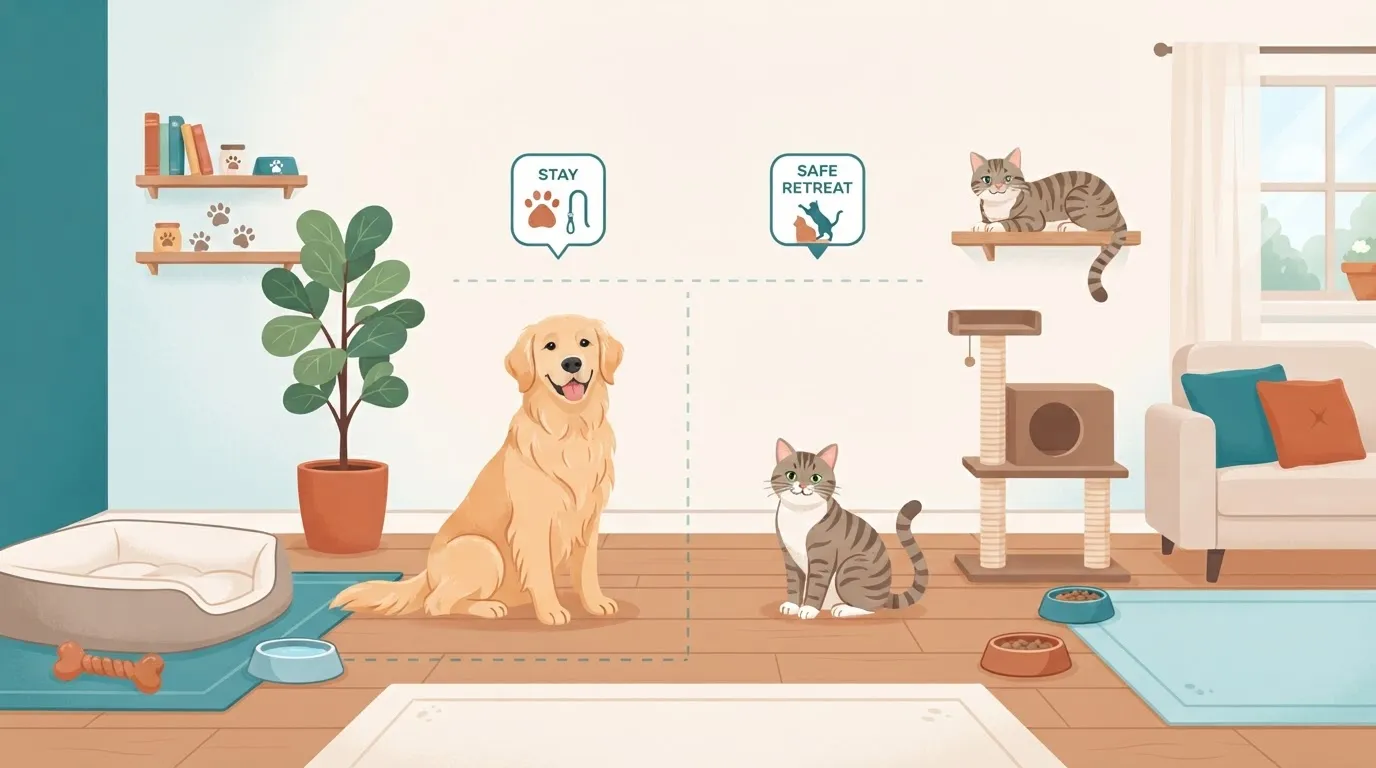
- increase resources: more litter boxes, more water bowls, more beds = less competition
- create hiding spots and elevated resting places (shelves, tall cat trees, bookcases)
- avoid cats chasing each other through the hallway past the litter box area
- if there are conflicts between cats, consider a feline behaviorist assessment
6. Practical solutions: step by step
6.1 Step 1 – Rule out (or treat) medical causes
Action summary:
- Book a veterinary visit as soon as you notice changes in elimination habits.
- Follow the prescribed treatment carefully (medications, diet, supplements).
- During treatment:
- make sure your cat always has fresh water
- reduce stressors as much as possible
- monitor where and how it pees (you can note it in a diary).
6.2 Step 2 – Optimize litter box management
Once the cat’s health has been checked, move on to environmental optimization.
Quick “litter box management” checklist
- number of litter boxes = number of cats + 1
- litter boxes in different rooms and not all side by side
- away from food and water bowls
- litter boxes cleaned at least 1–2 times a day
- litter that the cat likes (fine, not too scented)
- boxes with easy access, especially for older cats
- no sudden noises near the litter box (washing machine, dryer, boiler)
6.3 Step 3 – Reintroduce the litter box in a positive way
If the cat has now “lost trust” in the litter box, it may help to:
- Add a new litter box in a place where the cat tends to pee.
- Choose a box that is large, open, and low-sided.
- Use a different litter from the current one if you suspect it dislikes it.
- Make the litter area more appealing:
- keep it very clean at all times
- avoid traffic and disturbances
- provide enough light without too much exposure.
- Absolutely avoid:
- punishing the cat for peeing outside
- dipping its paws in the urine (a cruel and useless technique)
- locking it in the bathroom with the litter box for hours (this increases stress and anxiety)
6.4 What to do with already “marked” spots
For areas where the cat has already peed:
- clean with specific enzymatic products that remove odor
- avoid bleach or ammonia: they may encourage the cat to pee there again
- if possible, temporarily restrict access to that area until the routine improves
- turn some of those spots into “positive” areas:
- place a bed, a cat tree, or a food bowl there (but not where strong odors are still present)
7. Urine marking: targeted strategies
If the main problem is urine marking, general rules are not enough; you also need specific actions.
7.1 Neutering
In non-neutered cats, urine marking is very common.
- talk to your vet about neutering
- it often significantly reduces marking, though it does not always eliminate it completely
7.2 Territorial management
To reduce the need to mark:
- offer the cat multiple observation points (shelves, cat trees) from which it can watch the environment
- limit the view of outside cats through windows (curtains, films, moving furniture)
- avoid conflicts between cats in the home:
- more bowls
- more litter boxes
- more separate resting areas
7.3 Professional support
If marking continues despite environmental improvements and neutering:
- consider a consultation with a qualified feline behaviorist
- bring:
- videos of the behavior
- a map of the house with the location of litter boxes, bowls, and marking areas
- a log of episodes (which you can also keep through an app like PawsPet)
8. Practical tips in brief
Box: what to do RIGHT AWAY if your cat pees outside the litter box
- Observe how it pees (posture, amount, surface)
- Book a veterinary visit, especially if this is a new behavior
- Clean “accident” spots thoroughly with enzymatic cleaners
- Add at least one more litter box in a quiet place
- Check that the litter is suitable and that the box is always clean
- Avoid yelling, punishment, or scolding: they only increase stress
Box: what to absolutely avoid
- physically punishing or yelling at the cat
- rubbing the cat’s face in the urine
- thinking “it’s just doing it out of spite”
- only changing litter brands without assessing health and stress
- ignoring symptoms such as pain, blood in the urine, or straining without results
9. How PawsPet can help you in daily management
A litter box problem rarely gets solved “in a day”: it takes monitoring, changes in routine, and often coordination with veterinarians or behaviorists.
With an app like PawsPet you can:
- keep a diary of outside-the-box urination episodes (date, location, context)
- record visits, diagnoses, and treatments in one cat health profile
- set reminders for:
- vet checkups
- medication administration
- litter changes/cleaning
- share information clearly with your veterinarian or behaviorist, making a more accurate diagnosis easier
Less confusion in the information = easier to identify the cause and find the right solution.
10. Conclusion: from problem to prevention
When a cat pees outside the litter box, it is not a whim: it is a message.
It is saying that something is wrong with its body, its environment, its litter box management, or its emotional balance.
In summary:
- first of all, rule out (or treat) a medical problem with your veterinarian
- check the practical litter box setup: number, placement, litter, cleanliness
- observe whether it is inappropriate elimination or urine marking
- assess environmental stress: changes, other cats, noise, conflicts
- if the problem persists, rely on a feline behaviorist
With a structured and patient approach, most litter box problems can be greatly reduced or solved.
If you want to manage your cat’s health and behavior more easily,
try organizing everything with PawsPet: elimination diary, reminders, and a complete health record for your cat always at hand.
FAQ about cats and the litter box
Why is my cat peeing on the bed and not in the litter box?
Often a cat chooses the bed because it is a place saturated with your scent, which makes it feel safe, especially if it is stressed or insecure. However, peeing on the bed can also point to urinary problems (cystitis, pain). It is important to:
- have the cat examined by a veterinarian
- improve litter box management and placement
- reduce any sources of stress in the home
My neutered cat is urine marking: is that normal?
Yes, it is possible. Neutering reduces marking but does not always eliminate it. If a neutered cat keeps marking:
- check with your vet for possible urinary disorders
- look for stress or territorial conflicts
- increase resources (litter boxes, bowls, hiding spots) and improve the environment
In complex cases, support from a feline behaviorist is helpful.
How often should litter be fully replaced?
It depends on the litter type and the number of cats, but in general:
- remove feces and clumps every day
- add clean litter when the level gets low
- replace all the litter and wash the box every 1–2 weeks
If there are urinary or inappropriate elimination issues, more frequent cleaning is often helpful.
When should I call a behaviorist for litter box problems?
A feline behaviorist is recommended when:
- the veterinarian has ruled out disease but the problem continues or gets worse
- there are multiple cats with obvious conflicts or subtle tension
- the cat also shows other signs of distress (aggression, hiding, fear)
A professional can assess the environment, routine, and interactions at home and propose a personalized plan to help the cat regain balance and calm.