Living with dogs and cats can become peaceful, but it rarely works if you simply let the two animals “sort things out” on their own. Well-organized spaces, gradual introductions and attention to signs of discomfort can help prevent chasing, fear and conflicts that are difficult to correct.
Each animal has different timing, past experiences and needs. The initial goal is not to make them play together, but to help the dog and cat feel safe in the same home.
Preparing the Space Before the First Meeting
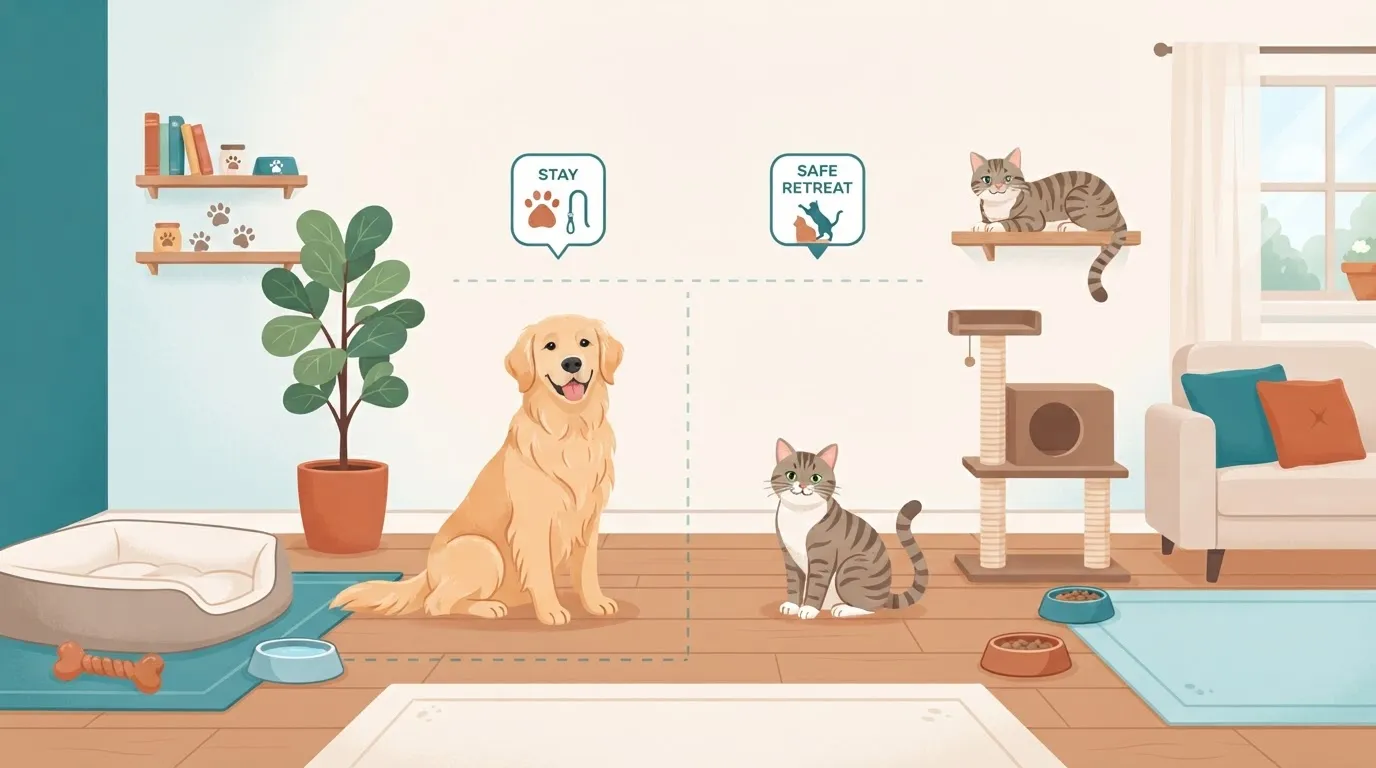
To manage dogs and cats at home, it is essential to create separate, easily accessible resources. The cat should be able to rest, eat and use the litter box without feeling watched or within the dog’s reach.
Set up at least these areas:
- A safe area for the cat, preferably a quiet room with a door that can be closed.
- Elevated routes, such as stable scratching posts, suitable shelves or secure furniture, allowing the cat to move away without being trapped on the floor.
- Separate food and water bowls, placed in different locations away from busy passageways.
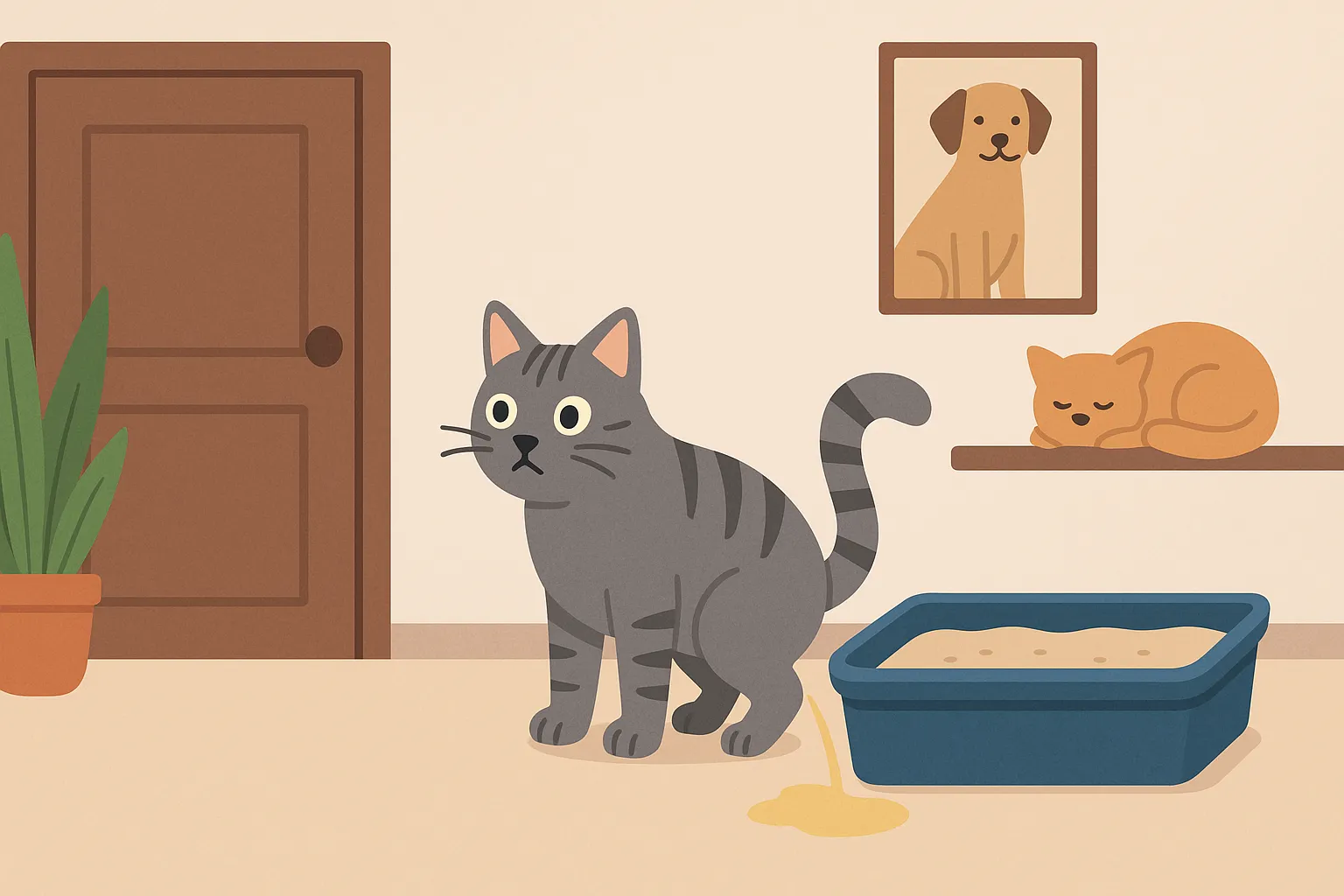
- A protected litter box, located in a quiet area, away from food and water and inaccessible to the dog.
- A resting space for the dog, with a bed or mat where the dog can relax without being disturbed.
Do not force the cat to pass close to the dog to reach its resources. Even a friendly dog can feel intrusive if it follows the cat, sniffs persistently or occupies the only available routes through the home.
Gradual Introductions: Scents Before Sight
One of the most common mistakes when dogs and cats live together is introducing them face to face immediately. A direct, overly long meeting can create fear in both animals, especially if the dog is excited or the cat has no escape route.
Proceed in stages:
- Exchange scents: Rub a soft cloth over each animal’s muzzle or bedding and let the other animal sniff it without pressure.
- Separation with a closed door: Allow them to notice each other through the door while associating the situation with calm moments, such as meals or relaxing activities.
- Controlled visual contact: Use a secure barrier, baby gate or slightly open door. The dog should be on a leash if necessary.
- Short, positive meetings: Stop before agitation or tension increases. Reward the dog for staying calm and allow the cat to move away freely.
- More freedom only with supervision: Move to meetings without a barrier when both animals show relaxed and predictable behavior.
Do not hold the cat in your arms in front of the dog: the cat may feel trapped and scratch out of fear. Similarly, do not punish growling, hissing or attempts to escape. These are forms of communication that should be acknowledged.
Stress Signals in Dogs and Cats to Recognize
Observing body language makes it possible to intervene before discomfort turns into conflict. Stress signals in cats can be more subtle, while excitement in dogs is sometimes mistaken for enthusiasm.
In cats, look for:
- very dilated pupils, flattened ears, a puffed-up or lashing tail;
- prolonged stillness, frequent escaping or constant hiding;
- hissing, growling, swatting or refusing to enter certain rooms;
- changes in litter box use, appetite or interest in contact.
In dogs, watch for:
- a fixed stare and silent chasing;
- a stiff body, tension on the leash or lunging toward the cat;
- persistent barking, whining, agitation or difficulty disengaging;
- attempts to block the cat’s path or reach the cat in elevated areas.
A chase should not automatically be considered play. Calmly interrupt it, redirect the dog to an alternative activity and separate the animals. If the chasing happens repeatedly, return to an earlier stage of the introduction process.
Mistakes to Avoid and Helpful Routines
Peaceful coexistence does not depend only on the first meeting. Daily routines help dogs and cats living together predict what will happen and reduce competition.
Avoid:
- leaving the animals unsupervised too soon;
- forcing physical contact or moving their bowls closer together to “make them get used to each other”;
- scolding the cat for hissing or the dog for showing signs of discomfort;
- giving the dog unrestricted access to the cat’s litter box or food;
- ignoring sudden changes in behavior.
Instead, provide separate activities for both animals: walks and scent games for the dog, controlled predatory play sessions and observation spots for the cat. Individual quality time reduces frustration and demands for attention.
If aggression, persistent fear, marking or changes in normal habits occur, consult your veterinarian to rule out physical causes and contact a qualified trainer or behavior professional.
FAQ About Living with Dogs and Cats
How long does it take for a dog and cat to live well together?
It depends on their temperament, age, previous experiences and environment. Some animals learn to tolerate each other within a few days, while others need weeks or longer. It is better to proceed slowly than to rush and create negative associations.
Can a dog be left alone with a cat?
Only after an appropriate period of supervision without chasing, tension or attempts to control the cat. If you are unsure, keep the animals in separate areas when you are not present.
What should I do if my cat stops using the litter box?
First, check that the litter box is quiet, clean and inaccessible to the dog. Since the change may also be linked to a health problem, contact your veterinarian.
Clear space management and a respectful introduction create the foundations for peaceful coexistence. With PawsPet, you can keep track of your pets’ habits, health reminders and daily activities, making it easier to notice any changes.