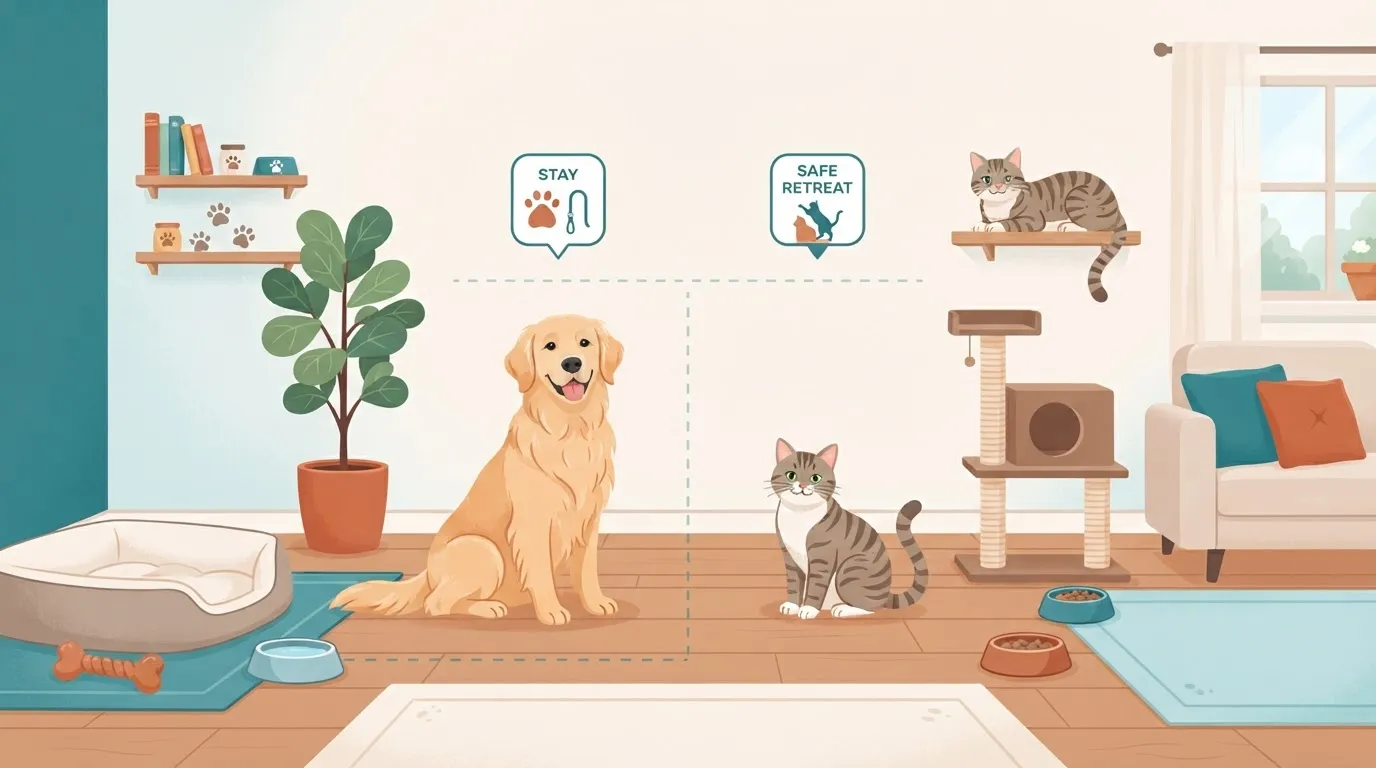
Bringing a new dog or cat into a home where other animals already live is one of the most delicate moments for a pet parent. The excitement of a new arrival often clashes with real concerns: fights, jealousy, marking around the house, constant meowing or barking, and animals that stop eating or using the litter box.
In this article, we look at how to introduce a new dog or cat into a home if there are already other pets, step by step, while minimizing stress for everyone. We’ll cover different situations (new dog, new cat, dog-and-cat coexistence, how to properly introduce two dogs) with practical strategies, examples, and mistakes to avoid.
1. Before bringing the new pet home: preparation is half the job
Coexistence begins before the new dog or cat even walks through the front door. Proper preparation often prevents 70% of future problems.
1.1 Assess the temperament of the pets already living there
Ask yourself honestly:
- Is my dog or cat:
- territorial?
- has it ever shown aggression toward other animals?
- easily frightened?
- older or dealing with health issues?
- Has it already had experiences with other dogs/cats?
- How does it react when it meets animals outside the home (on walks, at the vet, etc.)?
If the resident animal:
- is very old
- has chronic pain (arthritis, illness)
- is already anxious or aggressive
it may struggle to accept a newcomer. In these cases, it is a good idea to:
- choose a new pet with a calm, respectful temperament
- involve a behavior professional from the start
1.2 Choose the new dog or cat carefully
When possible, find out about:
-
Age
- Two puppies/young animals together = lots of energy, lots of management.
- A young animal with an older one = be very careful not to stress the older pet.
-
Size (especially dog + cat or dogs of very different sizes)
A big size difference increases the risk of injury, even unintentionally. -
Past history
- Has it already lived with other animals?
- Has it shown fear or aggression toward dogs/cats/humans?
If you are adopting from a shelter or rescue, clearly explain that you already have animals at home and ask for a compatible dog/cat (tolerant, balanced, and used to living with others).
1.3 Prepare the home space
Set up a few things before arrival:
-
Separate areas:
- a “safe” room or zone for the newcomer
- spaces where resident animals can retreat
-
Duplicate resources:
- separate food and water bowls
- multiple beds/cushions
- more scratching posts and litter boxes for cats (general rule: number of cats + 1 litter box)
-
Escape routes for cats:
- shelves, tall scratching posts, bookcases
- high-level pathways to avoid direct contact with the dog
-
Useful physical barriers:
- baby gates (to separate spaces while still allowing sight/smell contact)
- secure carriers for the first stages
2. Golden rule: gradual, controlled introduction
Most problems come from a common mistake: “I’ll just put them together right away and let them sort it out.” For a dog or cat, the arrival of another animal is a huge change. It needs time to:
- process new smells
- get used to the sounds
- understand that the newcomer is not a threat
2.1 Phase 1 – Arrival at home: controlled isolation
When you bring the new dog or cat home:
-
Take it directly to its designated area, already prepared with:
- bed or blanket
- water
- food
- litter box if it’s a cat
-
Keep the animals separated for the first few hours (often 24–48 hours):
- they will hear and smell each other through doors and gaps
- but they will not yet have direct contact
-
Keep the resident’s routine unchanged:
- same meal times
- same walks
- same play and cuddle moments
2.2 Phase 2 – Scent and signal exchange
Before any close visual meeting, it is essential to work with smells.
Some simple techniques:
-
Swap blankets or towels
- rub a soft cloth on the newcomer
- place it near the resident’s bed (and vice versa)
-
Swap spaces without seeing each other
- keep the resident in a room with something pleasant (toys, food)
- let the new pet explore the house
- then switch roles
-
Reward calm behavior
- if the resident dog/cat sniffs the door or cloth and stays calm, praise it and offer a treat
This applies to both:
- how to bring a new dog into the home with other dogs/cats
- how to bring a new cat into the home with dogs/cats already present
3. How to properly introduce two dogs
When a second dog enters the home (or a third, and so on), it is essential to plan structured meetings.
3.1 First meeting: better outdoors
If possible, make the first meeting:
- in a neutral place (a quiet park, a low-traffic street)
- with both dogs on long leashes (do not pull)
- with two people (one per dog)
Procedure:
- Walk parallel at a distance (5–10 meters) without forcing contact.
- If the dogs seem relaxed (soft tail, loose body), move a little closer.
- Let them sniff briefly (2–3 seconds), then gently call your dog back and reward it.
- Repeat several times, never forcing it: too many pauses are better than one clash.
Signs of good communication:
- sniffing the rear
- curved body posture (not stiff and pointed)
- slow, low tail wagging
- they move away and then come back
Warning signs:
- stiff body
- tail high and motionless
- growling, showing teeth, intense staring
- raised fur along the back
If you notice signs of tension, increase the distance and calm yourself first: dogs read our emotional state.
3.2 Entering the home
Once the atmosphere is calm enough:
- Let the resident dog enter first, free to move around.
- Keep the new dog on a loose leash and let it enter calmly.
- Do not rush to remove the leash:
- it should be a “safety line,” not a rigid control tool.
- Avoid placing food, toys, bones in the same room right away:
- these are resources that can trigger conflict at the beginning.
3.3 Managing the first days with two dogs at home
During the first 7–10 days:
-
Supervise everything
Do not leave the dogs alone together in the early stages, especially if you do not know them well yet. -
Manage resources:
- separate and spaced-apart bowls
- no highly prized toys when they are together if one of them is possessive
-
Maintain routine and attention
Spend exclusive time with the resident dog to avoid jealousy:- walks with just them
- one-on-one play sessions
4. Dog-cat coexistence: it is possible, but clear rules are needed
The topic of dog-and-cat coexistence is one of the most searched: many people fear they will never get along. In reality, with a proper introduction, many dog-cat pairs develop a good balance, sometimes even a real friendship.
4.1 First rule: safety for the cat
For the cat, the arrival of a dog is often very stressful. It must be able to:
- watch the dog from above (shelves, cabinets, tall scratching posts)
- escape easily to dog-free areas
- have:
- bowls
- litter boxes
- a bed in a place the dog cannot reach
4.2 Gradual dog-cat introductions
A possible path:
Phase 1 – Smells and sounds
- The dog hears the cat behind a closed door and vice versa.
- Reward the dog when it stays calm.
- If it barks or scratches at the door, move it away and redirect its attention elsewhere.
Phase 2 – Controlled sight
- Use a baby gate or a slightly open door:
- the cat sees the dog from a safe position (up high, or behind the gate).
- The dog is on leash.
- Short sessions (2–5 minutes), repeated several times a day.
- Every calm behavior is rewarded with treats or quiet play.
Phase 3 – Same environment, but controlled
- The dog is on leash.
- The cat is free to move and leave.
- No one should force the cat to approach.
- If the dog gets too excited, stop and try again later, increasing the distance.
4.3 Practical rules for dog-cat coexistence
-
Do not leave the dog and cat alone together until:
- the dog has learned to ignore or respect the cat
- the cat appears relaxed (not always hiding, not always on top of a wardrobe or in the attic)
-
Protect the cat’s litter boxes:
- many dogs find them “interesting”
- create areas only the cat can access (narrow passages, selective barriers)
-
Respect the cat’s timing:
- some cats get used to it in days
- others need weeks or months
Forcing contact can create defensive aggression.
5. Introducing a new cat into a home with other cats
Understanding how to introduce a new cat into the home when there are already cats means remembering that:
- cats are highly attached to their environment and smells
- they are often territorial, especially with other felines
5.1 Step-by-step cat introduction
1. Initial quarantine/isolation period
-
The new cat lives for a few days in just one room:
- litter box
- food
- water
- hiding spots (boxes, covered beds)
-
The other cats hear and smell the newcomer through the door.
2. Scent exchange
- Swap:
- blankets
- beds
- toys
- You can use a cloth:
- gently rub it on the new cat (cheeks, neck)
- then on the resident cat (always gently)
- and vice versa
3. “Nearby” but separate meals
- Feed the cats:
- one on one side of the door
- the other on the opposite side
This helps them associate the other cat’s smell with something positive.
4. First visual contact
- Open the door slightly or use a gate/screen:
- they should be able to see each other but not reach each other
- Watch their reactions:
- brief hissing, a little growling are normal at the beginning
- violent aggression (throwing themselves at the screen, attempts to attack) requires more time and, ideally, professional support.
5. Short meetings, constant supervision
- When they seem calmer:
- open the door
- let them sniff each other for brief periods
- do not punish a single hiss; it is a communication signal
- Always keep escape routes and high places available.
5.2 Enough resources for everyone
Cat coexistence is much calmer if there are:
- more litter boxes (at least number of cats + 1)
- food bowls that are not all crowded in one spot
- enough:
- scratching posts
- hiding places
- shelves
6. Managing jealousy, fights, and signs of stress
Even with a perfect introduction, signs of stress or conflict can still appear.
6.1 Signs of stress in dogs
- excessive barking
- sudden destruction around the house
- urine marking (in dogs that did not do this before)
- loss of appetite
- obsessive attention-seeking
6.2 Signs of stress in cats
- peeing outside the litter box
- constantly hiding
- overgrooming to the point of losing fur in some areas
- persistent meowing, especially at night
- refusing food or eating much less
If you notice these signs:
-
Reduce novelty
- fewer close encounters
- keep routines as regular as possible
-
Increase predictability and control
- stable times for meals, play, and walks
-
Offer more resources
- more beds, more litter boxes, more water stations
-
Avoid punishment
- scolding a dog that growls or a cat that hisses only makes things worse.
Contact your veterinarian if:
- stress lasts longer than 1–2 weeks
- there are physical symptoms (vomiting, diarrhea, significant weight loss, self-inflicted sores from licking)
- the coexistence seems to be getting worse instead of better
7. How technology can help manage coexistence better
Today, apps like PawsPet can help make daily life in a multi-pet home easier:
-
Separate profiles and records
- record each dog and cat with its own details (age, weight, preferences, treatments)
- keep track of any behavioral issues or advice received from the vet
-
Reminders for checkups and vaccines
- bringing in a new pet often means updating vaccines, parasite prevention, and visits
- reminders reduce the risk of forgetting things during a busy period full of changes
-
Behavior and progress notes
- note day by day how the introductions are going
- keep a “history” of incidents (growls, hisses, play sessions)
- also useful to show a trainer or veterinary behaviorist
-
Location and safety (if you use compatible GPS)
- especially important if you have outdoor cats or dogs that may panic and run away in the first few days
Using a single tool to centralize all this information helps you focus more on the relationship and less on the organization.
8. Summary checklist: how to introduce a new dog or cat into the home
8.1 Before arrival
- I assess the temperament and health of the resident pets
- I choose a compatible new pet whenever possible
- I prepare a dedicated room/area for the newcomer
- I arrange duplicate resources (bowls, beds, litter boxes)
- I set up high routes and hiding places for cats
- I install any gates/barriers needed
8.2 During the first days
- I keep the animals separated at first
- I exchange smells with blankets/cloths
- I organize calm, spaced-apart meals
- I introduce the first controlled visual contacts
- I carefully observe body language and stress signals
8.3 First direct interactions
- I introduce two dogs first in a neutral place, then calmly at home
- I use the leash only as a safety measure, not to force contact
- I protect the cat with escape routes up high and dog-free zones
- I do not immediately introduce toys or “high-value” resources together
- I do not leave the animals alone together until they are truly calm
Conclusions: peaceful coexistence is possible, with the right timing
Introducing a new dog or cat into a home where other animals already live requires:
- preparing the space
- respecting each animal’s pace
- gradual, controlled introductions
- attention to signals, without punishment but with guidance and support
Every dog and cat is different: some become friends with the newcomer right away, while others take months to accept them. Your job is to provide safety, stability, and patience.
If you want to keep everything under control during this delicate phase, you can use an app like PawsPet to:
- create a profile for each pet
- note the progress of introductions and behaviors
- set reminders for checkups and vaccinations for all pets
That way, the organizational side is simplified and you can focus on what really matters: helping your animals build a peaceful and respectful coexistence.
FAQ about introducing a new dog or cat into the home
How do you introduce a new dog into a home with a dominant dog?
When living with a dog that tends to “take charge”:
- organize introductions in a neutral place with two handlers
- keep clear routines: stable schedule, consistent rules for both
- manage high-value resources carefully (food, toys, attention)
- reward every moment of calm and balanced interaction
If the dominant dog shows serious aggression (biting, repeated attacks), involve a trainer or veterinary behaviorist.
How long does it take for a dog and cat to get along?
There is no fixed rule: some start tolerating each other in a few days, others take weeks or months. It depends a lot on:
- the temperament of both
- their past experiences
- the quality of the introduction (gradual or forced)
The initial goal should not be “instant friendship,” but peaceful coexistence, where neither animal lives in a constant state of fear.
What should you do if cats fight after a new cat arrives?
If the fights are frequent:
- Separate them temporarily into different areas of the home.
- Start again with a gradual introduction: scent exchange, meals nearby but separate, controlled visual contact.
- Increase the resources (litter boxes, bowls, hiding places).
- Ask your veterinarian for advice to rule out health problems that could increase irritability or pain.
If deep bites or wounds appear, professional intervention is recommended.
How can you tell if two dogs or cats are truly becoming friends?
Good signs of progress include:
- sleeping in the same room without tension
- sniffing each other and then calmly moving away
- playing (chasing with pauses, soft wrestling, without shouting or stiffness)
- eating in the same area without fighting
Remember that “friendship” can also simply mean living together peacefully: they do not need to be glued to each other all the time for the introduction to be successful.