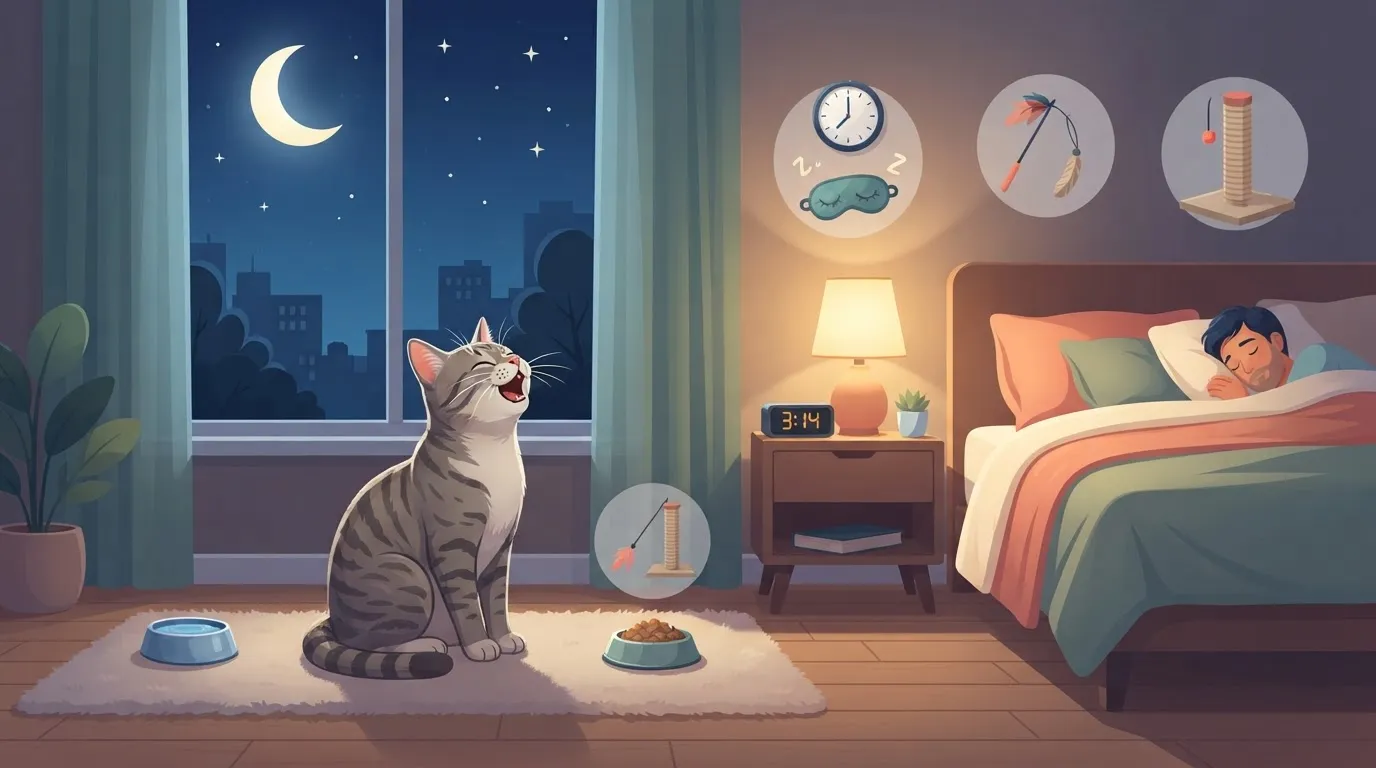
When a cat meows at night, the whole family’s sleep can become difficult. Nighttime meowing often results from habits, a request for attention, or too few daytime activities; in other cases, it may signal discomfort that should be assessed by a veterinarian. Observing when your cat vocalizes and building a consistent routine can help you respond without punishment.
Why is your cat meowing at night?
Cats tend to be more active at dusk and dawn. A cat that rests for many hours during the day may therefore look for play, food, or contact just when people are going to bed.
The most common causes of nighttime behavior include:
- Seeking attention: if your cat receives petting, food, or conversation every time it meows, it may learn that the behavior works.
- Hunger or meal-related habits: some cats associate the early morning with breakfast and start calling the family before it is time to get up.
- Too little daytime activity: a predictable environment without opportunities for simulated hunting can leave excess energy.
- Outside stimuli: noises in the hallway, other animals outside the window, lights, or changes at home can increase agitation.
- Stress and changes: moving house, new household members, extended absences, or changes to the routine can lead to unusual vocalizations.
Age, temperament, and each animal’s history also matter. An older cat, for example, may have different needs from a young, active adult cat.
Before changing the routine, rule out a health problem
A sudden change deserves attention, especially if your cat has never stayed awake or vocalized at night before. Meowing may occur alongside pain, disorientation, increased thirst, changes in appetite, or difficulty using the litter box.
Contact your veterinarian if you notice one or more of these signs:
- intense, frequent, or unusual vocalizations;
- restlessness accompanied by hiding or aggression;
- unexplained weight loss or gain;
- vomiting, diarrhea, difficulty urinating, or changes in the stool;
- changes in appetite, thirst, or litter box use;
- disorientation, especially in an older cat.
Do not give medication, supplements, or sedatives without veterinary guidance. A visit can help rule out physical causes and provide advice suited to your cat’s situation.
How to create an evening routine that supports rest
To calm a cat at night, the goal is not to force it to sleep. Instead, provide rewarding activities at the right times and make the evening predictable. Keep the new routine in place for several weeks without expecting immediate changes.
You can organize the evening ritual in three steps:
- Active play before bedtime. Spend a short but engaging session with a wand toy, a small toy mouse, or another toy that imitates prey. Let your cat chase, jump, and “finish” the hunt.
- A small meal after play. For some cats, offering part of the evening ration after activity follows a natural sequence: hunt, eat, rest. Follow the plan agreed with your veterinarian for portions and frequency.
- A calm, predictable home. Reduce noise and exciting interactions, make sure the litter box, water, and bed are easy to access, and keep schedules reasonably consistent.
If the calls are connected to breakfast, a programmed automatic feeder can prevent your cat from associating a person waking up with being fed. Introduce it gradually and do not increase the total daily amount of food.
Feline enrichment: more activity during the day
Feline enrichment includes objects, spaces, and activities that allow a cat to explore, observe, climb, and express natural behaviors. A cat that is engaged during the day may reach the evening feeling more satisfied.
Try introducing simple variety:
- place sturdy scratching posts and safe elevated resting spots;
- rotate toys instead of leaving all of them available at once;
- offer small food-search games if they are compatible with your cat’s diet;
- create a resting spot near a window, using curtains or screens if the outdoor activity makes your cat agitated;
- schedule short play sessions during the day as well.
Avoid scolding, spraying water, or suddenly shutting your cat away in response to meowing: these actions can increase stress and confusion. If medical causes have been ruled out, try not to reinforce nighttime calls with immediate attention. First make sure your cat has adequate resources and is safe.
FAQ about nighttime cat meowing
Should I ignore my cat when it meows at night?
Only after checking that it has no urgent needs and that the behavior is not new or associated with symptoms. Always responding with food or play can reinforce the meowing; it is better to work on routines and preventive activities.
How long does it take to change a nighttime routine?
It depends on how established the habits are and on the underlying cause. Daily consistency is more useful than intense but occasional interventions. If you do not see improvement or the problem gets worse, speak with your veterinarian or a qualified feline behavior professional.
Should an older cat that vocalizes at night be examined?
Yes. It is advisable to discuss it with your veterinarian, especially if the meowing has started recently or is accompanied by disorientation or changes in appetite, thirst, or litter box use.
Recording the times and duration of vocalizations, meals, and environmental changes can make it easier to identify a helpful routine. With PawsPet, you can use reminders to keep meals, play, and health checkups consistent while collecting practical information to share with your veterinarian.