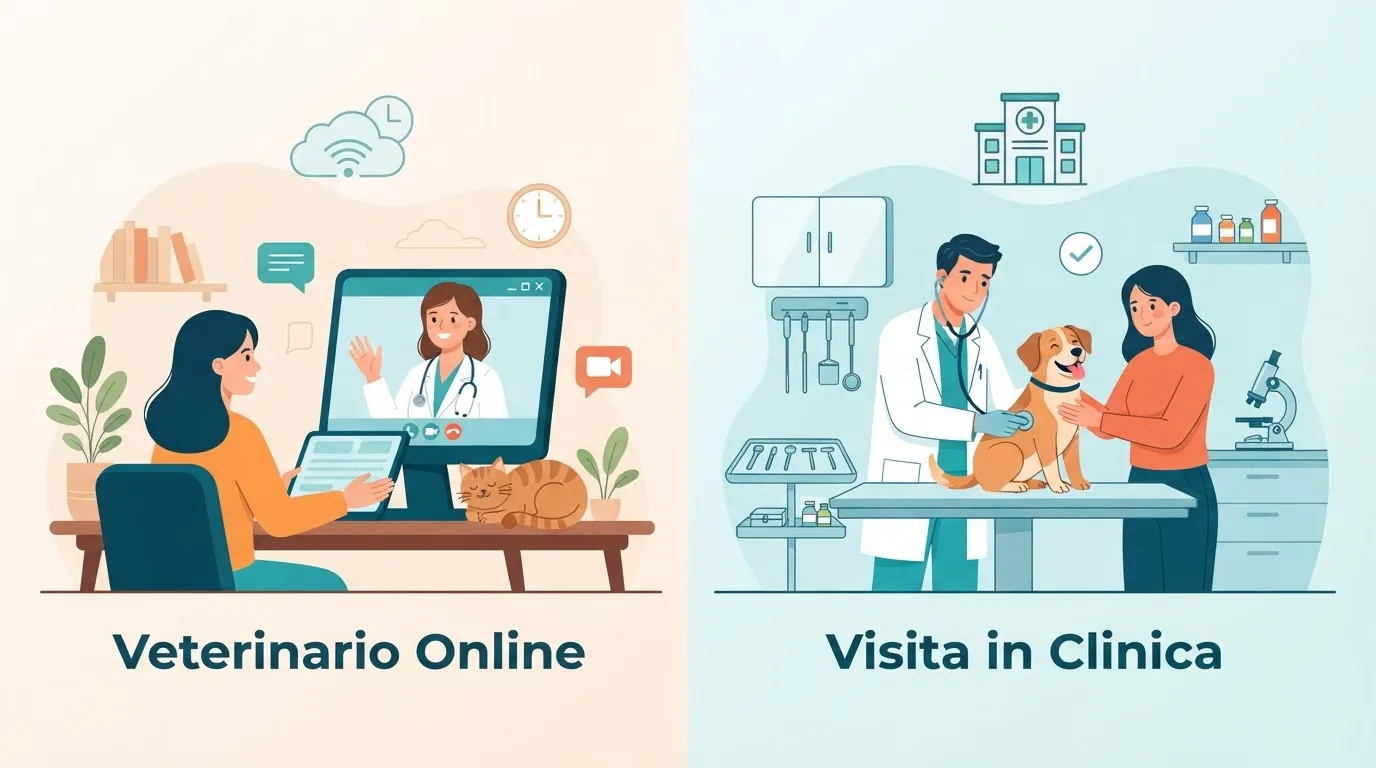
When your pet shows a change or you have a question about everyday care, choosing between an online veterinarian and a clinic visit is not always straightforward. An online veterinary consultation can help you get oriented and share information, but it does not always replace the direct examination needed to assess your pet’s health, pain, and symptoms comprehensively.
The decision mainly depends on your pet’s condition, how quickly the problem appeared, and whether examinations, tests, or treatments are needed.
When an online veterinarian may be useful
Telemedicine for pets can be a practical way to receive general guidance from a professional, especially when the problem does not seem urgent and your pet is already under the care of a veterinary practice.
An online veterinarian may help you:
- clarify questions about mild behaviors or changes to monitor;
- understand what information to observe before scheduling an appointment;
- receive instructions on preparing for transport, a visit, or requested samples;
- discuss the progress of a pet that has already been examined, if the veterinarian considers remote follow-up appropriate;
- review preventive-care routines, such as boosters, parasite treatments, or weight management, always following professional guidance.
The main advantage is speed: you can describe the context, show a short video of the behavior, and collect useful information without immediately putting your pet through the stress of travel. This does not mean that a video consultation can confirm a diagnosis.
Limits of an online veterinary consultation
An online veterinary consultation does not allow the professional to perform a complete clinical examination. Through a screen, it is not possible to palpate a painful area, listen to the heart and lungs, accurately check the eyes, ears, teeth, or temperature, or perform laboratory tests and diagnostic imaging.
For this reason, an in-person veterinary visit remains essential when you need:
- a direct physical examination and an assessment of your pet’s general condition;
- blood, urine, or other sample collection;
- X-rays, ultrasounds, or additional diagnostic tests;
- vaccinations, wound care, injectable treatments, or procedures;
- assessment of wounds, limping, pain, or widespread skin problems;
- prescriptions and treatment decisions that require an appropriate evaluation of the case.
Avoid treating photos and videos as definite confirmation. A skin lesion, unusual posture, or change in appetite may have different causes that cannot be reliably distinguished remotely.
Online veterinarian or clinic: how to decide
When choosing between an online veterinarian and a clinic, start with three questions: Is your pet stable? Is the symptom mild and already familiar? Can the veterinarian collect enough information without examining your pet in person?
A remote consultation may be reasonable if your pet appears alert, is breathing normally, drinking, and behaving almost as usual, while you are seeking guidance about a specific concern. If you are uncertain, it is safer to contact a veterinary clinic directly and follow the instructions you receive.
Seek urgent veterinary care or contact an emergency facility if you notice signs such as:
- difficulty breathing, fainting, or severe weakness;
- significant bleeding, trauma, or suspected ingestion of dangerous substances;
- seizures, intense pain, or a suddenly swollen abdomen;
- repeated vomiting or diarrhea together with a clear worsening of the condition;
- inability to urinate, especially when accompanied by agitation or pain.
Do not wait for an online consultation to manage a possible emergency. Do not give human medicines or remedies that have not been approved by your veterinarian.
How to prepare for an online consultation or veterinary visit
Organized information helps the professional understand the situation more quickly. Before the appointment, note when the problem began, how it has changed, and which aspects have remained the same.
Prepare:
- your pet’s age, species, approximate weight, and known health conditions;
- an up-to-date list of medications, supplements, foods, and parasite treatments being used;
- short, well-lit, dated photos or videos, without forcing your pet into painful positions;
- the frequency of eating, drinking, urination, bowel movements, vomiting, or other relevant changes;
- any reports, previous test results, and instructions from your regular veterinarian.
With PawsPet, you can keep your pet’s health information, documents, and reminders for appointments or treatments in one place. Having the history ready makes it easier to share consistent information during an online veterinary consultation or an in-person clinic visit.
FAQ about veterinary telemedicine and clinic visits
Can an online veterinarian make a diagnosis?
It depends on the case and on what the professional is able to assess. Many conditions require direct observation, a physical examination, or diagnostic tests, so an online consultation often helps determine the next steps.
Can I send a photo of a skin problem?
A photo can be useful as preliminary information, especially for showing how a mark changes over time. However, it is not always enough to identify the cause. If the problem persists, spreads, or causes discomfort, schedule a veterinary visit.
Is a video consultation suitable for emergencies?
No. If you suspect an emergency or your pet is deteriorating quickly, contact a veterinary clinic or emergency service immediately. Prompt in-person assessment is the safest option.
For non-urgent questions, organize your observations, documents, and reminders with PawsPet so you can speak with your veterinarian using clearer, more useful information.