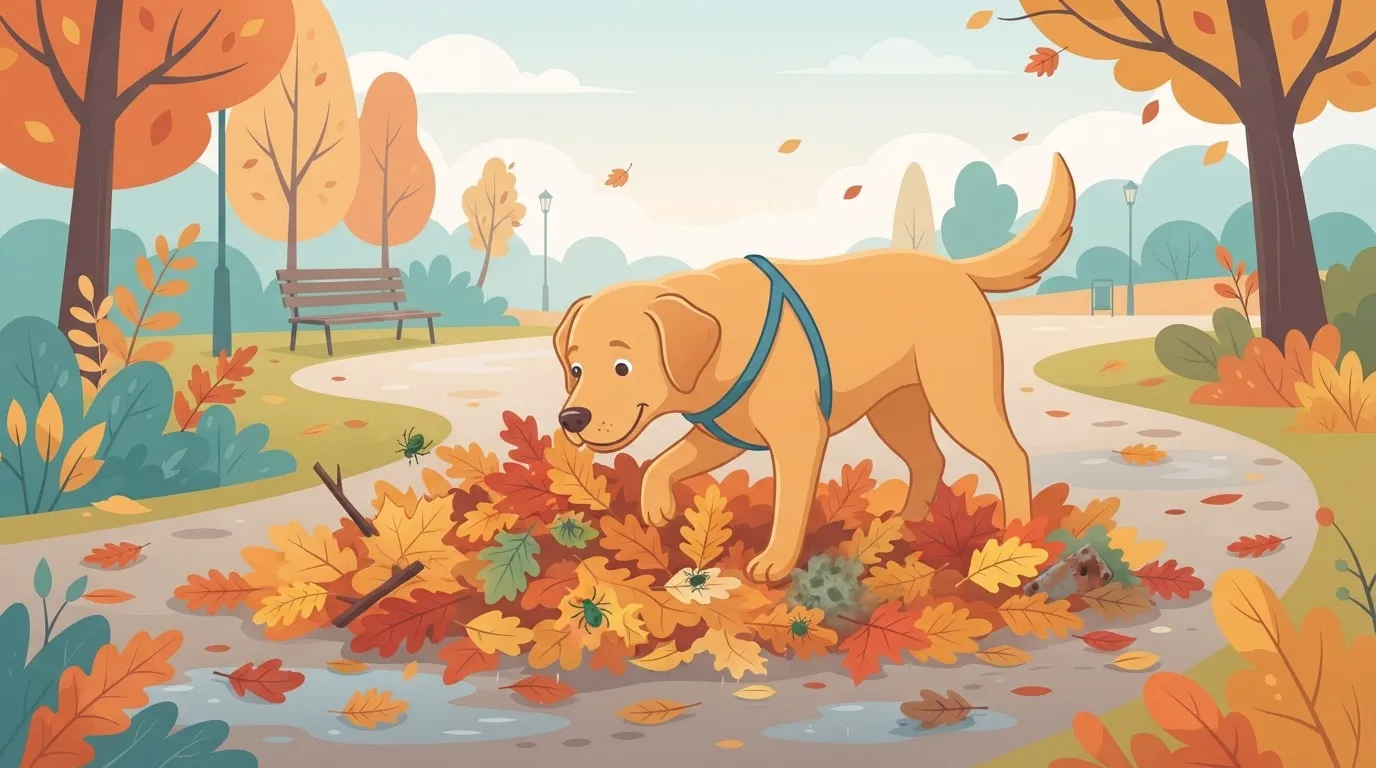
Walking through fallen leaves is one of autumn’s pleasures, but for many dogs, colorful piles are also an invitation to dig, sniff, and taste whatever they find. Knowing the main risks associated with dogs and autumn leaves can help prevent minor accidents without giving up time outdoors.
The goal is not to avoid every fallen leaf. It is to choose cleaner routes, watch your dog, and calmly intervene when something deserves attention.
Why autumn leaves can be a risk
Healthy, dry leaves scattered on the ground are not usually dangerous on their own. Problems become more likely when leaves are wet, decomposing, or gathered in piles that have been left for a long time on sidewalks, in parks, or in gardens.
The main autumn risks for dogs include:
- Mold and decomposing material: moisture encourages the growth of microorganisms. Sniffing is normal, but eating rotten leaves, soil, or plant debris can irritate the digestive system.
- Hidden objects: glass, cans, hooks, bones, bait, food waste, and small toys can remain hidden beneath a layer of leaves.
- Slippery surfaces: wet leaves on stone, wood, or asphalt increase the risk of slipping, especially for older dogs, puppies, or animals with joint problems.
- Environmental residue: piles near roads can collect dirt, liquids, gardening substances, or waste.
- Parasites: tall grass, leaves, and undergrowth can provide shelter for ticks and other external parasites.
A curious dog cannot tell what is harmless from what could cause a problem. For this reason, prevention during the walk is more effective than scolding afterward.
Mold in dogs: what to avoid during walks
Mold in dogs is mainly a concern when an animal eats deteriorated plant material, leftover food, or other waste hidden among the leaves. You cannot tell by looking whether a pile contains irritating or contaminated substances, so it is best to treat piles that are very wet, dark, foul-smelling, or close to waste containers as suspicious.
During the walk:
- do not let your dog dig in compact, wet piles;
- use a shorter leash in dirty or poorly lit areas;
- practice the recall and “leave it” cues, rewarding your dog when they move away from something they have found;
- do not try to force your dog’s mouth open if they have picked something up: this could make them swallow it or accidentally bite you.
If, after possible ingestion, you notice repeated vomiting, significant diarrhea, lethargy, tremors, breathing difficulties, or unusual behavior, contact your veterinarian promptly. When in doubt, explain what your dog may have eaten and when it happened. This information can help the professional assess the situation.
Dog parasites: useful checks after walking through leaves
Autumn does not automatically eliminate the risk of parasites. Temperature, the area you visit, and your dog’s lifestyle matter more than the calendar. Ticks and other unwanted parasites may be found in grass, bushes, and areas where leaves have accumulated.
When you get home, spend a few minutes carrying out a practical check:
- run your hands over your dog’s coat, especially around the neck, ears, armpits, groin, and between the toes;
- check the paws and paw pads, where thorns, seeds, or small fragments can become lodged;
- notice whether your dog repeatedly licks one area or is limping;
- dry the coat and paws thoroughly if the route was wet.
Parasite prevention should be established with your veterinarian based on your dog’s characteristics and the area where you live. Avoid do-it-yourself solutions or products that are not suitable for your pet’s species, weight, or individual condition.
Safe autumn walks: simple habits that help
Good autumn walk safety starts with preparation. Choose visible routes with adequate lighting and no piles of waste. On rainy days, favor less slippery paths and reduce your pace.
Bring water, waste bags, a small light if you go out at dusk, and a towel for cleaning your dog’s paws and coat. Also check that the ID tag and identification details are up to date. In crowded areas or places with poor visibility, a dog may wander away more easily.
If you like to monitor your usual routes, PawsPet GPS walks can help you keep track of outings and identify areas that are better suited to your dog. Reminders can also be useful for scheduling regular health and prevention checks.
FAQ about autumn leaves and dogs
Can dogs eat fallen leaves?
A small amount of dry leaves may not cause any consequences, but it is not a habit to encourage. Wet or rotten leaves, or leaves gathered in piles, may contain mold, waste, or irritating substances.
How do I remove a tick found after a walk?
Remove it with a suitable tool, gripping it as close to the skin as possible without crushing it. If you are not confident doing this, or if the area looks irritated, ask your veterinarian for help.
Do I always need to wash my dog’s paws in autumn?
After muddy, urban walks or routes with many wet leaves, cleaning and drying the paws and paw pads is a good practice. It also gives you an opportunity to spot cuts, foreign objects, or irritation.
Walking among autumn colors remains a valuable activity. All it takes is attention to the route, a check after the walk, and prevention agreed on with your veterinarian. With PawsPet, you can organize your dog’s reminders and useful information in one place, helping you face every season with greater peace of mind.