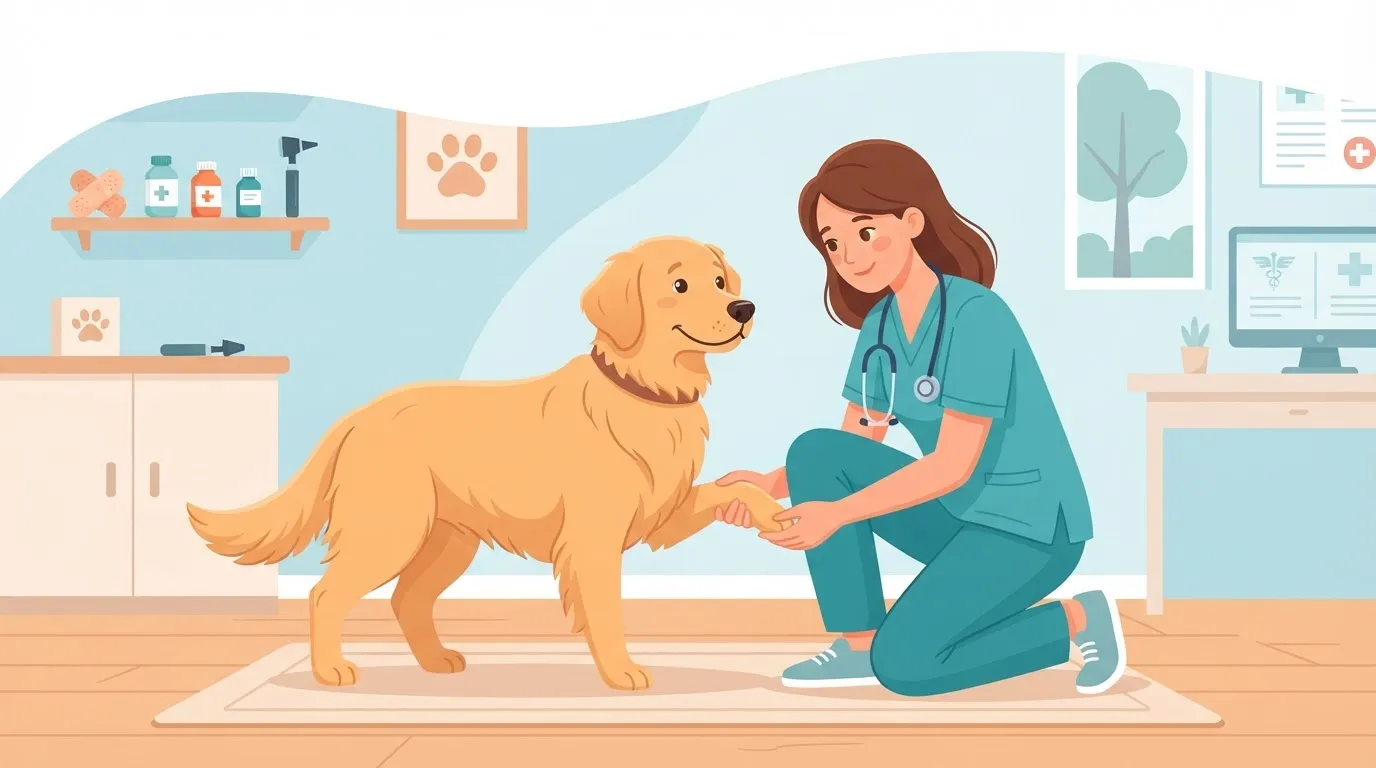
When your dog is limping, it is natural to wonder whether they twisted something, have an issue with their paw, or need to see a veterinarian right away. Limping can result from minor causes or problems that require professional assessment. Observing it calmly, without forcing movement or handling the painful area, can help you decide what to do next.
First step: limit activity and observe the limp
When you notice that your dog is limping, stop running, energetic play, jumping, and long walks. Take them to a calm, safe area with non-slip flooring and let them rest.
Observe a few useful details without asking your dog to walk more than necessary:
- Which limb seems affected: front or back, right or left.
- How your dog moves: do they put only part of the paw down, drag it, hold it up, or walk stiffly?
- When the problem appears: after intense activity, on waking, after resting, or suddenly during a normal walk?
- Whether the limp is constant: it may lessen after a few steps or worsen with movement.
- Overall condition: have appetite, energy, breathing, sleep, or behavior changed?
A short video recorded while your dog is walking naturally can be very useful to the veterinarian. Do not encourage them to run to “get a better look,” and do not give human medications: some can be dangerous for animals.
What to check without handling the paw
Dog paw pain can be linked to broken nails, foreign objects, small cuts, or irritation of the paw pad. You can perform a gentle visual check, preferably when your dog is relaxed and without restraining them.
Look for:
- cuts, bleeding, swelling, or areas of redness;
- a thorn, seed, small stone, or other material between the toes;
- overgrown nails, including dewclaws, or broken nails;
- cracked paw pads, abrasions, or burns caused by very hot surfaces;
- an unusual position of the paw or limb;
- persistent licking of one specific area.
Avoid bending joints, pulling the toes, massaging the area, or trying to remove an object that is lodged deeply. Even a normally gentle dog may react when in pain. If you notice a serious wound, a deformity, or an embedded object, protect the area from further injury and contact your veterinarian.
When sudden dog lameness requires urgent care
Sudden dog lameness is not always an emergency, but some signs warrant prompt veterinary contact, including outside regular hours if necessary. Do not wait long if your dog is not putting weight on a leg after an injury or appears to be in significant distress.
Seek urgent assistance if your dog:
- cannot stand or is not using a limb at all;
- has a limb that looks deformed, very swollen, or positioned unnaturally;
- has bleeding that will not stop, a deep wound, or a possible bite;
- cries, pants, trembles, or shows marked pain even while resting;
- started limping after a fall, being hit by a vehicle, an impact, or rough play;
- drags one or more legs, loses balance, or shows sudden weakness;
- is unusually lethargic, may have a fever, will not eat, or has other general symptoms.
In these situations, keep your dog as still as possible during transport. If they are large and struggling to move, ask for help supporting them without lifting or twisting the painful limb.
When to schedule a veterinary visit
If the limp is mild but does not improve with rest, or if it returns frequently, schedule a veterinary visit. This also applies when your dog has better and worse days: dog joint pain, muscle problems, or certain paw conditions are not always visible to the naked eye.
Arrange a check-up if:
- the limp continues beyond a short period of rest;
- your dog avoids stairs, jumping, or walks they previously enjoyed;
- you notice stiffness after sleeping or remaining still;
- your dog frequently licks one paw without an obvious cause;
- the problem returns after similar activities;
- your dog is elderly, still growing, or has had orthopedic problems before.
Bring the information you have collected to the appointment: when the limp began, any injuries, recent activities, a video of your dog moving, and any changes you observed. With PawsPet, you can record episodes, symptoms, and appointments in the health management section and set reminders for check-ups and treatments prescribed by your veterinarian.
FAQ about dog limping
My dog is limping but does not seem to be in pain. Should I be concerned?
It is still useful to monitor them. Dogs can hide pain or show it only during certain movements. Limit activity and contact your veterinarian if the limp persists, worsens, or returns.
Can I give my dog a painkiller?
Not without veterinary guidance. Common human medications can cause serious effects in dogs. Your veterinarian will determine whether treatment is needed and which option is suitable for your individual pet.
If my dog is not putting weight on a paw, can I wait until tomorrow?
If your dog is not putting weight on a paw, shows clear pain, or the paw is swollen, injured, or deformed, it is best to contact a veterinarian immediately. In the meantime, prevent your dog from walking.
Careful observation, reduced exertion, and timely action are the most cautious ways to protect your dog’s well-being. With PawsPet, you can keep health records, notes, and reminders organized for every veterinary visit.