If your dog eats grass during a walk, it is understandable to wonder whether they are feeling nauseous, hungry, or experiencing a digestive problem. In most cases, it is an occasional behavior that is not necessarily concerning, but the context and any associated symptoms make a difference.
Observing how often it happens, how much grass your dog ingests, and their overall condition can help you understand when to simply monitor the behavior and when to contact a veterinarian.
Why Do Dogs Eat Grass?
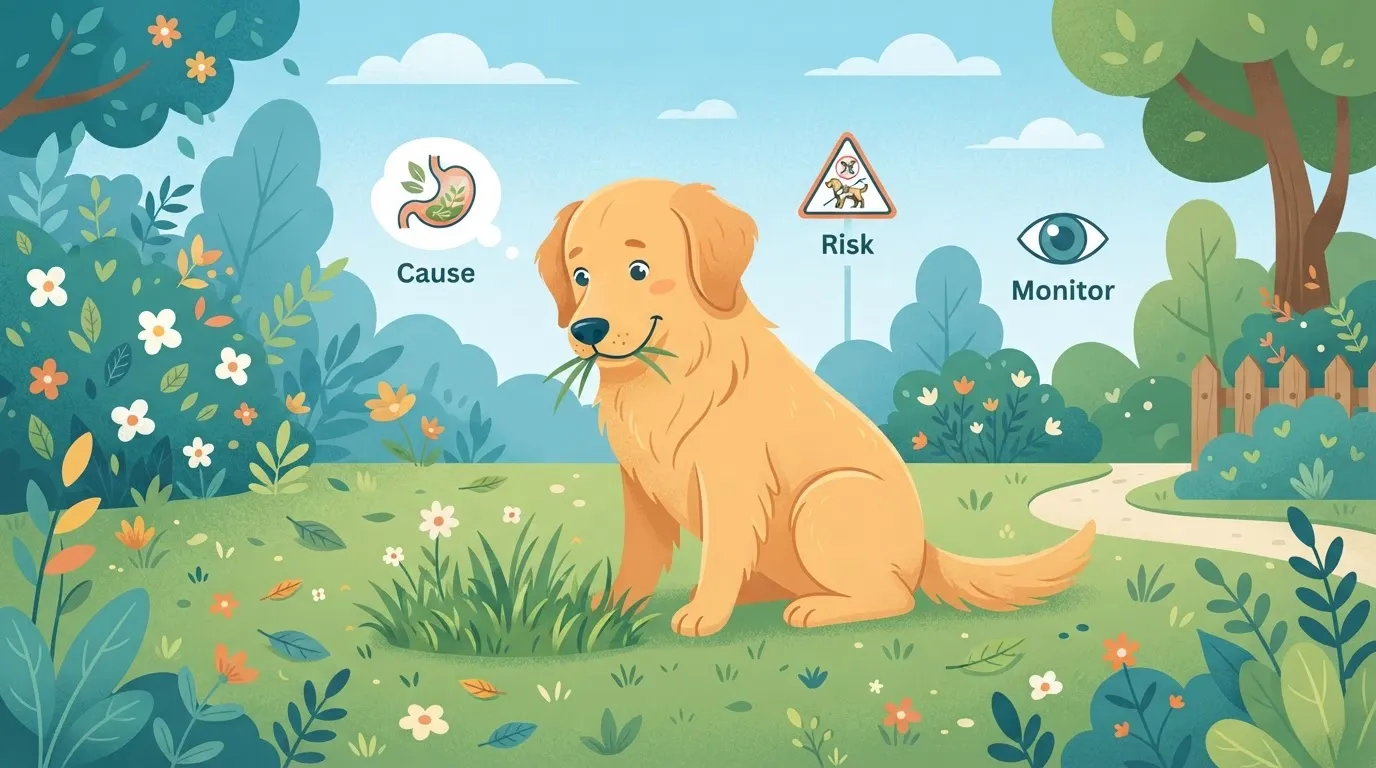
There is no single answer to the question “why do dogs eat grass?” Dogs may do it for different reasons, many of which are harmless and related to individual habits.
Common causes include:
- Curiosity and exploration: puppies and lively dogs in particular use their mouths and sense of smell to learn about their surroundings.
- Taste or texture: some dogs seem to enjoy young, damp, or particularly tender grass.
- Learned behavior: if your dog eats grass in the same place on every walk, it may have become a habit.
- Boredom or stress: in some cases, eating behavior may increase when a dog has too few opportunities for activity, play, and mental stimulation.
- Gastrointestinal discomfort: sometimes a dog seeks out grass when feeling nauseous or experiencing stomach discomfort, but grass should not be considered a treatment or a reliable way to make a dog vomit.
A dog that eats a few blades of grass, remains lively, eats normally, and shows no other problems can often simply be monitored. If the behavior happens frequently, however, it is worth noting when it occurs and what happens beforehand.
Dog Eating Grass and Vomiting: When to Take Notice
A dog may eat grass and vomit shortly afterward. Grass can irritate the throat or stomach and contribute to retching in some dogs, but this does not automatically mean that it caused the vomiting or that the dog sought it out to “cleanse” themselves.
It is useful to assess the overall situation. Pay attention to:
- how often the vomiting occurs;
- diarrhea, loss of appetite, or lethargy;
- repeated attempts to vomit without producing anything;
- unusual drooling, retching, abdominal pain, or restlessness;
- blood in the vomit or stool;
- refusing water or drinking much more than usual;
- eating large amounts of grass, soil, or other materials.
If any of these signs are present, or if your dog seems different from usual, contact a veterinarian. A check-up is particularly important for puppies, senior dogs, animals with known medical conditions, or dogs receiving treatment.
Do not give your dog medication, supplements, or home remedies for digestive problems without professional advice.
Risks of Eating Grass During a Walk
The problem is not always the grass itself, but what may be on or around it. Shared residential green spaces, roadside verges, parks, and gardens may have been treated with products that are not safe to ingest or may contain irritating substances.
The main risks include:
- pesticides, herbicides, or fertilizers;
- bait, litter, cigarette butts, and food scraps;
- parasites or contamination from other animals’ feces;
- stiff blades of grass or grass awns that may irritate the mouth and throat;
- ornamental or wild plants that are unsafe for dogs.
During walks, guide your dog away from recently treated areas, unfamiliar flower beds, and piles of cut grass. Washing their paws when you return home is a useful habit, especially if your dog tends to lick them afterward.
How to Manage the Behavior Practically
Punishing or pulling your dog when they look for grass can increase agitation and frustration. It is more effective to prevent access to risky areas and teach a safe alternative.
You can proceed as follows:
- Keep a suitable distance from heavily used lawns or tall grass if your dog tends to eat large amounts.
- Introduce a simple cue, such as “leave it,” practicing at home first with treats and positive reinforcement.
- Improve the quality of walks with controlled sniffing, changes of route, and playtime suited to your dog.
- Review your dog’s feeding routine with a veterinarian if the behavior is new, persistent, or associated with digestive problems.
- Keep a brief diary of episodes, food, stools, vomiting, and places visited: this information can be useful during a veterinary appointment.
On PawsPet, you can use health management and reminders to record recurring episodes, veterinary check-ups, and changes in your dog’s routine.
FAQ About Dogs Eating Grass
Does a dog that eats grass always have an upset stomach?
No. Dogs may do it out of curiosity, for the taste, out of habit, or while exploring. However, if the behavior suddenly increases or is accompanied by vomiting, diarrhea, loss of appetite, or lethargy, you should contact a veterinarian.
Should I always stop my dog from eating grass?
It is sensible to prevent it in places where there may be chemicals, litter, feces, or unsafe plants. Eating a few blades of grass in a controlled area does not necessarily require alarm, but large amounts should be avoided.
When should I call the veterinarian?
Contact a veterinarian if your dog vomits repeatedly, shows signs of pain, is very lethargic, refuses food, has blood in the vomit or stool, or may have eaten treated grass or unknown substances.