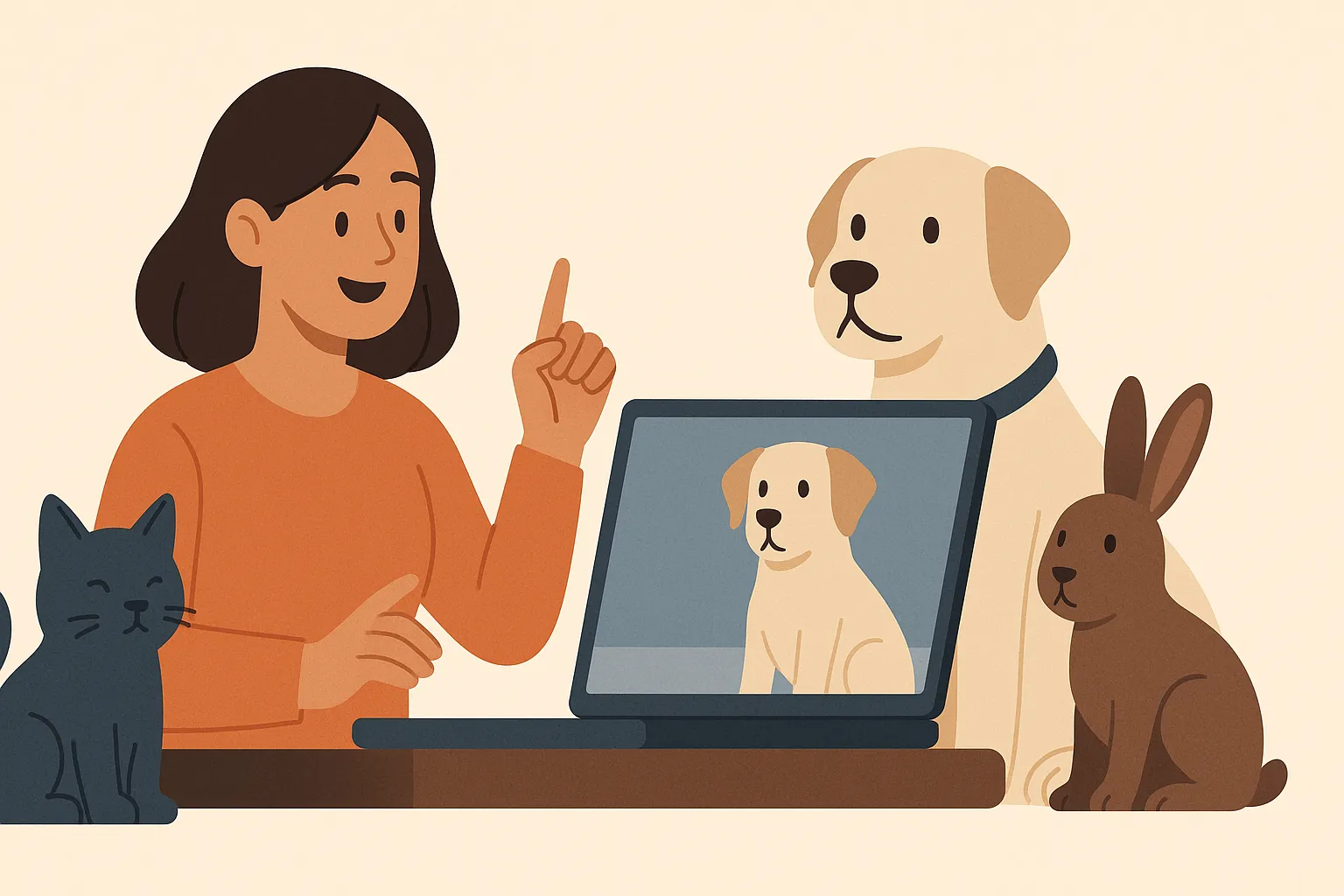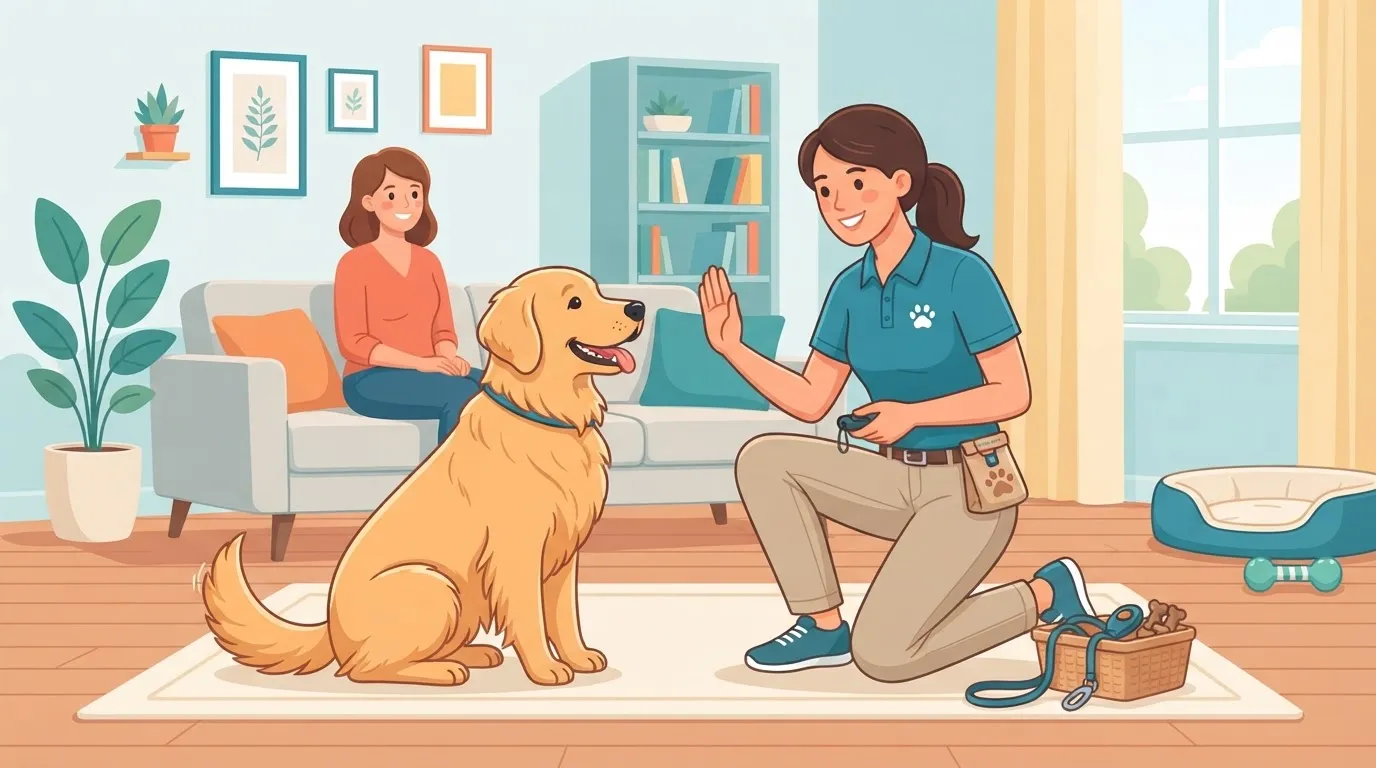
In-home dog training can be useful when difficulties arise mainly in everyday situations: on the leash near home, when guests arrive, during mealtimes, or when the dog is left alone. Working in the real-life environment makes it easier to observe habits, spaces, and triggers that may not appear in a training center.
The goal should not be to achieve obedience “on command,” but to build practical skills, clear communication, and a calmer routine for the dog and the family.
When dog training at home is truly useful
An in-home dog trainer can observe the situation directly and suggest exercises that fit the dog’s everyday reality. This approach is particularly helpful when the issue is connected to specific places, people, or household routines.
It may be useful, for example, for:
- puppies learning family rules and routines;
- dogs that pull on the leash as soon as they leave the building;
- difficulties managing guests, the doorbell, or people passing by;
- jumping up, persistent attention-seeking, or overexcitement;
- living with multiple animals;
- preparing for the arrival of a baby, another animal, or a house move;
- owners who want to better understand their dog’s signals, needs, and limits.
The professional can also check very practical details: where the dog rests, how access to sofas and doors is managed, which equipment is used on walks, and how the people in the household respond. Not every difficulty can be addressed exclusively at home, however. Socialization or recall training, for example, may require gradual outings in outdoor settings.
The benefits and limitations of in-home dog training
The main benefit is personalization. Advice does not remain theoretical: it is applied immediately in the place where the behavior occurs. In addition, the whole family can take part in the lesson and learn to use consistent signals and rules.
Key benefits include:
- less need to transport a dog that is not used to cars or unfamiliar environments;
- direct observation of everyday routines;
- exercises that are easy to repeat between sessions;
- involvement of the people who live with the dog;
- adapting the program to the animal’s age, history, and pace.
There are also some limitations. A highly controlled home environment does not replace work on the street, around other dogs, or in busy places. In addition, for complex issues such as aggression, intense fear, repetitive behaviors, or sudden behavioral changes, it may be necessary to consult a veterinarian and, when appropriate, a veterinary behavior specialist.
Dog trainer cost: what affects the quote
The cost of a dog trainer varies according to several factors, so it is more useful to request a detailed quote than to rely on a generic figure. An effective program often requires several sessions, exercises at home, and progress checks.
The factors that usually have the greatest influence are:
- Length and number of sessions: an initial consultation may differ significantly from an ongoing program.
- Distance and service area: some professionals charge additional travel fees.
- Program goals: puppy training, leash management, and behavioral difficulties require different amounts of time and expertise.
- Participants and setting: a large family or a home with multiple animals may require more complex work.
- Included support: ask whether the quote includes written materials, contact between sessions, or practical outings away from home.
Before confirming, always ask what the price includes, how many sessions are initially recommended, and how progress will be assessed. Be cautious of anyone who guarantees certain results within a fixed timeframe: every dog and family environment has different needs.
How to choose an in-home dog trainer
Choosing the right professional matters as much as the dog training program itself. Look for someone who asks about the dog’s history, habits, and the family’s goals before suggesting solutions.
Consider these criteria:
- verifiable training and ongoing professional development;
- relevant experience with your situation, without absolute promises;
- a respectful approach based on management, prevention, and gradual learning;
- the ability to explain exercises and their purpose clearly;
- willingness to work with your veterinarian when health or behavioral concerns arise;
- a clear quote outlining the working methods and conditions.
During the first meeting, also observe how the professional interacts with the dog. They should respect the dog’s pace, signs of discomfort, and need for distance, without forcing contact or exercises. Prepare a short list in advance of the behaviors you want to address, the times when they occur, and what happens immediately beforehand. Short videos recorded safely can help show difficult situations that do not arise during the visit.
To organize appointments, training notes, and reminders for exercises, you can use PawsPet to keep useful information about your dog’s health and routine in one place.
FAQ
How many in-home sessions are needed to train a dog?
It depends on the goal, the consistency of the exercises, and the family environment. After an initial assessment, the trainer can suggest a realistic program and adjust it based on progress.
Can I start training a puppy at home?
Yes. The first sessions can help establish routines, manage spaces, support rest, address toilet training, and build leash habits. It is important to proceed gradually and avoid overwhelming the puppy.
Can a dog trainer resolve aggression?
A trainer can assess the situation and suggest an appropriate educational program, but aggression can have different causes. If the behavior is intense, sudden, or creates safety risks, contact a veterinarian first and work with qualified professionals.