Knowing how to clean a dog’s ears can help maintain good daily hygiene and make it easier to notice changes early. However, cleaning the ears too often or using unsuitable products can irritate the ear canal: the goal is to gently remove visible dirt, not to “deep-clean” the ear.
Every dog has different needs depending on ear shape, lifestyle, earwax production, and skin condition. If your dog shows discomfort, has a strong odor, or develops discharge, ask your veterinarian for advice.
When to Clean a Dog’s Ears
There is no single cleaning schedule that works for every dog. Some dogs’ ears remain clean for weeks, while others accumulate earwax more easily, especially if they have floppy ears, a lot of hair near the ear canal opening, or frequently bathe and swim.
Check your dog’s ears regularly, for example while brushing or after a walk in areas with tall grass. In general, cleaning may be useful when you notice:
- a small amount of earwax or visible residue at the ear opening;
- dirt after baths, swimming, or grooming;
- small pieces of external debris, without redness or pain;
- a mild, unusual odor that should be monitored.
A healthy ear looks clean, without obvious redness, swelling, or discharge. Avoid cleaning it every day “just in case”: excessive handling can disturb the skin’s natural balance.
Dog Ear Products: What to Prepare
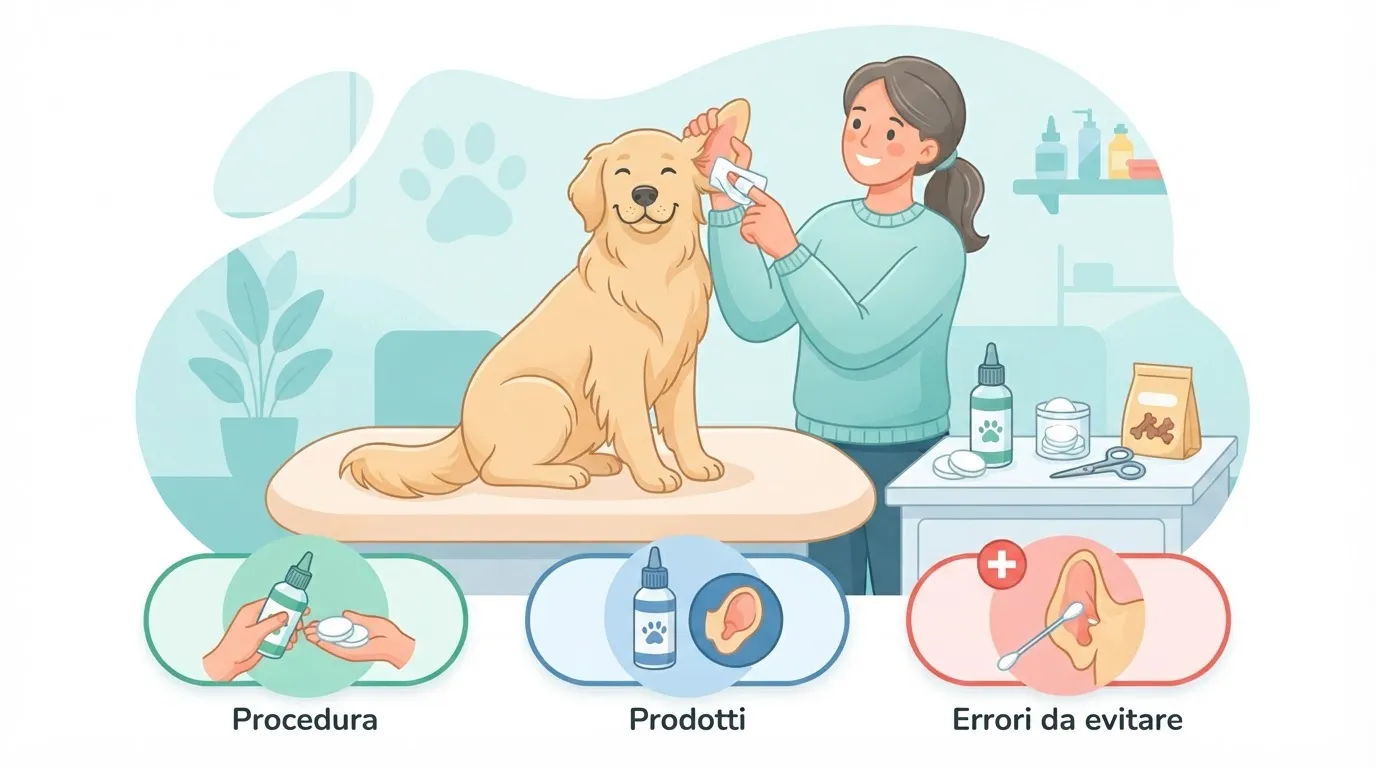
Only a few items are needed for safe cleaning. Choose dog ear products formulated for veterinary use and suitable for canine ear hygiene; if you are unsure, your veterinarian can recommend the most appropriate ear cleaner.
Prepare:
- an ear-cleaning solution specifically made for dogs;
- soft gauze or cotton pads;
- a towel, useful for containing any shaking;
- small treats to make the experience more positive.
Do not use cotton swabs inside the ear canal: they can push earwax and dirt deeper or cause injury. Also avoid alcohol, hydrogen peroxide, essential oils, soaps, and home remedies that have not been recommended by a professional. These substances can be irritating, especially when the skin is already sensitive.
How to Clean a Dog’s Ears Step by Step
Choose a quiet environment and a time when your dog is relaxed. If your dog tries to pull away or shows discomfort, proceed gradually: forcing the process can make future cleaning sessions more difficult.
- Inspect the ear. Gently lift the ear flap and look only at the visible area. If you see a large amount of material, marked redness, or your dog reacts to touch, stop.
- Apply the cleaner. Follow the product instructions. In general, the nozzle should be placed just at the ear opening, without inserting it deeply.
- Massage the base of the ear. Using gentle movements, massage the area at the base of the ear flap for a few seconds. This helps the solution spread and loosen residue.
- Let your dog shake. This is normal and helps bring some of the dirt to the surface. Protect your clothes and nearby surfaces with a towel.
- Remove visible excess. Wrap gauze around your finger and clean only the outer folds that you can reach easily.
- Reward your dog and note any changes. A small treat and a calm voice can help create a positive association.
If your veterinarian has prescribed ear drops or other ear medication, do not replace them with general-purpose cleaners. Ask how to coordinate cleaning and treatment correctly.
Mistakes to Avoid and Signs That May Be Consistent with an Ear Infection
Common mistakes include cleaning too forcefully, using rigid tools, and applying products without considering the condition of the ear. It is equally important not to overlook signs that require a veterinary examination.
Contact your veterinarian if you notice possible dog ear infection symptoms such as:
- a strong or persistent odor;
- dark, yellowish, or unusual discharge;
- redness, swelling, or scabs;
- frequent scratching or continuous head shaking;
- pain when you touch the ear;
- a tilted head, loss of balance, or unusually irritable behavior.
These signs can have different causes and do not allow for a diagnosis at home. Do not put liquids or medication into the ear if your dog is in severe pain, if you see blood, or if you suspect a foreign object: having the ear assessed promptly is safer.
Making Daily Care Easier
Ear care works best when it is part of a calm, observant dog hygiene routine. Check the ear flap after water activities, dry the outer area thoroughly, and teach your dog from an early age to accept gentle handling of the head and ears.
You can use PawsPet reminders to record regular checks, baths, grooming appointments, and veterinary visits. Keeping notes about odors, the amount of earwax, or your dog’s reactions during cleaning can also help you provide the professional with more precise information.
FAQ
How often should a dog’s ears be cleaned?
It depends on the individual dog. Regular checks are preferable, with cleaning only when there is visible dirt or when your veterinarian recommends it. Avoid unnecessary daily cleaning.
Can I use a cotton swab to clean my dog’s ears?
No. A cotton swab can push earwax deeper and irritate or injure the ear canal. Use soft gauze only on the visible outer areas.
Does dark earwax always mean an ear infection?
Not necessarily, but dark earwax combined with a bad odor, itching, pain, or discharge should be assessed by a veterinarian. Avoid treating the problem yourself with medicated products.